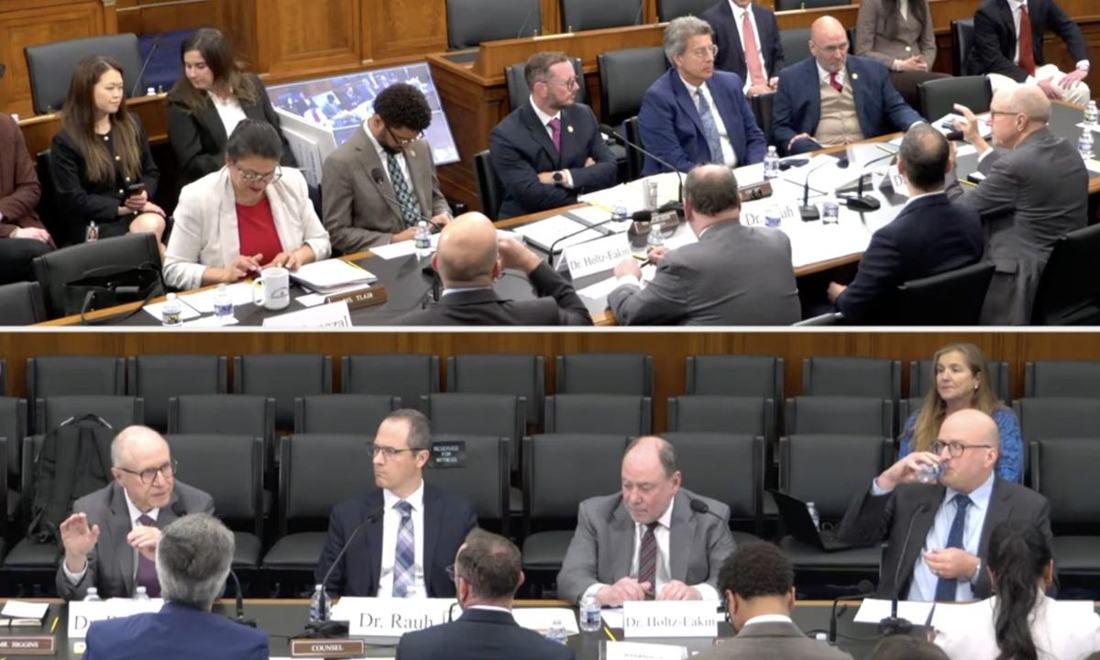
Testimony
Remarks before Congress by Dr. Bill Beach on "Reducing America’s National Debt: Rooting Out Federal Waste, Fraud, and Overregulation"
May 14, 2026 · William W. Beach, D. Phil.


1. The MRRA would put more than $1 trillion of Biden-Harris rules within the CRA “lookback” window of the 119thCongress, which means the next Congress and President could use the MRRA to effectuate swift, major regulatory rollbacks.
If passed later this year or early next year, the MRRA, which has been introduced in both the House and Senate, would allow the 119thCongress to conduct a CRA review of any rule finalized and submitted to Congress during the final year of the Biden-Harris Administration. That means many of the rules finalized this spring, prior to what was widely viewed as the earliest possible start of the forthcoming CRA lookback period, would be reachable by the 119th Congress and President Trump. Because multiple rules could be bundled into a single joint resolution of disapproval, the MRRA would potentially allow President Trump and the incoming Congress to overturn dozens – possible even hundreds – of rules using the CRA’s legislative fast-track procedures. According to data from the American Action Forum (AAF), the cost of just 313 rules finalized since January 20th of this year was a staggering $1.324 trillion (subtract their early January data from their current total). Yes, that’s trillion with a “t.” That makes up a substantial portion of the $1.8+ trillion of regulatory costs imposed by the Biden-Harris Administration since inauguration day, and it easily surpasses the $890 billion of regulatory costs imposed across all eight years of the Obama Administration. It’s also important to note that these cost calculations are based only on finalized rules that include meaningful cost projections. Many other categories of rules – such as proposed but not yet final rules, significant guidance documents, and other types of regulatory actions that include little or no quantified analysis but still have meaningful impacts – aren’t counted in this total but could still be reachable with the CRA/MRRA.2. Robust use of the CRA/MRRA would allow the Trump Administration to shift its focus more quickly from midnight rules to important new policy priorities.
The early months and years of recent presidential administrations have been spent slowing, stopping, and overturning the regulations of the outgoing administration, distracting from other priorities the new administration may wish to pursue. If Congress were to pass the MRRA and robustly use the augmented CRA powers, it could work with President Trump to address potentially hundreds of recent rules and allow the new administration to focus more quickly and fully on other priorities.