
Testimony
Remarks before Congress by Dr. Bill Beach on "Reducing America’s National Debt: Rooting Out Federal Waste, Fraud, and Overregulation"
May 14, 2026 · William W. Beach, D. Phil.


Figure 1
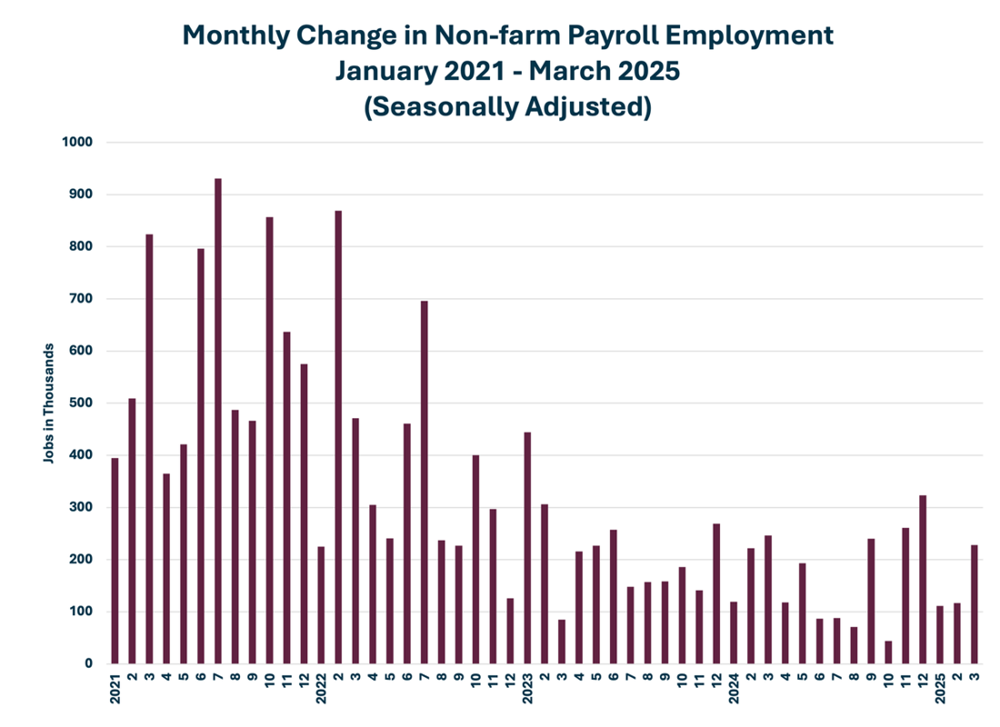 Note however, that job creation numbers for January and February were both revised downward respectively by 14,000 and 34,000. That lowers January’s total net jobs created from 125,000 to 111,000 and February’s from 151,000 to 117,000.[2] The non-farm employment numbers are routinely revised for two months following their initial release, primarily due to additional surveys from businesses being received by BLS. These most recent revisions imply that today’s March estimate also might be revised downward next month.
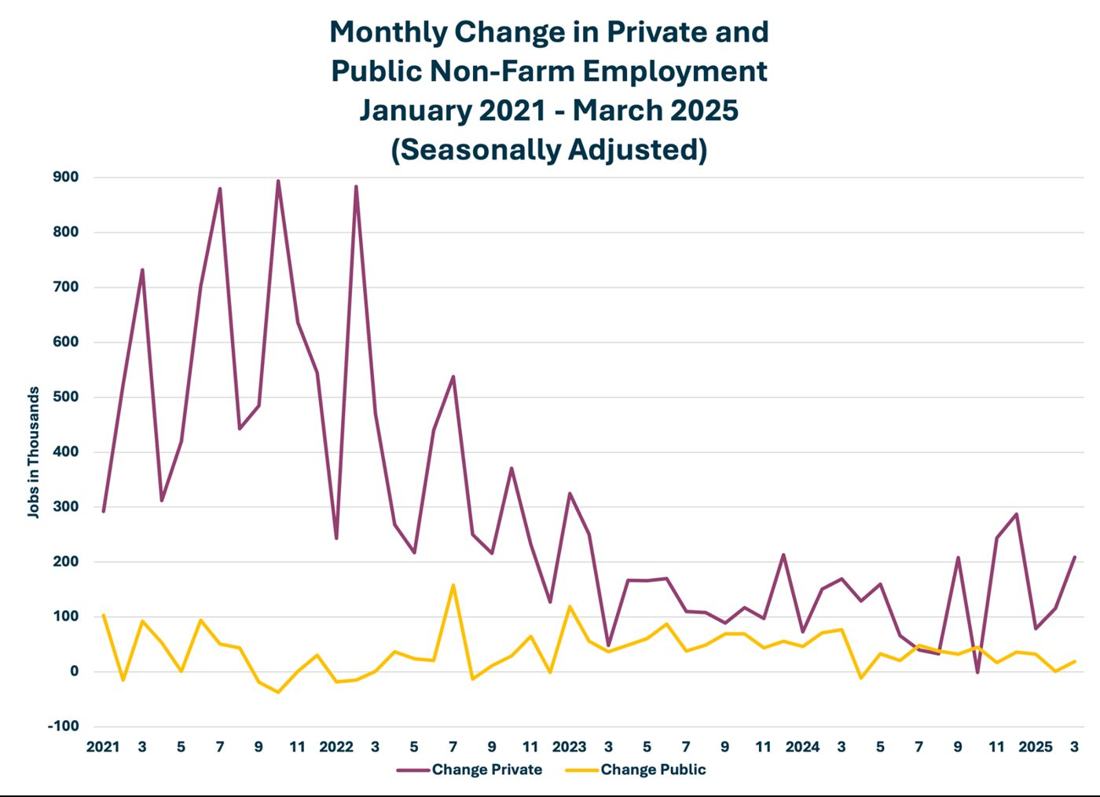
Given the recent upheaval in federal employment, analysts expected substantial declines in federal government staffing. That federal payrolls declined by 4,000 in March may seem a little light but note: thousands of federal employees are no longer going to work but remain on government payrolls. BLS considers these types of workers as still employed. We will see further reductions in federal employment as their severance pay expires later in the year. At the same time, state government employment grew by 6,000 and local government grew a whopping 17,000, which was split fairly even between education and non-education government jobs.
Private employment grew by 209,000. The near-term trend in private employment is sharply up: 79,000 in January; 116,000 in February; and today’s 209,000. Most of these gains came from the service side of the economy. Indeed, 94 percent of the private sector job gains were from service providing sectors, the biggest of which were retail trade (following the end of boycotts against Target and other retailer over their termination of DEI programs), transportation and warehousing, health care, and leisure and hospitality. (See Figure 2).
Note however, that job creation numbers for January and February were both revised downward respectively by 14,000 and 34,000. That lowers January’s total net jobs created from 125,000 to 111,000 and February’s from 151,000 to 117,000.[2] The non-farm employment numbers are routinely revised for two months following their initial release, primarily due to additional surveys from businesses being received by BLS. These most recent revisions imply that today’s March estimate also might be revised downward next month.
Given the recent upheaval in federal employment, analysts expected substantial declines in federal government staffing. That federal payrolls declined by 4,000 in March may seem a little light but note: thousands of federal employees are no longer going to work but remain on government payrolls. BLS considers these types of workers as still employed. We will see further reductions in federal employment as their severance pay expires later in the year. At the same time, state government employment grew by 6,000 and local government grew a whopping 17,000, which was split fairly even between education and non-education government jobs.
Private employment grew by 209,000. The near-term trend in private employment is sharply up: 79,000 in January; 116,000 in February; and today’s 209,000. Most of these gains came from the service side of the economy. Indeed, 94 percent of the private sector job gains were from service providing sectors, the biggest of which were retail trade (following the end of boycotts against Target and other retailer over their termination of DEI programs), transportation and warehousing, health care, and leisure and hospitality. (See Figure 2).
Figure 2
 These gains are a bit surprising given the most recent JOLTS report, which showed continued decline in job openings. The last JOLTS report, this one for February and released last week, reported a month-over-month decline of 194,000 job openings or a year-over-year decline of 877,000 openings.[3] Hires and total separations also were down significantly from their levels in February 2024.
Even so, an observer would not be chided for concluding that the employment side of today’s BLS report looks pretty good.
Let’s briefly turn to the earnings portion of the March report. The gains in average weekly earnings at 3.2 percent year- over-year are now about even with the core Consumer Price Index (CPI) rate of 3.1 percent for February. However, average hourly wages (a slightly narrower concept than earnings) came in at 3.8 percent year-over-year in March. This rate is good for workers who are scratching their way back after losing so much purchasing power between 2021 and 2024, but this result will alert the Federal Reserve of continued vigilance on the inflation front.
So, what about the unemployment rate and other labor force numbers? The household survey results were hardly different from last month. Unemployment rose from 4.1 to 4.2 percent, but that metric has been bouncing around in that range for several months. (See Figure 3). The unemployment rates by race, gender, and educational attainment also barely moved. All of the small changes were within the margin of error for those variables. Indeed, every one of the most commonly followed labor force concepts had no statistically significant change last month.[4]
These gains are a bit surprising given the most recent JOLTS report, which showed continued decline in job openings. The last JOLTS report, this one for February and released last week, reported a month-over-month decline of 194,000 job openings or a year-over-year decline of 877,000 openings.[3] Hires and total separations also were down significantly from their levels in February 2024.
Even so, an observer would not be chided for concluding that the employment side of today’s BLS report looks pretty good.
Let’s briefly turn to the earnings portion of the March report. The gains in average weekly earnings at 3.2 percent year- over-year are now about even with the core Consumer Price Index (CPI) rate of 3.1 percent for February. However, average hourly wages (a slightly narrower concept than earnings) came in at 3.8 percent year-over-year in March. This rate is good for workers who are scratching their way back after losing so much purchasing power between 2021 and 2024, but this result will alert the Federal Reserve of continued vigilance on the inflation front.
So, what about the unemployment rate and other labor force numbers? The household survey results were hardly different from last month. Unemployment rose from 4.1 to 4.2 percent, but that metric has been bouncing around in that range for several months. (See Figure 3). The unemployment rates by race, gender, and educational attainment also barely moved. All of the small changes were within the margin of error for those variables. Indeed, every one of the most commonly followed labor force concepts had no statistically significant change last month.[4]
Figure 3
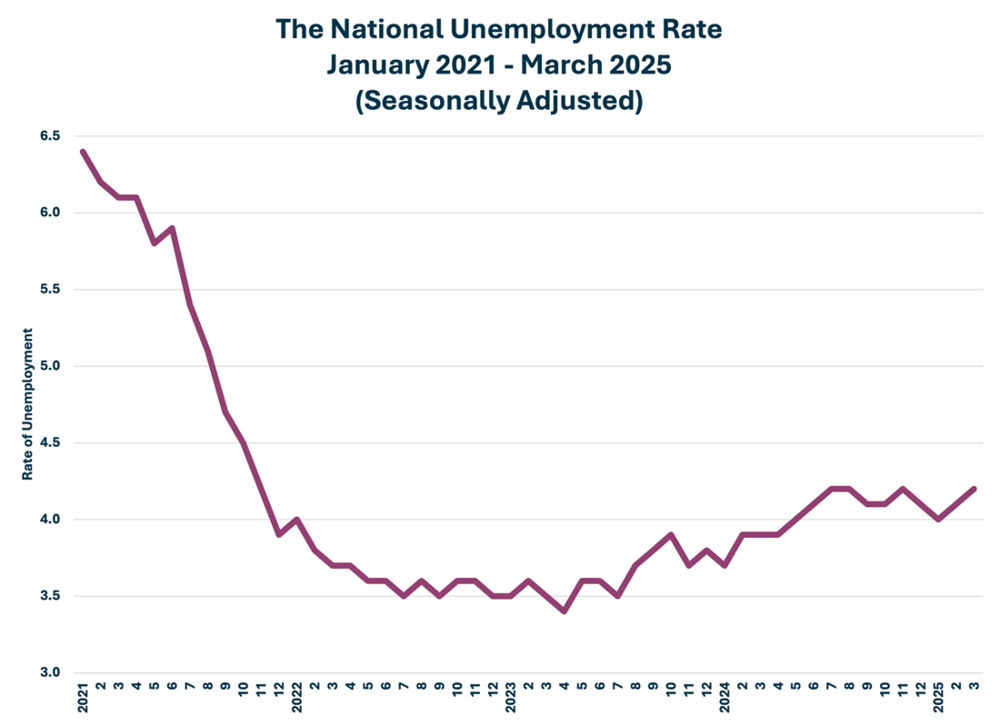 How important is this “steady state”? If employment grows at about the monthly rate of 200,000 jobs, the unemployment rate should not increase by very much, if at all. While the first estimate for March job growth is consistent with this “steady state” and, thus, probably helps explain so few noteworthy changes in the household survey, the previous months are worrisome.
BLS never revises the unemployment rates. Thus, revisions in the employment survey’s job results (like those this month) sometimes show up months later in sudden unemployment rate jumps. That is why one needs to watch both surveys closely, especially revisions to the job numbers. If the March number comes down substantially over the next few months, then we can expect the unemployment rate to rise. On the other hand, continued average growth close to 200,000 promises to keep the labor force metrics closer to the bright side of the ledger.
It probably would be a mistake to conclude that these results for March tell us anything about the trade policy changes of the last several weeks. Labor markets may reach a verdict on tariffs over the next few months. If so, it would be good to keep a close eye on the storm clouds while we appreciate today’s rays of sunshine.
[1] The Employment Situation summary reports on two surveys: the Current Employment Statistics survey, which is commonly called the employment survey, and the Current Population Survey, which is commonly called the household survey. The former gives us the jobs created estimates, as well as details on wages and earnings. The latter provides the unemployment rates and demographic details on the labor force.
[2] Note that the jobs totals are always net job creation estimates. That is today’s 228,000 is the estimated difference between the millions of jobs commenced in March and the millions of job ended last month. See the Job Openings and Labor Turnover (see footnote 3 below) for a sense of how many jobs are churning over each month.
[3] U.S. Department of Labor, Bureau of Labor Statistics, “Job Openings and Labor Turnover – February 2025”, (April 1, 2025): Table 1.
[4] See the March Statistical Summary Table from BLS: https://www.bls.gov/web/empsit/cpssigsuma.htm
How important is this “steady state”? If employment grows at about the monthly rate of 200,000 jobs, the unemployment rate should not increase by very much, if at all. While the first estimate for March job growth is consistent with this “steady state” and, thus, probably helps explain so few noteworthy changes in the household survey, the previous months are worrisome.
BLS never revises the unemployment rates. Thus, revisions in the employment survey’s job results (like those this month) sometimes show up months later in sudden unemployment rate jumps. That is why one needs to watch both surveys closely, especially revisions to the job numbers. If the March number comes down substantially over the next few months, then we can expect the unemployment rate to rise. On the other hand, continued average growth close to 200,000 promises to keep the labor force metrics closer to the bright side of the ledger.
It probably would be a mistake to conclude that these results for March tell us anything about the trade policy changes of the last several weeks. Labor markets may reach a verdict on tariffs over the next few months. If so, it would be good to keep a close eye on the storm clouds while we appreciate today’s rays of sunshine.
[1] The Employment Situation summary reports on two surveys: the Current Employment Statistics survey, which is commonly called the employment survey, and the Current Population Survey, which is commonly called the household survey. The former gives us the jobs created estimates, as well as details on wages and earnings. The latter provides the unemployment rates and demographic details on the labor force.
[2] Note that the jobs totals are always net job creation estimates. That is today’s 228,000 is the estimated difference between the millions of jobs commenced in March and the millions of job ended last month. See the Job Openings and Labor Turnover (see footnote 3 below) for a sense of how many jobs are churning over each month.
[3] U.S. Department of Labor, Bureau of Labor Statistics, “Job Openings and Labor Turnover – February 2025”, (April 1, 2025): Table 1.
[4] See the March Statistical Summary Table from BLS: https://www.bls.gov/web/empsit/cpssigsuma.htm