Testimony
Remarks before Congress by Dr. Bill Beach on "Reducing America’s National Debt: Rooting Out Federal Waste, Fraud, and Overregulation"
May 14, 2026 · William W. Beach, D. Phil.

 Several interesting and challenging points stand out when thinking about CBO’s interest rate and inflation forecasts. Let us start with the interesting points.
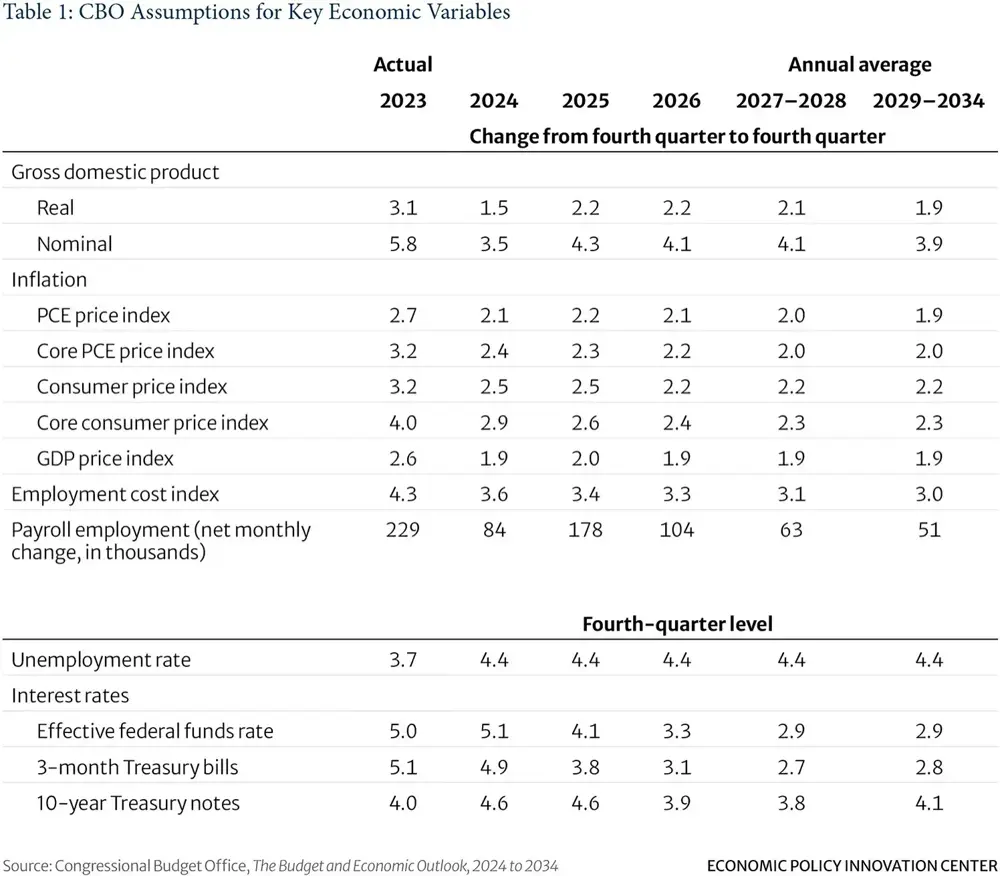
First and perhaps most obviously, there is a pronounced decrease in the inflation estimates for 2024 through 2026 but not a comparably sharp decline in interest rates. The CPI and the PCE drop, respectively, 60 and 70 basis points between 2023 and 2024, and the CPI declines further through 2026. The “core” versions of each index (that is, the index minus highly volatile components like food and energy) steadily decline through 2026. If that’s the case with the price indexes, why do interest rates stay relatively rigid in 2024 before declining through 2026?
The answer to that question brings us to the second interesting point: CBO’s forecast reflects a widespread view among economists that the Fed is unconvinced about the trend in inflation. That is, the Fed recognizes the gains its interest rate policy has made against inflation, but it has not yet announced victory. Thus, rates remain high in the short run. In the longer run, CBO assumes that the Fed has beaten inflation, certainly by the end of 2024, and both metrics decline thereafter.
Several interesting and challenging points stand out when thinking about CBO’s interest rate and inflation forecasts. Let us start with the interesting points.
First and perhaps most obviously, there is a pronounced decrease in the inflation estimates for 2024 through 2026 but not a comparably sharp decline in interest rates. The CPI and the PCE drop, respectively, 60 and 70 basis points between 2023 and 2024, and the CPI declines further through 2026. The “core” versions of each index (that is, the index minus highly volatile components like food and energy) steadily decline through 2026. If that’s the case with the price indexes, why do interest rates stay relatively rigid in 2024 before declining through 2026?
The answer to that question brings us to the second interesting point: CBO’s forecast reflects a widespread view among economists that the Fed is unconvinced about the trend in inflation. That is, the Fed recognizes the gains its interest rate policy has made against inflation, but it has not yet announced victory. Thus, rates remain high in the short run. In the longer run, CBO assumes that the Fed has beaten inflation, certainly by the end of 2024, and both metrics decline thereafter.
 Now, let us turn to the challenging points.
First, if CBO is right about a downturn in the economy in 2024, how certain should we, CBO’s readers, be about interest rates staying relatively high? There is a significant probability that a downturn in the growth rate and a rise in unemployment might prompt the Fed to stimulate the economy through lower interest rates, even if inflation has not been whipped, to use Gerald Ford’s terminology.
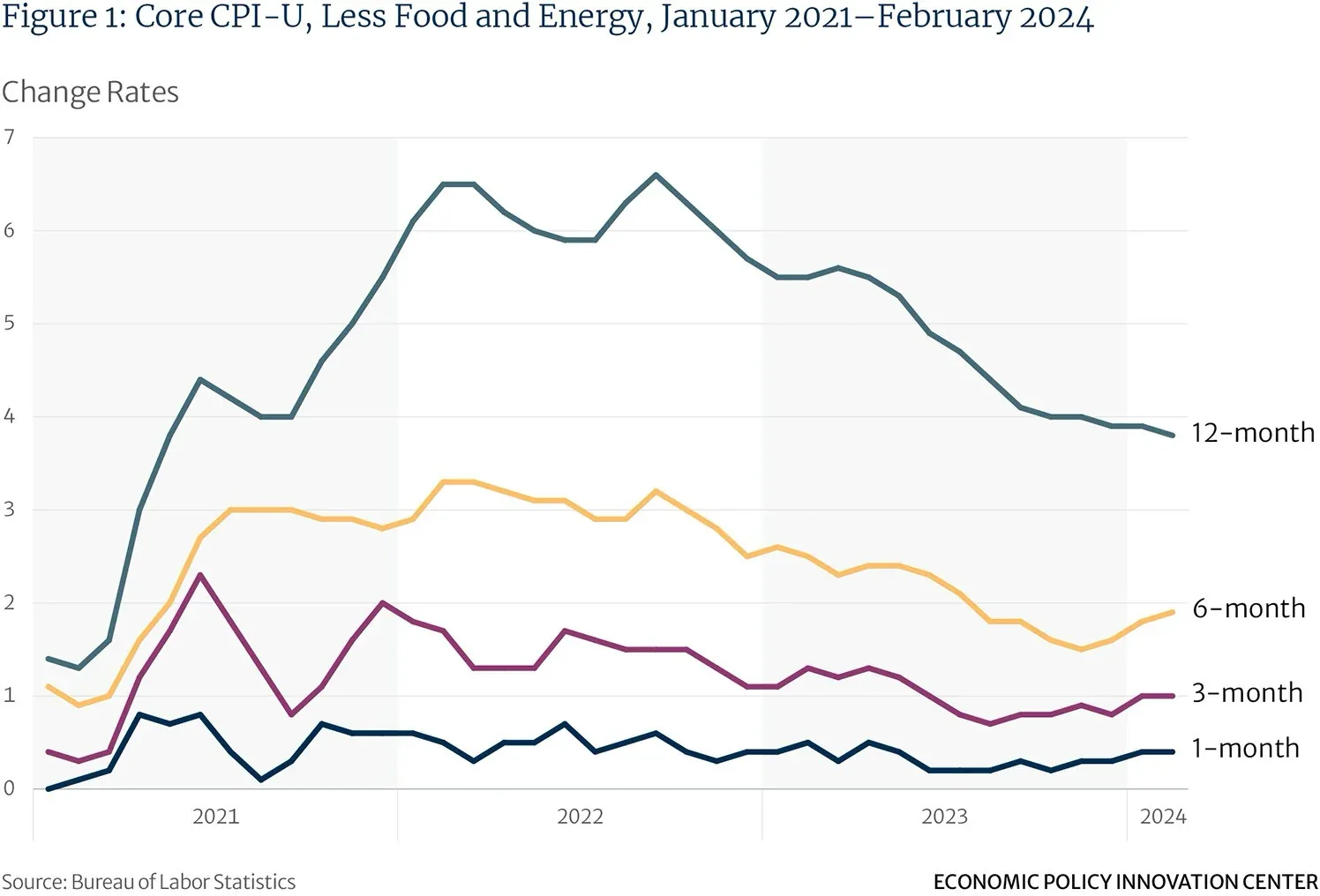
Second, is inflation even trending down? If we subtract from the CPI all-urban series (the benchmark inflation metric) the volatile food and energy components, it is possible to see in this “core” CPI a renewal of inflation pressures. Figure 1 below shows four monthly change rates: 1-month, 3-months, 6-months, and 12-months. The first three trend lines are turning up, which implies that the 12-month (or year-over-year rate) will turn up next. So, again, is the CPI falling or rising?
Third, if CPI turns up in 2024 rather than down, as CBO predicts, then key budget parameters, like the Social Security cost of living adjustment and the defense outlays will be bigger budgetary elements than CBO expects in the budget portion of the Outlook.
When all this limited evidence from the Report is combined with recent data, the message for policymakers is straightforward: they need to be especially cautious in their budget work this year until there’s more clarity on these two key economic variables. Badly missing the assumptions on these key economic variables could mean even worse misses in future budgets.
Now, let us turn to the challenging points.
First, if CBO is right about a downturn in the economy in 2024, how certain should we, CBO’s readers, be about interest rates staying relatively high? There is a significant probability that a downturn in the growth rate and a rise in unemployment might prompt the Fed to stimulate the economy through lower interest rates, even if inflation has not been whipped, to use Gerald Ford’s terminology.
Second, is inflation even trending down? If we subtract from the CPI all-urban series (the benchmark inflation metric) the volatile food and energy components, it is possible to see in this “core” CPI a renewal of inflation pressures. Figure 1 below shows four monthly change rates: 1-month, 3-months, 6-months, and 12-months. The first three trend lines are turning up, which implies that the 12-month (or year-over-year rate) will turn up next. So, again, is the CPI falling or rising?
Third, if CPI turns up in 2024 rather than down, as CBO predicts, then key budget parameters, like the Social Security cost of living adjustment and the defense outlays will be bigger budgetary elements than CBO expects in the budget portion of the Outlook.
When all this limited evidence from the Report is combined with recent data, the message for policymakers is straightforward: they need to be especially cautious in their budget work this year until there’s more clarity on these two key economic variables. Badly missing the assumptions on these key economic variables could mean even worse misses in future budgets.