
Testimony
Remarks before Congress by Dr. Bill Beach on "Reducing America’s National Debt: Rooting Out Federal Waste, Fraud, and Overregulation"
May 14, 2026 · William W. Beach, D. Phil.


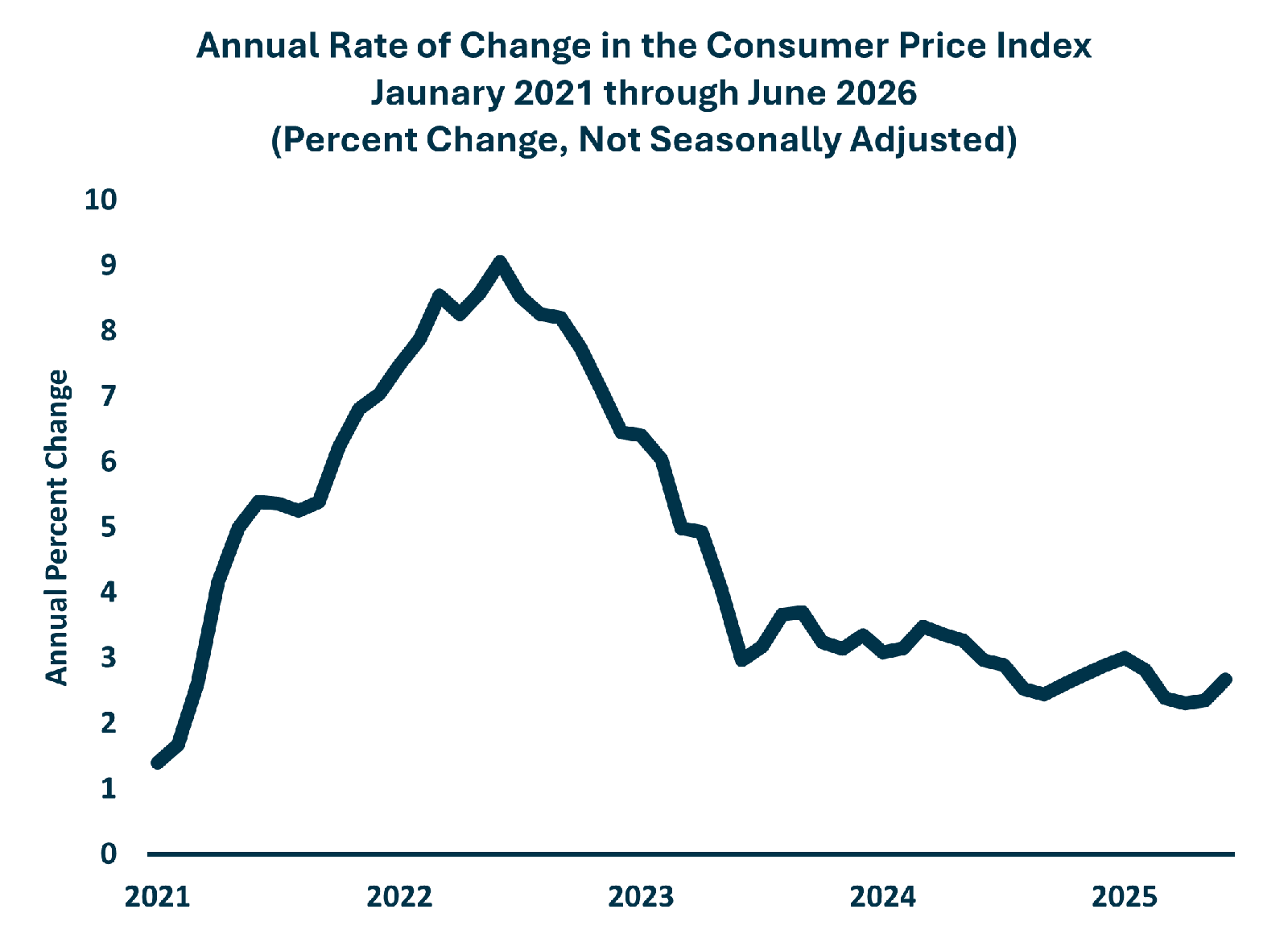 These three components have some of the largest weights (or greatest influence) on month-to-month movements in the CPI. The relatively small change in the shelter price index of 0.2 percent had a large effect on the CPI, since the weight for that component is 35.473. That means that about 35 percent of each month’s overall index number comes from shelter alone. Energy has an Index weight of 6.379, and food is weighted at 13.644 percent.
Shelter prices clearly are not subject to import duties, and they have been running at an annual clip of 3.8 percent this past year. Energy does contain an import component. The U.S. imports about 600,000 to 800,000 barrels of refined gasoline per week. However, that’s only about 7 percent of the total average weekly consumption of gasoline. The country also imports electricity, primarily from Canada. However, retail electricity imports only accounted for about 1 percent of total retail consumption.
While shelter and energy price changes probably cannot be attributed to higher tariff rates, that is not the case with some food items. This commodity group contains many items that cannot be stockpiled when tariffs are low, like many durable goods purchased in large quantities prior to April 2nd. In addition, many important food items are imported. Among the heavily imported items, these were up in price in June over May: Fresh fruits (1.3 percent), citrus fruits (2.3 percent), lettuce (1.1 percent), coffee (2.2 percent), beef and veal (2 percent), and poultry (0.6 percent).
BLS’s July 17 report on import and export prices, released several days after the CPI report, confirmed that some of the CPI increases probably had roots in import price increases. Edible vegetables increased by 2.5 percent from May to June, tomatoes by 4.7 percent, chilled vegetables by 3.4 percent, frozen vegetables by 0.6 percent, and edible fruit and nuts by 1.4 percent.
These three components have some of the largest weights (or greatest influence) on month-to-month movements in the CPI. The relatively small change in the shelter price index of 0.2 percent had a large effect on the CPI, since the weight for that component is 35.473. That means that about 35 percent of each month’s overall index number comes from shelter alone. Energy has an Index weight of 6.379, and food is weighted at 13.644 percent.
Shelter prices clearly are not subject to import duties, and they have been running at an annual clip of 3.8 percent this past year. Energy does contain an import component. The U.S. imports about 600,000 to 800,000 barrels of refined gasoline per week. However, that’s only about 7 percent of the total average weekly consumption of gasoline. The country also imports electricity, primarily from Canada. However, retail electricity imports only accounted for about 1 percent of total retail consumption.
While shelter and energy price changes probably cannot be attributed to higher tariff rates, that is not the case with some food items. This commodity group contains many items that cannot be stockpiled when tariffs are low, like many durable goods purchased in large quantities prior to April 2nd. In addition, many important food items are imported. Among the heavily imported items, these were up in price in June over May: Fresh fruits (1.3 percent), citrus fruits (2.3 percent), lettuce (1.1 percent), coffee (2.2 percent), beef and veal (2 percent), and poultry (0.6 percent).
BLS’s July 17 report on import and export prices, released several days after the CPI report, confirmed that some of the CPI increases probably had roots in import price increases. Edible vegetables increased by 2.5 percent from May to June, tomatoes by 4.7 percent, chilled vegetables by 3.4 percent, frozen vegetables by 0.6 percent, and edible fruit and nuts by 1.4 percent.
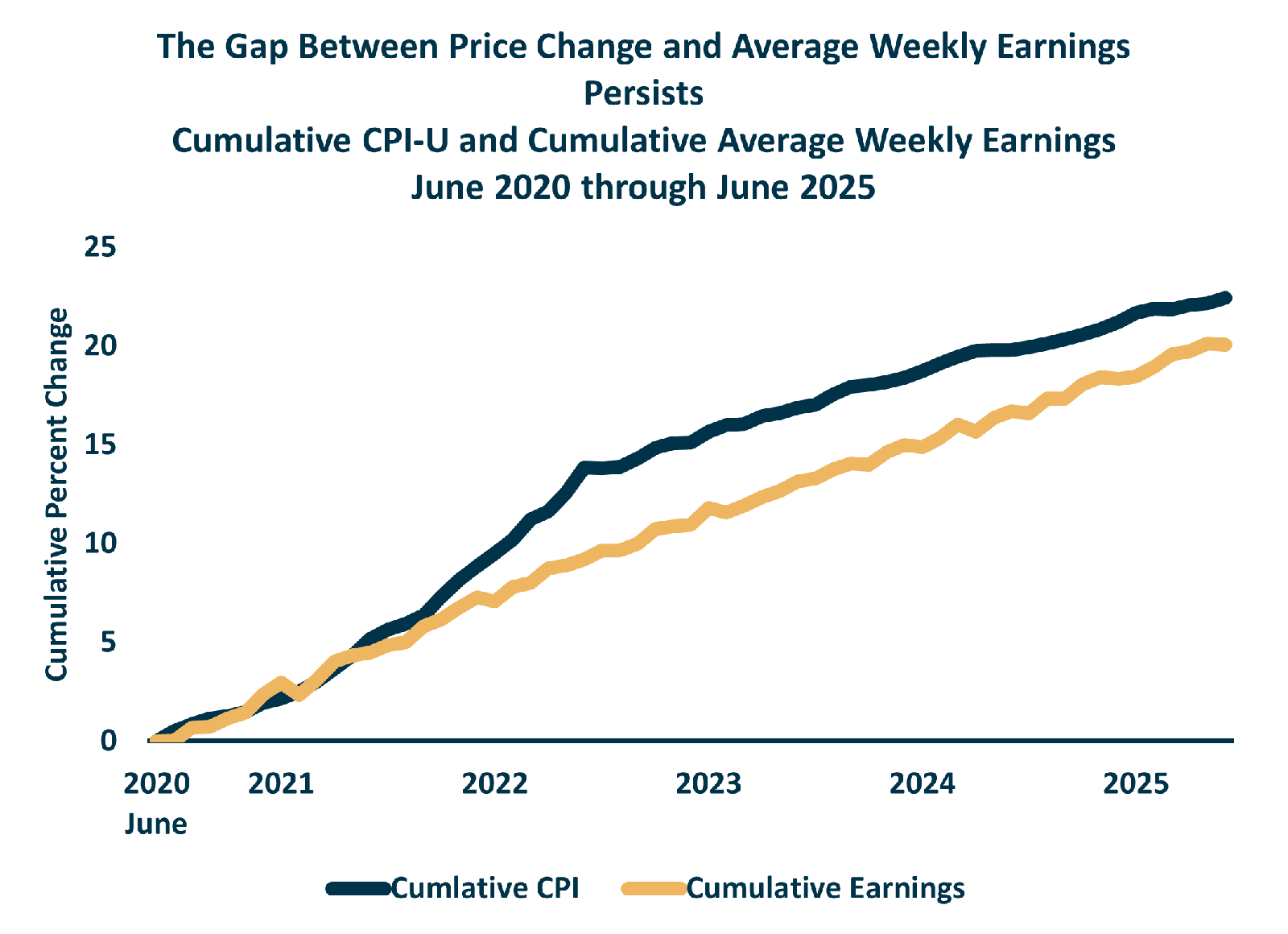 These price changes are important for the purchasing power of workers. The average weekly earnings of all private sector employees declined slightly in June compared to May. The annual rate of change dropped from 3.81 percent to 3.41 percent between May and June, and that marked the slowest annual rate of growth since December of 2024. At the same time the monthly and annual rate of change in the CPI grew. As mentioned above, the June CPI rate is 2.7 percent. Thus, workers lost some of their regained purchasing power on average over the last two months, as the graph above illustrates.
Are these changes a cause for concern? Probably not. The cumulative change in private sector weekly earnings has fluctuated in the same range as last month’s slightly negative result. Further, CPI is rising, but it is hard to find a firm connection yet to imports.
Thus, like last month, analysts and policy makers need to wait for further information on private sector earnings and consumer price changes. The Trump Administration believes that its tariff policies will, indeed, ignite further employment and income growth in the U.S. economy while not restarting inflation. Economists and certainly the policy makers in the White House know how difficult it will be to pass through this narrow gate to greater prosperity. That said, President Trump appears to be successfully leading that passage, at least so far.
These price changes are important for the purchasing power of workers. The average weekly earnings of all private sector employees declined slightly in June compared to May. The annual rate of change dropped from 3.81 percent to 3.41 percent between May and June, and that marked the slowest annual rate of growth since December of 2024. At the same time the monthly and annual rate of change in the CPI grew. As mentioned above, the June CPI rate is 2.7 percent. Thus, workers lost some of their regained purchasing power on average over the last two months, as the graph above illustrates.
Are these changes a cause for concern? Probably not. The cumulative change in private sector weekly earnings has fluctuated in the same range as last month’s slightly negative result. Further, CPI is rising, but it is hard to find a firm connection yet to imports.
Thus, like last month, analysts and policy makers need to wait for further information on private sector earnings and consumer price changes. The Trump Administration believes that its tariff policies will, indeed, ignite further employment and income growth in the U.S. economy while not restarting inflation. Economists and certainly the policy makers in the White House know how difficult it will be to pass through this narrow gate to greater prosperity. That said, President Trump appears to be successfully leading that passage, at least so far.