Testimony
Remarks before Congress by Dr. Bill Beach on "Reducing America’s National Debt: Rooting Out Federal Waste, Fraud, and Overregulation"
May 14, 2026 · William W. Beach, D. Phil.


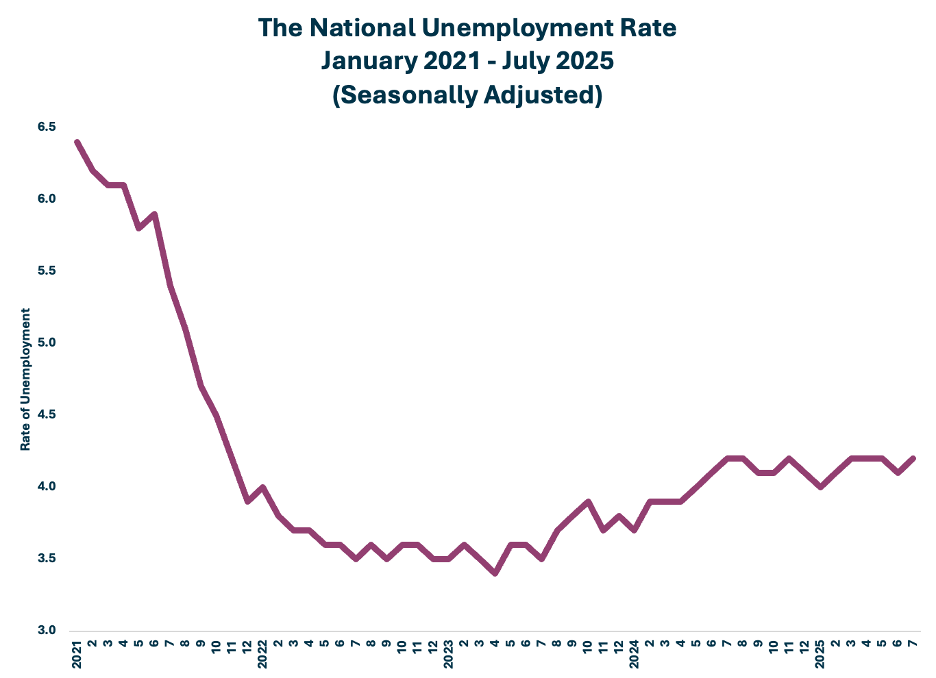
 Other labor force indicators also signaled potential problems in the US economic performance. The overall unemployment rate notched up from 4.1 to 4.2 percent, roughly in the range of 4.0 to 4.2 percent that it has been in since the middle of 2024. However, the report contained a statistically significant increase in the number of long-term unemployed: this indicator covers those individuals who continue to look for work after 27 or more weeks of unemployment, and it rose by 179,000 in July. BLS now estimates that 1,826,000 workers have been looking for work for 27 weeks or more.
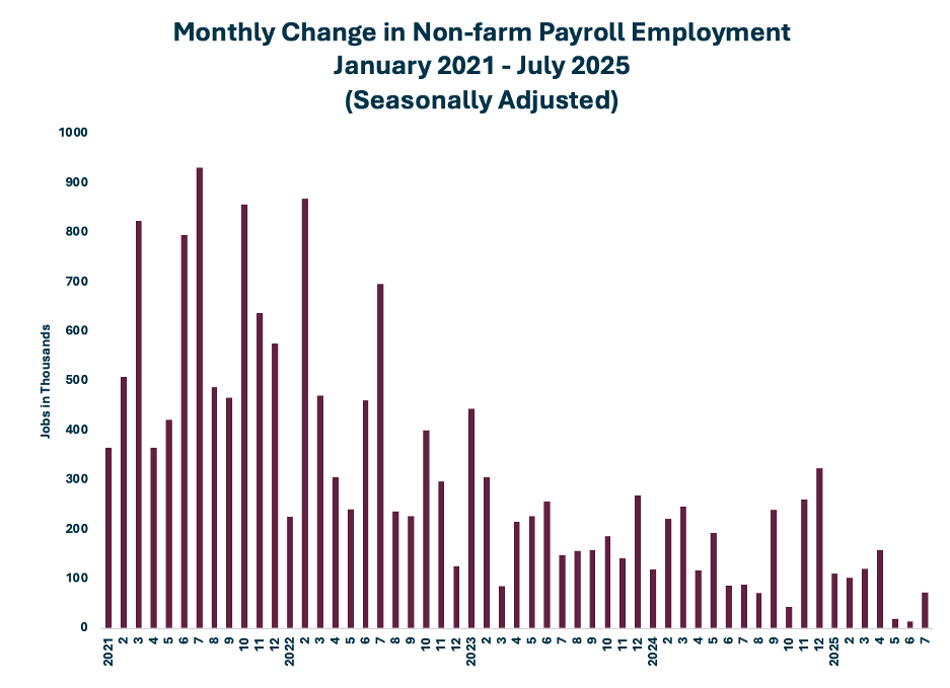
 The headline jobs number of 73,000 masks two major public policy trends that shape today’s labor market: reductions in immigration and increases in health care spending.
The administration’s successful efforts to reduce illegal immigration has reduced labor force growth and hiring for low-skilled, low-paid jobs. In 2023, the job creation rate needed to keep the unemployment rate from growing stood somewhere near 160,000 per month. Today it likely is below 100,000, with one economist estimating that the rate is 86,000 new jobs. There’s not lack of job openings, as the latest Job Openings and Labor Turnover report from BLS shows: the Bureau reported that June job openings stood at 7,437,000, which is almost exactly the level of June 2024. So, the 73,000-job estimate may just be a function of much slower labor force growth (which declined in July by 38,000), given the dramatic decreases in immigration. That slower labor force growth is one reason the unemployment rate did not increase more than 0.1 of a percent.
The second policy driven factor shaping today’s report and recent economic performance generally is the steady growth in health care spending. BLS estimates that 88 percent of July’s private sector job growth stems from one sector: health care and social assistance. That sector increased by 73,300 in the month, followed in a distant second by retail trade at 15,700. This dominance of health care in the jobs report echoes the Bureau of Economic Analysis’s recent report on changes in Gross Domestic Product. About 63 percent in the growth of household services consumption in the second quarter of 2025 is due to health care spending, and this sector contributed to which accounted 33 percent of the total change in personal consumption spending.
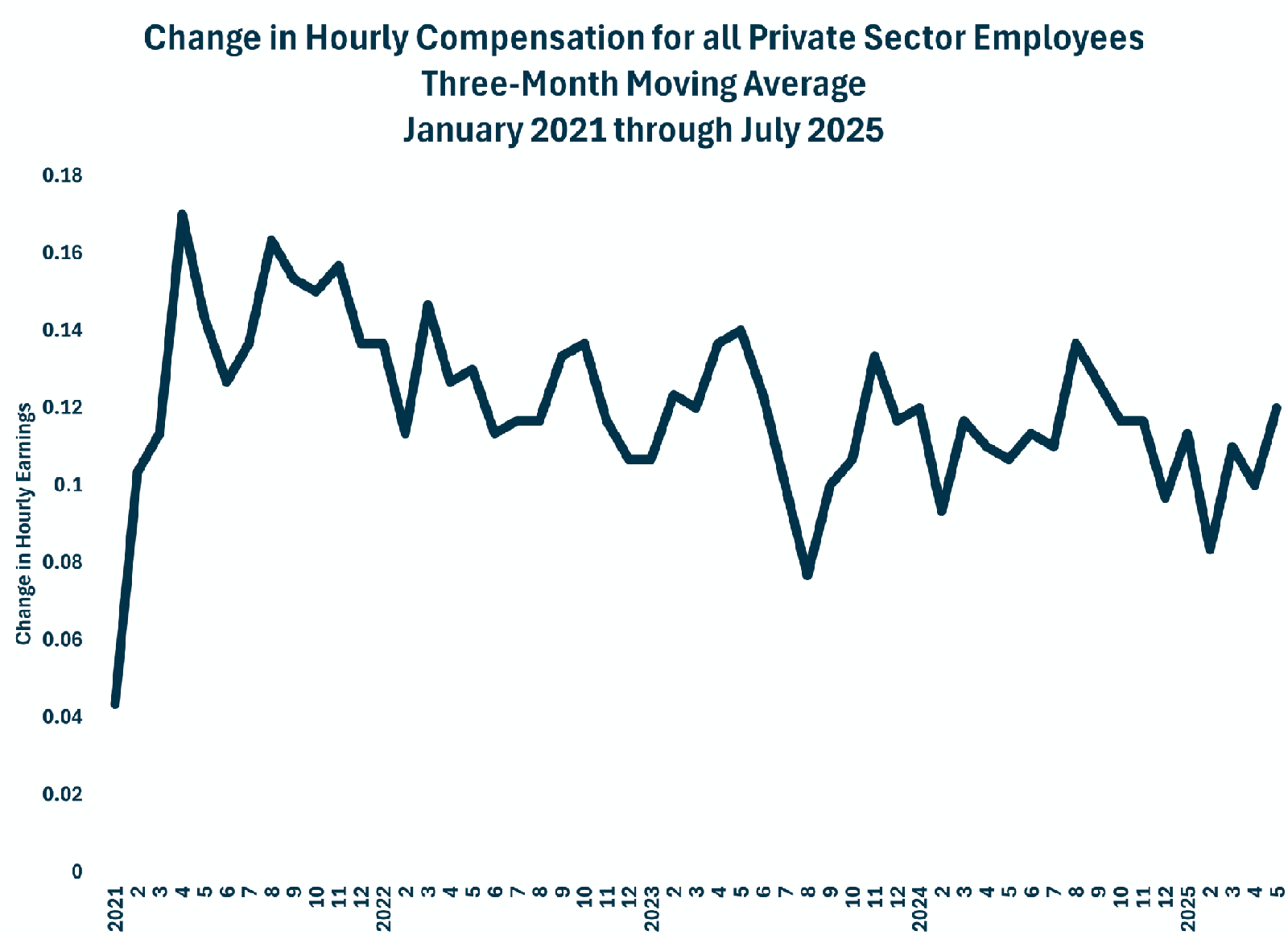
Two other important policy indicators that appear each month in the jobs reports are changes in the average worker’s earnings and changes in manufacturing employment. By restricting immigration and promoting economic growth, the administration aims at improving the earnings of average workers, and the earnings indicators in the jobs report appear to be improving. Average hourly earnings rose 12 cents in July and now stand at $36.44.
The headline jobs number of 73,000 masks two major public policy trends that shape today’s labor market: reductions in immigration and increases in health care spending.
The administration’s successful efforts to reduce illegal immigration has reduced labor force growth and hiring for low-skilled, low-paid jobs. In 2023, the job creation rate needed to keep the unemployment rate from growing stood somewhere near 160,000 per month. Today it likely is below 100,000, with one economist estimating that the rate is 86,000 new jobs. There’s not lack of job openings, as the latest Job Openings and Labor Turnover report from BLS shows: the Bureau reported that June job openings stood at 7,437,000, which is almost exactly the level of June 2024. So, the 73,000-job estimate may just be a function of much slower labor force growth (which declined in July by 38,000), given the dramatic decreases in immigration. That slower labor force growth is one reason the unemployment rate did not increase more than 0.1 of a percent.
The second policy driven factor shaping today’s report and recent economic performance generally is the steady growth in health care spending. BLS estimates that 88 percent of July’s private sector job growth stems from one sector: health care and social assistance. That sector increased by 73,300 in the month, followed in a distant second by retail trade at 15,700. This dominance of health care in the jobs report echoes the Bureau of Economic Analysis’s recent report on changes in Gross Domestic Product. About 63 percent in the growth of household services consumption in the second quarter of 2025 is due to health care spending, and this sector contributed to which accounted 33 percent of the total change in personal consumption spending.
Two other important policy indicators that appear each month in the jobs reports are changes in the average worker’s earnings and changes in manufacturing employment. By restricting immigration and promoting economic growth, the administration aims at improving the earnings of average workers, and the earnings indicators in the jobs report appear to be improving. Average hourly earnings rose 12 cents in July and now stand at $36.44.
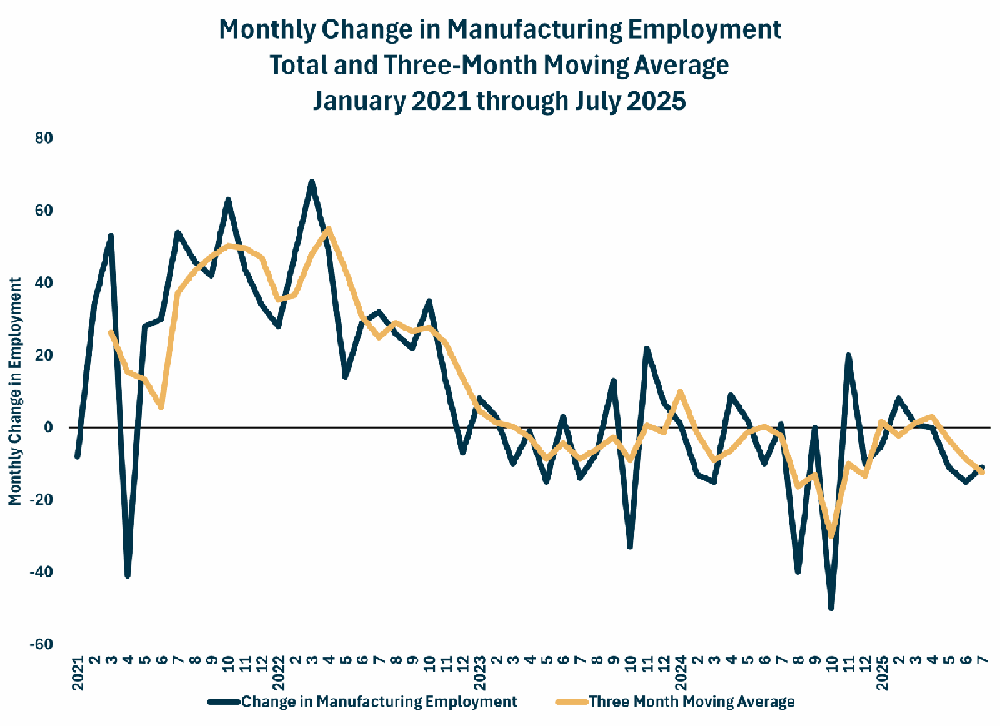
 The administration also intends its trade and immigration policies to support growth in manufacturing employment. To that end, several recent trade agreements have included substantial investments in the US economy. That would be good, since manufacturing employment has been steadily dropping in recent years. The past month was no exception: employment in manufacturing declined in July by 11,000, most of which was centered in the non-durable portion of that sector.