Testimony
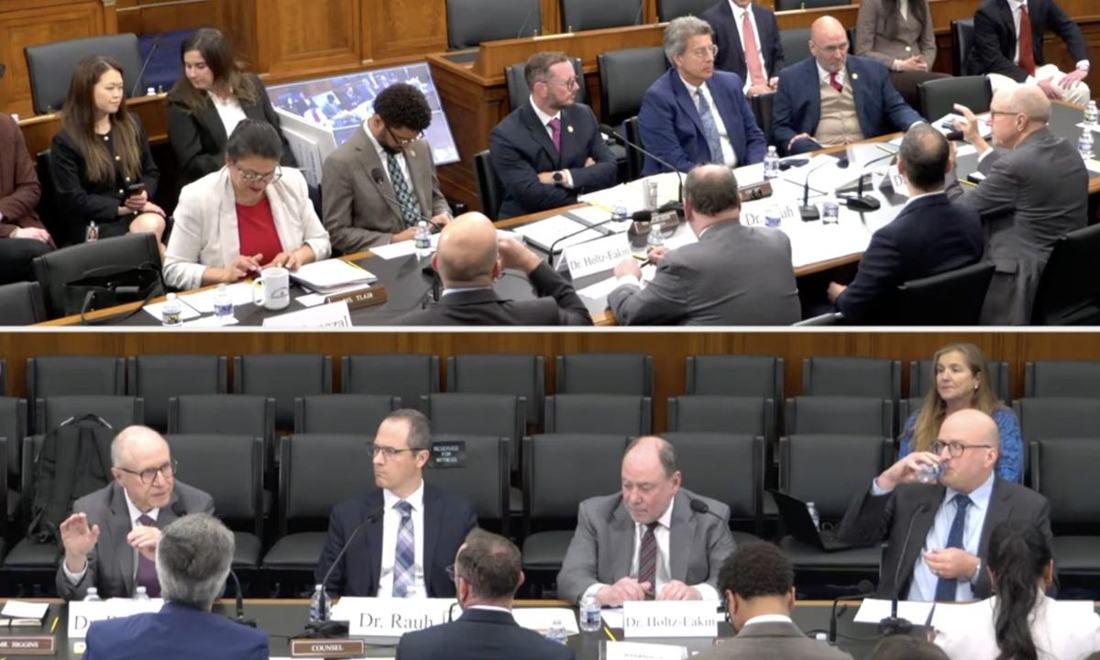
Remarks before Congress by Dr. Bill Beach on "Reducing America’s National Debt: Rooting Out Federal Waste, Fraud, and Overregulation"
May 14, 2026 · William W. Beach, D. Phil.

 In addition to these tax credits, the Act authorizes outlays for expanding the nation’s forests and improving our oceanic territory as steps toward naturally capturing and transforming atmospheric carbon. The Congressional Budget Office (CBO) estimated direct spending on climate provisions such as these to cost $47 billion over 10 years.
The main problem many have with the IRA is with the tax credits. They now appear to be far more costly than originally envisioned and far more likely to incentivize tax avoidance strategies rather than actions to counter global warming.
Analysts at CBO and the staff of the Joint Committee on Taxation (JCT) concluded in 2022 that the tax credits would reduce federal revenues by around $223 billion. This revenue reduction occurs because a taxpayer, most likely a business, chooses to use a tax credit to reduce a mandated tax liability.
However, predicting the rate at which taxpayers will take tax credits depends on many factors that are quite hard to predict. For example, analysts at the JCT and CBO would need to accurately assess when individuals and businesses would decide over the 10-year budget window to reduce their tax liabilities by exercising one of these credits.
Moreover, these analysts would need good guesses on how fast the green energy sector would develop and how extensive that development would be over a 10-year period. Indeed, CBO and JCT would need a good prediction of how rapidly the technology needed for decarbonization would develop, the ease of access to apply for tax credits or subsidies, and many other factors. For instance, the clean electricity production tax credit depends mightily on the technology required to produce clean electricity. Should that technology develop either more slowly than predicted, then the “tax expenditure” estimates will be off, perhaps wildly wrong.
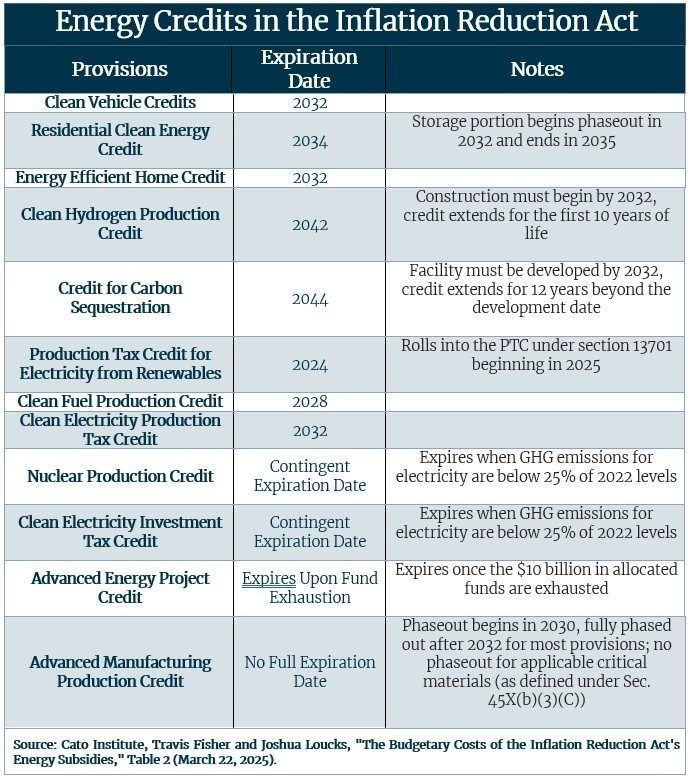
As the figure below shows, that is probably what has happened. The actual adoption rates for these tax credits far exceed the initial assumptions included in the JCT and CBO cost estimates.
In addition to these tax credits, the Act authorizes outlays for expanding the nation’s forests and improving our oceanic territory as steps toward naturally capturing and transforming atmospheric carbon. The Congressional Budget Office (CBO) estimated direct spending on climate provisions such as these to cost $47 billion over 10 years.
The main problem many have with the IRA is with the tax credits. They now appear to be far more costly than originally envisioned and far more likely to incentivize tax avoidance strategies rather than actions to counter global warming.
Analysts at CBO and the staff of the Joint Committee on Taxation (JCT) concluded in 2022 that the tax credits would reduce federal revenues by around $223 billion. This revenue reduction occurs because a taxpayer, most likely a business, chooses to use a tax credit to reduce a mandated tax liability.
However, predicting the rate at which taxpayers will take tax credits depends on many factors that are quite hard to predict. For example, analysts at the JCT and CBO would need to accurately assess when individuals and businesses would decide over the 10-year budget window to reduce their tax liabilities by exercising one of these credits.
Moreover, these analysts would need good guesses on how fast the green energy sector would develop and how extensive that development would be over a 10-year period. Indeed, CBO and JCT would need a good prediction of how rapidly the technology needed for decarbonization would develop, the ease of access to apply for tax credits or subsidies, and many other factors. For instance, the clean electricity production tax credit depends mightily on the technology required to produce clean electricity. Should that technology develop either more slowly than predicted, then the “tax expenditure” estimates will be off, perhaps wildly wrong.
As the figure below shows, that is probably what has happened. The actual adoption rates for these tax credits far exceed the initial assumptions included in the JCT and CBO cost estimates.
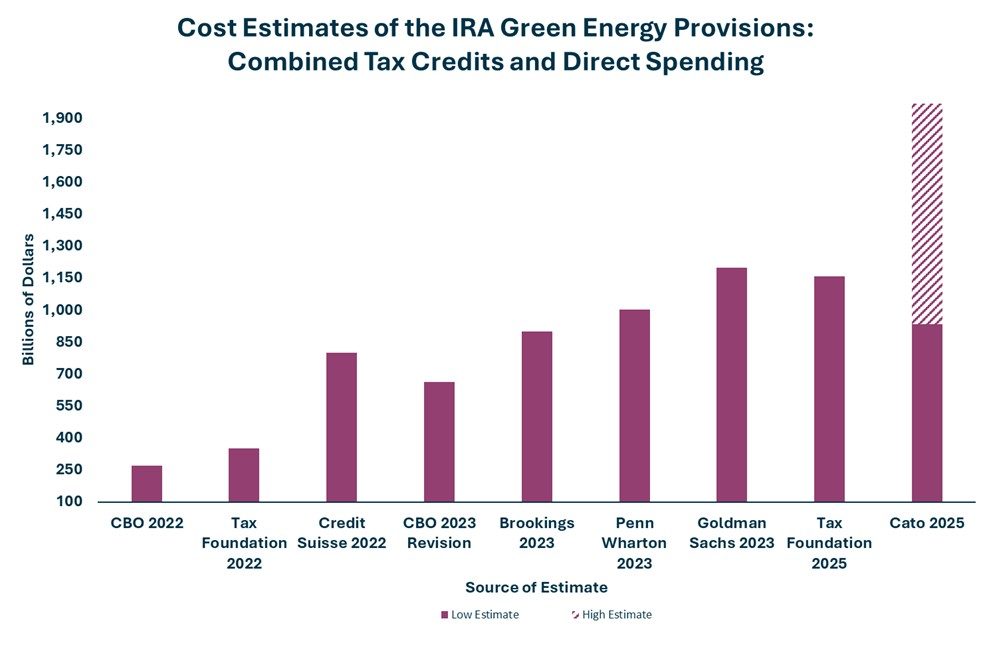 In CBO’s 2022 score, they estimated the total fiscal impact of the green energy credits to be around $270 billion — with $47 billion in direct spending and $223 billion from tax credits. As the actual take-up rate has materialized, cost estimates have shown the IRA to be significantly more expensive than originally projected. A recent study by the Cato Institute estimated that, depending on the take-up rates used, the “green” tax credits and energy provisions could have a fiscal impact of between $936 billion and $1.97 trillion over the next ten years.
Congress has every reason for taking a second look at the energy tax credits and subsidies in the Inflation Reduction Act. The credits are costing too much, with little prospect of the upward cost curve returning to its forecasted path. Moreover, the promised decarbonization has failed to materialize, but the budget deficits continue to mount and threaten economic activity. It is past time for Congress to reassess the resources it should devote to the Green New Deal agenda and use reconciliation to repeal the IRA green energy provisions.
In CBO’s 2022 score, they estimated the total fiscal impact of the green energy credits to be around $270 billion — with $47 billion in direct spending and $223 billion from tax credits. As the actual take-up rate has materialized, cost estimates have shown the IRA to be significantly more expensive than originally projected. A recent study by the Cato Institute estimated that, depending on the take-up rates used, the “green” tax credits and energy provisions could have a fiscal impact of between $936 billion and $1.97 trillion over the next ten years.
Congress has every reason for taking a second look at the energy tax credits and subsidies in the Inflation Reduction Act. The credits are costing too much, with little prospect of the upward cost curve returning to its forecasted path. Moreover, the promised decarbonization has failed to materialize, but the budget deficits continue to mount and threaten economic activity. It is past time for Congress to reassess the resources it should devote to the Green New Deal agenda and use reconciliation to repeal the IRA green energy provisions.