Addressing 2024 Rulemakings is Step #1 of Sweeping Regulatory Reform
The Biden Administration has imposed more regulatory costs in 2024 than the Obama Administration imposed across
all eight years of that administration. That is astounding, especially since the Biden Administration has
prioritized subjective rather than quantitative analysis of regulatory impacts. It also presents a monumental task to the incoming Trump Administration, which if left on its own will have to work around the clock for four years to overturn those rules one at a time through the arduous
rulemaking process. By working together, President Trump and Congress can use the enhanced power of the MRRA and CRA to overturn hundreds of regulations at a time,
permanently ending rules that seem to return in increasingly costly form every few years. Now is the time to lock in major reform.
How the MRRA Would Amend the CRA
The MRRA would amend the CRA in two important ways.
First, it would allow Congress to bundle multiple rules into a single joint resolution of disapproval, cutting down on the amount of floor time needed to overturn new rules. This would facilitate sweeping deregulatory packages to be voted on by simple majority votes.
Second, it would expand the CRA’s “lookback” period to the entire final year of a president’s term (January 20, 2024 through the end of the Biden Administration), significantly increasing the number of rules that may be reviewed by the new Congress. This would allow the 119
th Congress to overturn the many rules promulgated early in 2024, prior to what was widely thought to be the start of the CRA’s lookback period (now likely in August 2024).
The Potential Economic Impact of the MRRA
According to data from the American Action Forum (AAF), the cost of rules finalized since January 20
th of this year is an unprecedented and unbearable $1.34
trillion dollars (subtract their
early January data from
their current total; see also their
running tally). That’s about 50%
more regulatory cost than the Obama Administration imposed over
eight years. Note, also, that this sum only includes the self-identified cost of final rules, not the impacts of other actions like proposed but not yet finalized rules, significant guidance, and other informal regulatory actions that fail to include regulatory impact analysis. Those actions, while not included in this cost total,
may still be overturned by the CRA/MRRA.
Procedural Reform that Empowers Congressional Oversight
While the MRRA could create opportunities for important legislative discussions and actions on federal rules, it is important to note that the MRRA itself is not a deregulatory action. It is, rather, a procedural vote that would enhance Congress’s ability to play a more direct, effective role in supervising the manner in which its delegated lawmaking power is exercised. Members may have varied perspectives on individual rules, but in general, Congress should have more ability to oversee the exercise of its constitutional power.
The House Takes a Significant Step to Help DOGE and President Trump with Deregulation
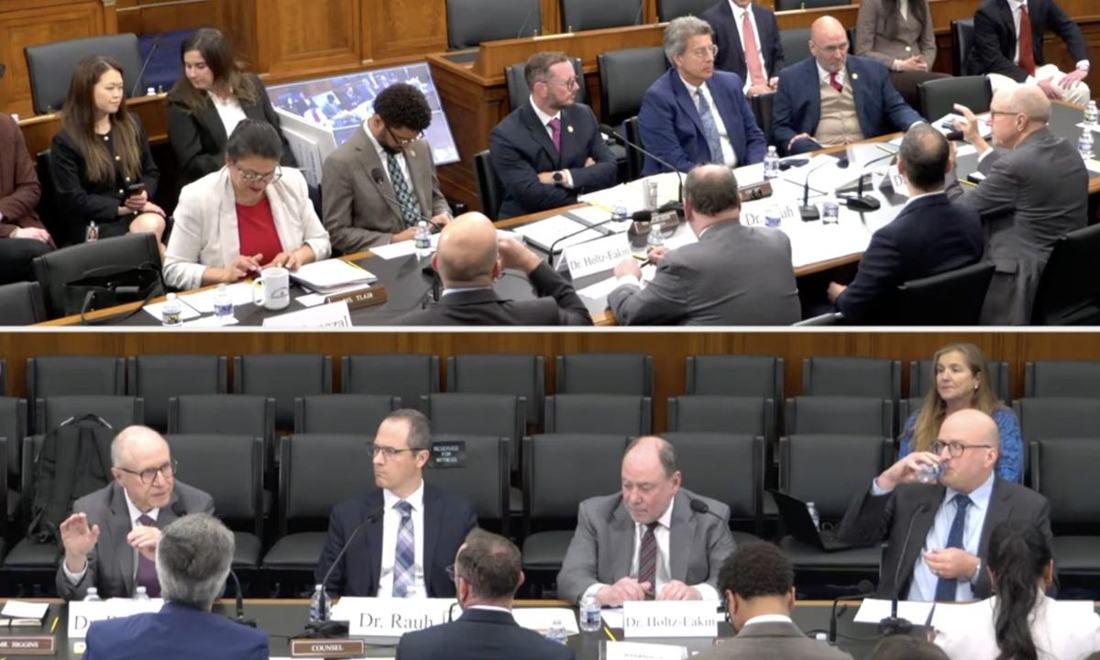
The MRRA represents an important reassertion of Article I control over the administrative state, which would enable Congress, DOGE, and President Trump to work together to overturn dozens and potentially hundreds of unduly burdensome rules. The MRRA’s sponsor, Congressman Andy Biggs, co-sponsors Harriet Hageman, Andrew Ogles, Scott Perry, Josh Brecheen, and Blake Moore, the House Judiciary Committee, and the House leadership team should be commended for their extraordinary leadership on this issue.
Recent administrations have spent months and years overturning only the latest actions of the outgoing administration. That may be doubly true for the incoming administration, which will be contending with the single most regulatory year on record. With the augmented power of the CRA/MRRA, Congress could work with President Trump and DOGE to overturn –
quickly and permanently – hundreds of recent rules. That would free the Trump Administration to focus more swiftly and fully on other key policy reforms.
Conclusion
President Trump and Congress won a mandate for reform, including for even more of the deregulation that was a hallmark of President Trump’s first term in office. The CRA is an important part of regulatory reform, but it has only been used to overturn
20 rules thus far. At times of single-party control in Washington, the primary limiting features of the CRA are the inability to bundle rules into a single resolution of disapproval and the related need to use limited Senate floor time for presidential nominations and other legislative priorities. The MRRA addresses both of those factors, facilitating significant and lasting deregulation.
For Further Reading