The
One Big Beautiful Bill (OBBB) Act includes provisions that address many of President Trump’s priorities, including his signature issue of
border security.
It is important for Americans to know how the OBBB will support border and immigration enforcement, and to understand the context that led to such significant policy action.
Biden’s Border Chaos
During the four years of the Biden administration, U.S. Customs and Border Patrol (CBP) encountered roughly 11 million “inadmissible alien” encounters, with the volume exceeding 100,000 per month for 48 consecutive months and exceeding 300,000 per month in late 2023.
This not only overwhelmed the immigration system’s ability to process citizenship and asylum applications but also led to a costly humanitarian crisis.
A substantial financial price has been paid by American taxpayers. Many illegal aliens
become eligible for taxpayer-funded welfare programs, costing billions of dollars annually. These benefits, some of which are outright cash payments through the tax code or other direct checks, are a significant pull factor for illegal immigration.
The Congressional Budget Office (CBO) estimated that by FY 2034, outlays for benefits provided to immigrants in the Biden border surge population and their children will total $177 billion.
The federal government also spent
more than $30 billion between 2021 and 2024 on food,
shelter, and other services for unauthorized immigrants, even including free transportation across the country. State and local governments spent billions more on such services, often stressing available resources for citizens, and many communities near the border struggled to manage the relentless flow of migrants.
Worse, the crisis was one of choice. The Biden administration’s policies were
deliberate, enticing countless migrants from Central and South America (and even from the rest of the world,
including China) to make a perilous trek to the U.S. border. The avoidable nature of the problem became especially evident when illegal migration
plunged immediately upon President Trump taking office.
While there were border and immigration problems at the start of the first Trump term, the situation became considerably worse between 2021 and 2025.
In this context, President Trump and Congress were determined to enact serious changes in the OBBB.
Burnishing the Border & Security
Title IX of the OBBB authorizes over
$120 billion in resources for the Department of Homeland Security. This includes:
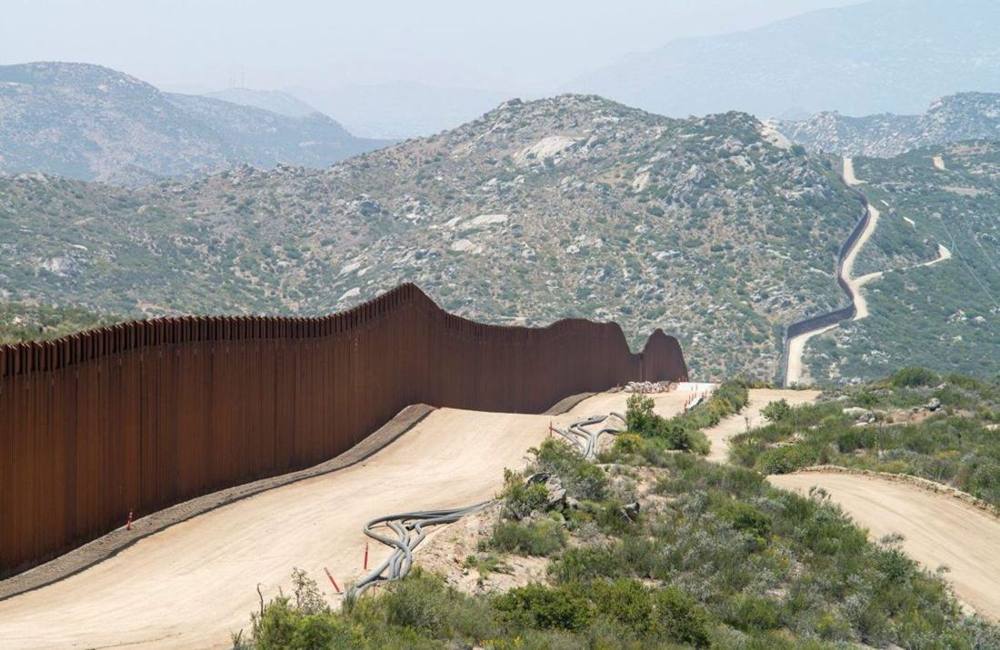
- $46.5 billion for adding to the border wall, along with related infrastructure such as sensors, access roads, and cameras.
- $45 billion for detention facilities for people taken into custody prior to deportation proceedings.
- $10 billion in grants to state and local governments affected by the migrant crisis.
- $6.1 billion to hire and retain border-related personnel.
- $6 billion for border monitoring and screening technology.
- $5 billion for border facility improvements.
- $10 billion for other border-related Homeland Security accounts.
- $1.65 billion for security at the 2028 Olympics and the 2026 World Cup.
Title X of the bill addresses enforcement of immigration laws. This
includes:
- A series of new and increased immigration fees that are projected to raise over $30 billion, offsetting most of the cost of the title.
- Roughly $30 billion for Immigration and Customs Enforcement, including hiring and retaining personnel, facility improvements, and technology enhancements.
- $5 billion for the Department of Justice’s Bureau of Prisons, including new personnel and facility maintenance.
- $3.5 billion for Department of Justice grants to state and local governments for collaborative enforcement efforts.
- $3.3 billion for the Department of Justice for immigration courts and other legal activity, investigations, and additional state and local grants.
- $2 billion for Customs and Border Patrol and other Homeland Security accounts.
- $1.2 billion for the Secret Service.
While the budget authority for these provisions is provided immediately, spending will take place over several years.
The OBBB marks a turning point in U.S. immigration policy. Better control of the border and stronger enforcement efforts should reduce the volume of illegal immigrants.
However, Congress must not assume that their work is done. They must continue to work with the Trump Administration to provide oversight and accountability for border and enforcement agencies in the years to come.