The House and Senate Budget Committees have sole authorizing jurisdiction over the Congressional Budget Office (CBO). They have long held this role since the agency’s establishment by the Congressional Budget and Impoundment Control Act of 1974.
Unlike other authorizing committees, the Budget Committees, however, are not compelled to reauthorize the agency under its jurisdiction. This is because CBO operates under a permanent authorization according to the statute, which simply states: “There is established an office of the Congress to be known as the Congressional Budget Office.”
Congress’s Budget Agency
The Congressional Budget Act sets out CBO’s basic structure and responsibilities, including its “duties and functions” and obligation to provide “public access to data.” It is clear that the agency’s first and foremost obligation is to assist Congress. Even more specifically, CBO is to prioritize the House and Senate Budget Committees in its tiered provision of that assistance.
This is notable. CBO clearly works for the Legislative Branch – atypical in comparison to the vast majority of departments and agencies authorized by Congress, which function as part of the Executive Branch. In fact, its creation is largely a response to the Executive Branch’s Office of Management and Budget.
And yet, Congress rarely revisits CBO’s mandate or organizational structure to ensure it continues to fulfill Congress’s own needs and can meet Congressional priorities. Nor is it often that the agency receives substantive direction on improving its scoring methods, transparency, or resource allocation.
Congressional Oversight
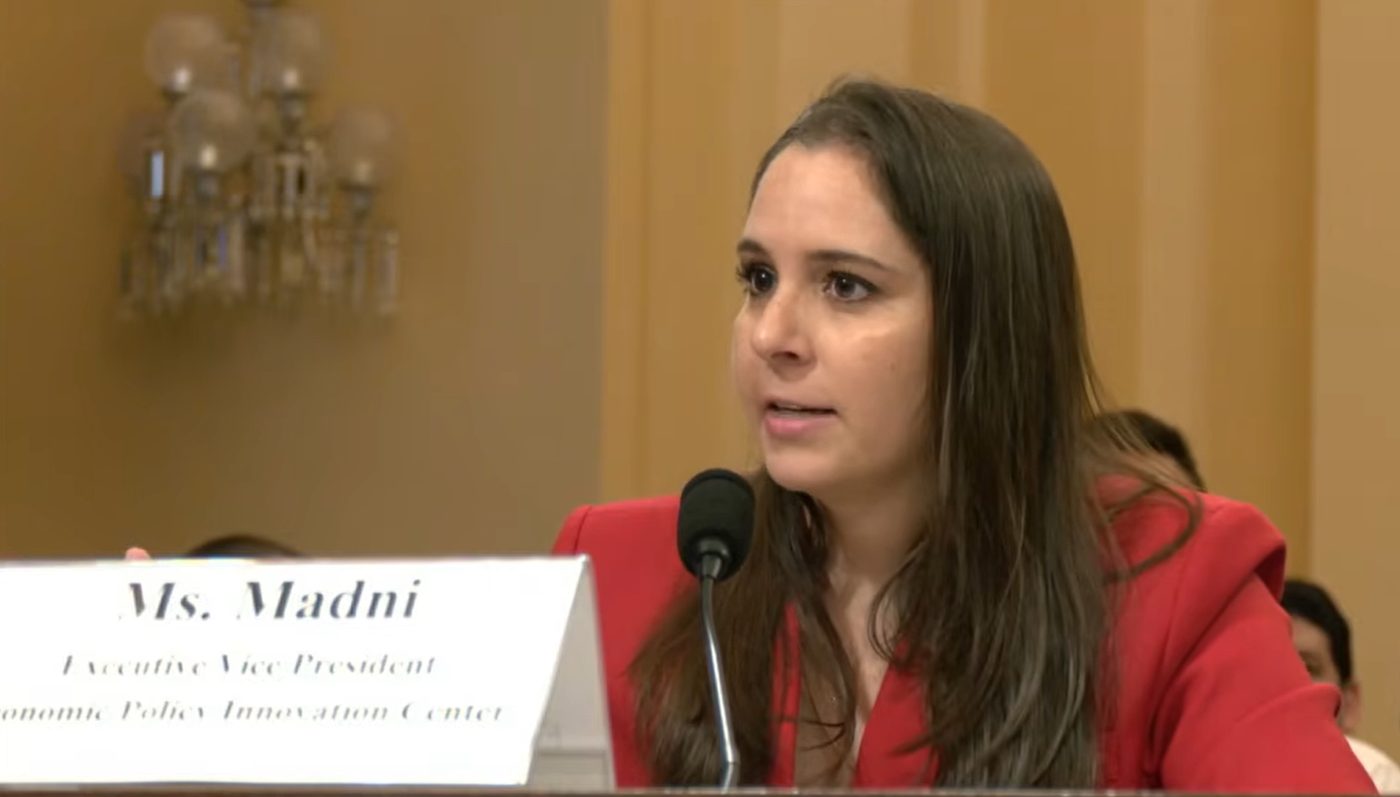
In 2018, the House Budget Committee under then-Chairman Steve Womack began a series of five hearings conducting oversight of CBO. Now, the House Budget Committee is picking up that mantle under Chairman Jodey Arrington, with a hearing this week on “Creating a Culture of Fiscal Responsibility: Assessing the Role of the Congressional Budget Office.”
This is a rare opportunity for improvements, including several essential changes discussed by my colleague Matt Dickerson that should be used to strengthen CBO.
However, there is one goal in particular that the hearing series in 2018 failed to meet that Chairman Arrington would be wise to pursue now: shifting CBO’s authorization away from permanence.
An Outdated Authorization
CBO has functioned under the same authorization since its creation in 1974. That was half a century ago. 50 years is a long time for an agency not to be reauthorized. In fact, 1974 was so long ago that there was an explicit subsection of the Congressional Budget Act that calls out the agency’s allowance to have these new-fangled computer technologies.
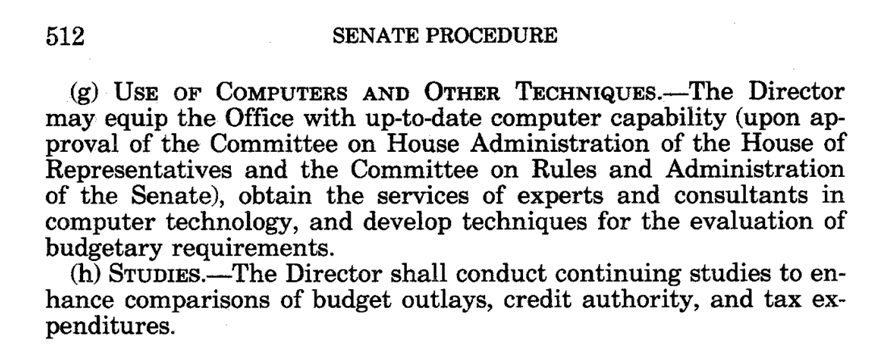
Reauthorizations serve an important role. They ensure that agencies continue to be serving an appropriate mission, continue to be relevant, and continue to be a necessary expenditure of taxpayer funds. Critically, reauthorizations are when Congress has the opportunity to reexamine and make changes to an agency’s mission, structure, and operations on a regularized basis.
Congressional review of agency operations is an essential component of the Legislative Branch’s oversight responsibility. Unfortunately, as CBO functions under a permanent authorization, it does not benefit from the regular oversight opportunity afforded by reauthorizations.
As such, the agency only receives new direction, modernization, and improvements on an ad-hoc basis. This happens, for example, at the direction of the Budget Committee Chairmen or in response to concerns from Members of Congress or the public.
Reauthorizing Is Modernizing
To a large extent, this is through no fault of CBO’s own making. After all, how can the agency be expected to implement the most modern transparency ideals when it is operating under a data transparency system approved in 1974?
In fact, over the years, CBO Directors have sought out permission directly from the Budget Committees to improve its own transparency, like creating and updating its website. Instead, the agency should be improving and modernizing on a regular basis with the help of Congressional oversight.
Now, Chairman Arrington is working to implement a culture of fiscal responsibility. That should start with an intentional look at ways to improve the Congressional Budget Office’s scoring, transparency, and resources – but it should end with a regularized reauthorization.