The National Debt and Interest
When the federal government spends more than it collects in revenue (
i.e., taxes), it must issue debt to maintain its planned level of spending.
The federal government, much like any other debtor, owes interest payments on its debt, further driving up federal expenditures. The
Congressional Budget Office estimates that net interest costs on the federal government’s debt will be more than $950 billion in FY 2025, making it one of the government’s
largest expenses.
The Treasury’s Role and Debt Auctioning
One of the responsibilities of the U.S. Department of the Treasury is managing federal debt, and it attempts to do this at the lowest cost over time. The Treasury’s strategy is to maintain high demand and liquidity by issuing debt regularly and predictably.
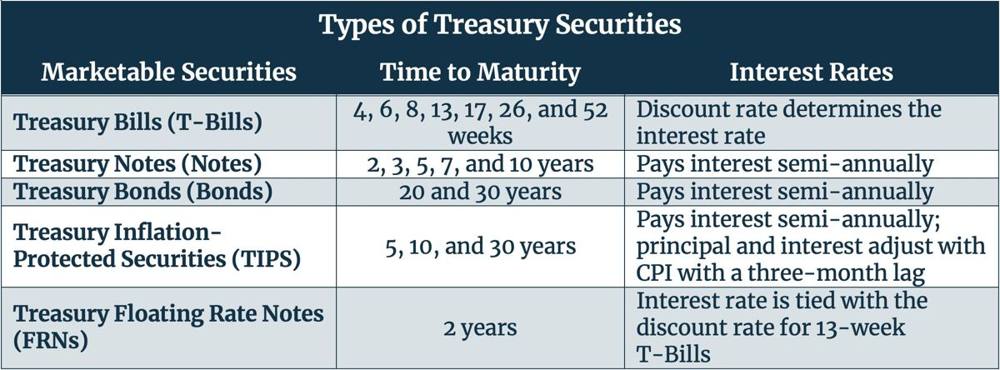
The Treasury issues debt by auctioning a mixture of debt instruments on their
TreasuryDirect website throughout the year. Participants place bids on the amount and the interest rate of the debt they want to purchase, and bids are ranked lowest to highest by yield rate and accepted until the offered debt amount runs out. The last accepted bid is the considered the “stop” bid; all the securities are sold at the stop bid’s yield rate.
Government Debt Purchasing
The general public can purchase securities from these auctions, including individuals and other investors (
e.g., retirement plans, pensions, and hedge funds), as well as foreign investors and governments. Additionally,
primary dealers (large banks and financial institutions that have a trading relationship with the Federal Reserve Bank of New York) are expected to participate in Treasury auctions. Investors can purchase securities on the secondary market if they are allowed to be resold (or “marketable”).
Related: the debt limit, the legal cap on that borrowing.
Common questions
Why does the federal government issue debt?
When spending is higher than tax revenue, Treasury borrows to cover the difference. The government then owes interest on that debt.
How does Treasury sell debt?
Treasury auctions a mix of securities through the year. Bids are accepted from the lowest yield upward until the offered amount is sold, and every security in that auction is sold at the stop bid's yield.