Healthcare costs have grown faster than inflation in recent decades. Costs have risen as the federal government intervened in the healthcare system, adding new regulations, mandates, and taxpayer
subsidies.
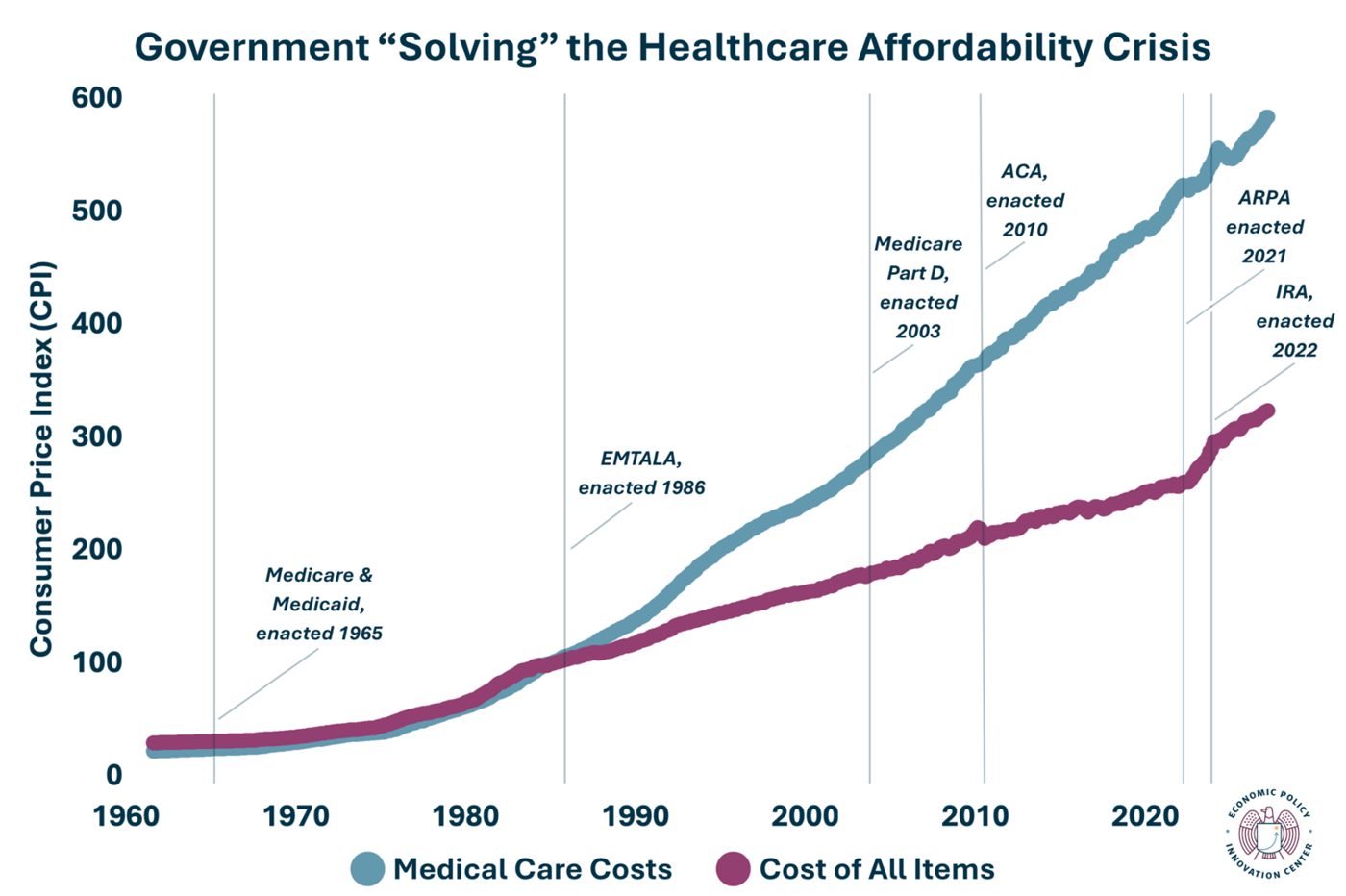
Some of these major healthcare “reforms” include:
- Medicare and Medicaid: These programs created new health care entitlements.
- EMTALA: The Emergency Medical Treatment and Labor Act required hospitals to treat all patients in emergency rooms regardless of ability to pay in order for the hospital to be able to receive Medicare funds.
- Medicare Part D: This Medicare expansion established a federal prescription drug benefit for seniors.
- The Affordable Care Act: Obamacare introduced excessive regulations (i.e., the 10 essential health benefits mandate) and introduced new subsidies for medical care. These policies increased the cost of care and reduced consumer choice.
- The Biden COVID Credits: First enacted in the American Rescue Plan Act and extended in the Inflation Reduction Act, the COVID Credits expanded the existing ACA subsidies and increased federal overreach in healthcare markets.
Government interventions have contributed to the healthcare affordability crisis. The real solution is to eliminate overregulation, increase consumer choice, and promote competition in healthcare markets.