Authorization for spending from the Highway Trust Fund (HTF) expires on September 30, 2026, meaning that a new Highway Bill is one of the largest “to do” items remaining for Congress this year.
There are several thorny policy problems for the House and Senate authorizing committees to address in the Highway Bill, and perhaps none are as pointed as addressing the woeful state of the HTF.
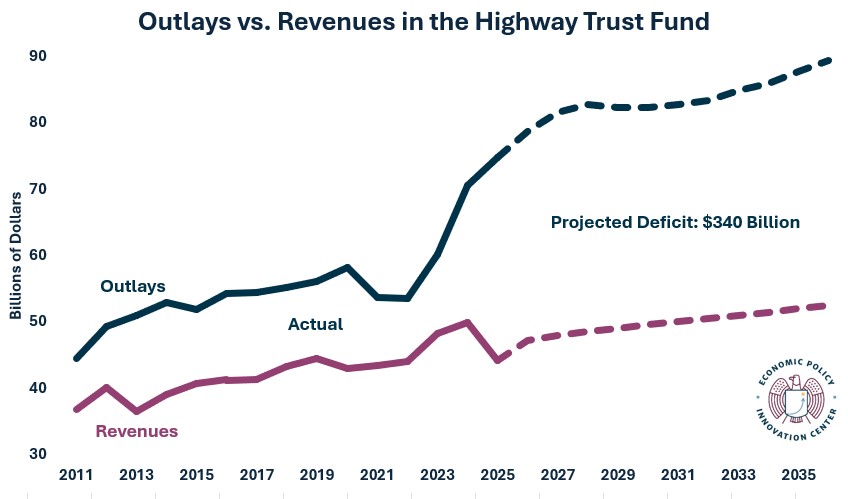
The fund, which has a large structural deficit, is expected to run dry in fiscal year 2028. To maintain current spending for five years would require a deficit-financed $121 billion bailout, accelerating the federal government down the road to
$40 trillion in gross debt.
Congress can avoid a big bailout by patching potholes in HTF spending.
How Diversions Erode the Highway Trust Fund
The 1956 Highway Act established the HTF, which focused on building and improving core highways and bridges using revenue from the federal gas tax. Constructing the full interstate highway system was one of the largest undertakings in human history, and today the highway grid is crucial for moving people and goods across the country. Sadly, opportunistic legislators leveraged the importance of the HTF to get handouts for selected special interest groups.
Mass transit started receiving a cut in the 1980s and has drained more than $200 billion from the HTF even though transit riders do not pay into the fund. Today, transit’s share of HTF spending (20%) is many times greater than its share of commuter trips (less than 4%), which are concentrated in just
seven urban areas.
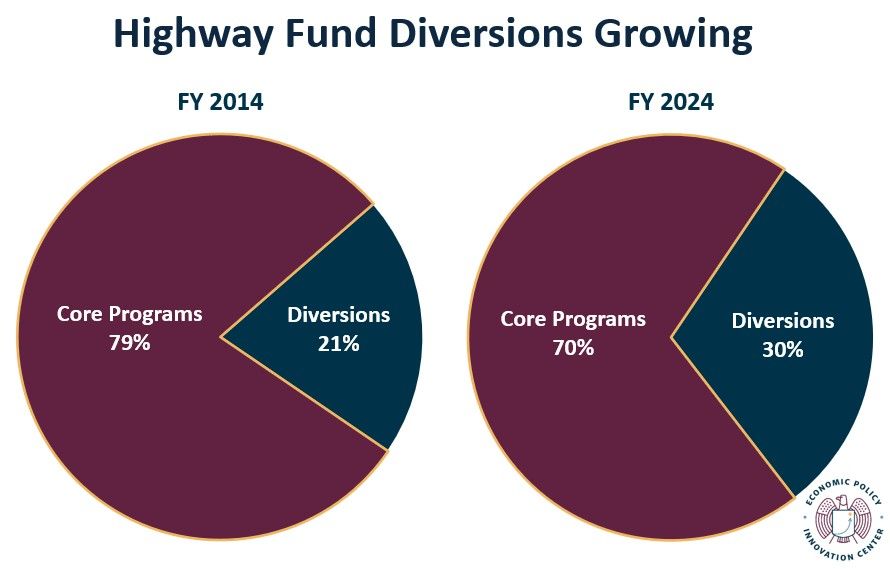
The 2021 Infrastructure Investment and Jobs Act (IIJA) both increased HTF spending and added billions of dollars in questionable “Green New Deal” programs to the fund. This has pushed the volume of HTF spending outside of core highway infrastructure activity to roughly 30% as of fiscal year (FY) 2024.
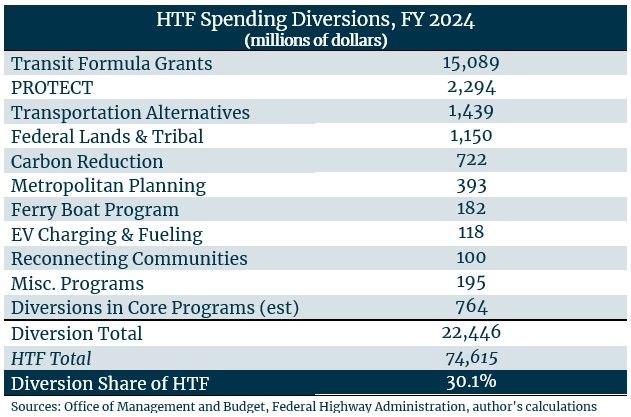
While the problem of spending diversions predated the IIJA, it was severely exacerbated by the law. Diversions as a share of HTF spending grew significantly between FY 20214 and FY 2024.
To date the HTF has received $271 billion in deficit-financed bailouts, an amount needed because of decades of diversions. Maintaining current diversion-heavy spending for just ten more years would require an even greater volume of bailouts. Although addressing diversions would not single-handedly balance the HTF, it would make the fund’s deficit small enough that relatively minor reforms would be sufficient to finish the job.
By reducing or eliminating wasteful and inappropriate spending diversions, fitting overall spending to HTF revenues, and cutting cost-increasing regulations, Congress can preserve the value of America’s highways and bridges without adding to unsustainable debt and deficits.