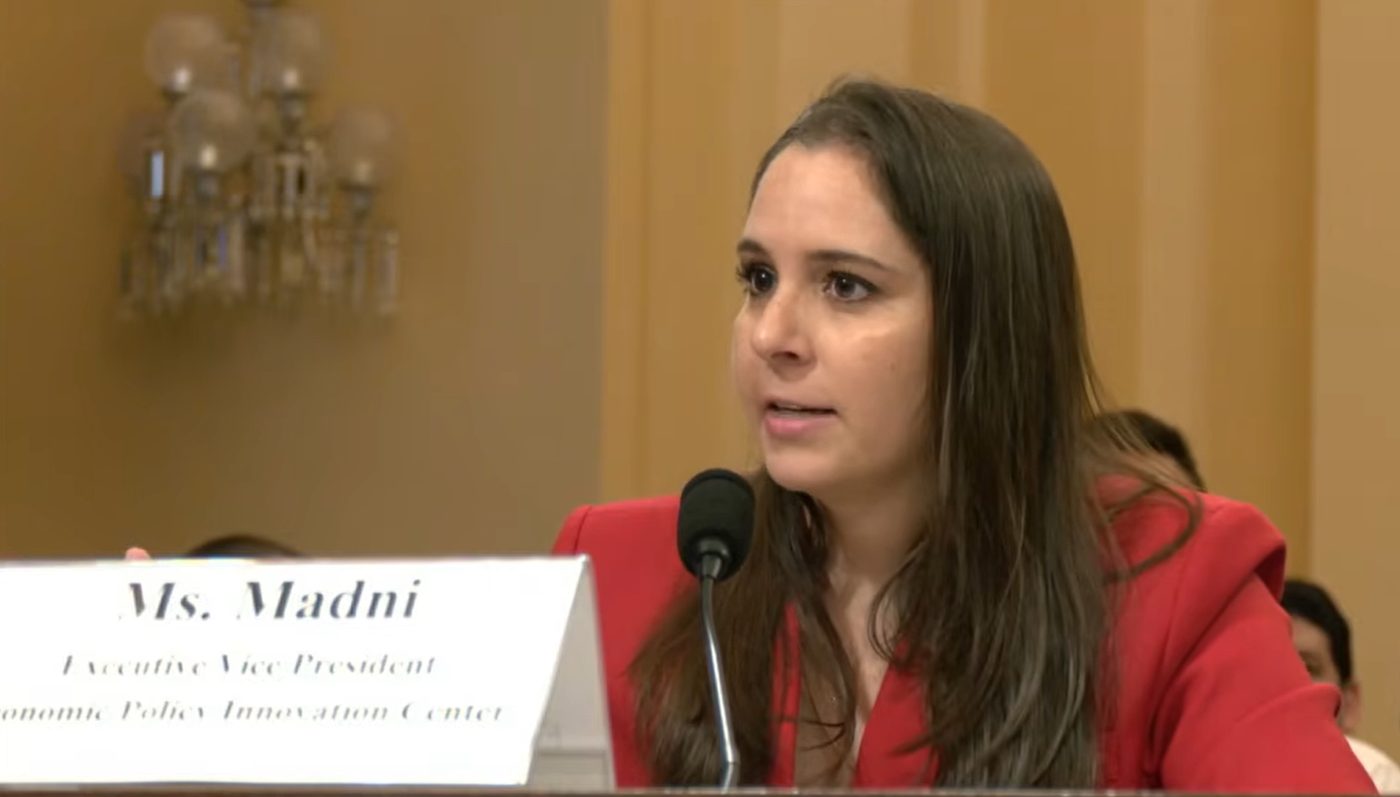
The House Committee on Energy and Commerce
marked up several bills to promote housing and energy affordability on December 3, 2025. These bills would restore consumer choice and limit government overreach into American homes. By reducing unnecessarily burdensome regulations, these proposals would lower compliance costs and improve affordability for households across the country if enacted into law.
The Energy Choice Act
H.R. 3699, the
Energy Choice Act, introduced by Rep. Nick Langworthy (R-NY-23), would prohibit state and local governments from banning or limiting access to and usage of any energy source sold in interstate commerce, including fossil fuels.
This is not hypothetical. The state of
New York and
several municipalities around
the country have enacted laws or regulations that restrict or outright ban natural gas connections in new construction, many of which are facing legal challenges. Whenever supply is reduced via government action, which laws like that do by restricting which sources of energy consumers can use, prices will typically increase in response.
With power grids increasingly strained by growing
power demand, banning a source of energy like natural gas would increase reliance on electricity for heating and cooking, making power bills higher and add further strain to the grid. This bill would maintain consumer freedom and choice in the market while preventing governments from exacerbating the problems the energy grid faces.
The Homeowner Energy Freedom Act
H.R. 4758, the
Homeowner Energy Freedom Act, sponsored by Rep. Craig Goldman (R-TX-12), would repeal wasteful grant programs established in sections 50122, 50123, and 50131 of the
Inflation Reduction Act (IRA) and rescind any remaining unobligated funds. Those provisions originally allowed up to $5.7 billion in grants (a CBO score for the savings of rescinding unspent funds is not yet available).
One of these IRA programs provides grants to state and local energy offices to incentivize them to adopt building codes that meet or exceed the energy conservation standards set in the 2021 International Energy Conservation Code (IECC). Adopting those standards, openly declared to be a stepping stone to a
net-zero agenda, can add between
$20,000 to $31,000 in building costs per house which would increase housing prices anywhere these codes are adopted. The federal government should not be spending hundreds of millions of dollars incentivizing local governments to adopt costly energy efficiency regulations. This bill would prevent further funds from being used for this purpose.
The Don’t Mess With My Home Appliances Act
The
Don’t Mess With My Home Appliances Act, introduced by Rep. Rick Allen (R-GA-12), would amend the
Energy Policy and Conservation Act (EPCA) to ensure that appliance standards are not overly burdensome. The proposal would remove the requirement that the Department of Energy (DOE) review and tighten appliance standards every six years and would instead allow the DOE to revoke standards that prove too costly or are not “economically justified.” When only new regulations can, and indeed must, be promulgated under the EPCA, but old regulations cannot be revised or repealed, regulations become increasingly burdensome in what is known as the “ratchet effect”. This provision opens the door for agencies to remove standards where costs outweigh benefits.
This legislation would also strengthen the test for whether a standard makes economic sense. Under the bill, any new standard issued by the DOE would need to produce at least a 10 percent reduction in energy or water use as well as not impose additional net costs on consumers over the first three years of use, once purchase, installation, maintenance, disposal, and replacement costs are considered. As a safeguard, the bill would require DOE to reassess any new standard within two years to determine whether its projected costs and benefits were accurate and to modify or repeal the rule if they were not.
In its regulatory analysis, the DOE would no longer be permitted to rely on speculative “social costs” of
greenhouse gas emissions and would instead focus on direct impacts on consumers and manufacturers. Under the Biden Administration all appliance regulations
began including calculations of “climate benefits” from reducing the social cost of carbon. This led to more burdensome regulations being implemented based on a standard with shaky calculus and vague benefits. Removing the impacts of greenhouse gas emissions from the cost-benefit calculus allows decision makers to focus their analysis on the economic and technical aspects of potential new standards, providing a more concrete standard for regulatory review.
While the bill allows new regulations to be promulgated and standards updated, it would remove the requirement for the DOE to periodically do so and changes what factors are included in the regulatory analysis. The goal of this is to limit any new regulations or standards to ones that are economically and technically justified rather than being implemented due to mandatory review requirements and relying on vague factors.
Congress Can Improve Affordability
These three bills represent a broader effort to rein in years of regulatory overreach and improve affordability for American households. As Congress looks to respond to the growing concerns about affordability, these bills make progress in the right direction.