As the temporary lapse in appropriations (also called a government “
shutdown” continues, the Department of Energy (DOE) has taken steps towards reducing waste, fraud, and abuse of taxpayer funds by
cancelling grants given to organizations that do not promote activities in line with American priorities of reliable, affordable power.
Revocation of Grants
To preserve funds, the DOE has
cancelled 321 grants and awards supporting 223 projects during the shutdown. This saves $7.56 billion. The DOE issued these grants under the Biden Administration, many of which were made in the last few months of the Administration. Most of these revoked grants were for spending on “green” energy projects or funded energy advocacy groups. Below are a few of the most wasteful projects and groups the Biden DOE funded which have since been canceled.
Community Environmental Council (CEC) - $2 Million
The DOE granted $2 million for the CEC to promote climate workshops and environmental education initiatives. CEC is an
advocacy organization that promotes climate activism rather than education. They sponsor
community climate resilience hubs that “consider socioeconomic inequities and structural racism” as essential for environmental efforts. Taxpayer funds should not go to climate justice advocacy that leads to energy forced transitions to unreliable energy resources.
United States Green Building Council (USGBC) - $3.8 Million
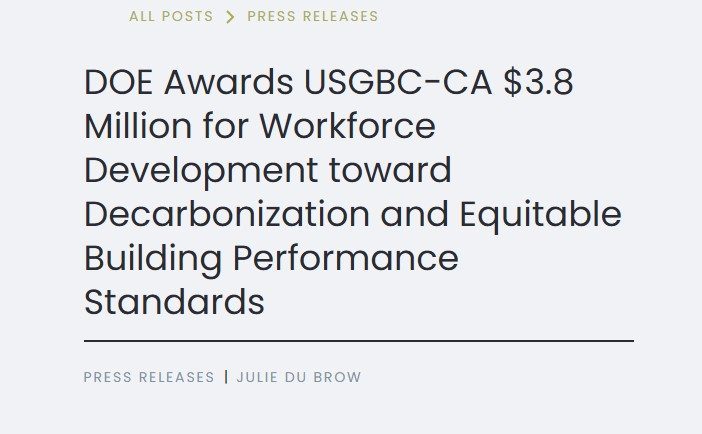
This $3.8 million dollar
DOE grant explicitly went towards creating “equitable building performance standards” in California. The USBGC is already dedicated to implementing the Leadership in Energy and Environmental Design green building rating system. This system, created and run by the USGBC, focuses on promoting zero-carbon buildings based on a sustainability point system that developers follow to receive tax breaks in some states. The equitable building performance standards “applies an equity lens to each credit within the rating system”.
Rather than allowing the market to drive innovation and efficiency, this grant subsidized a subjective “equity-based” framework that distorts incentives and forces developers to prioritize political goals over affordability and economic growth.
ARCHES H2 LLC (California hydrogen hub) - $1.2 Billion
Through a 2023 Office of Clean Energy Demonstrations grant, the DOE gave
$1.2 billion dollars for the development of a California hydrogen hub that would replace current baseload power sources. Baseload power is the minimum level of continuous electricity supply needed to meet consistent energy demand. It is typically provided by reliable, always-on sources such as coal, nuclear, or natural gas plants that operate steadily to ensure grid stability. Hydrogen hubs waste large amounts of electricity during production, storage, and use, which drives up system costs and strains the power grid rather than supporting it.
SunPower Corporation - $6.65 Million
Biden’s DOE gave almost $7 million to build “
zero-energy-ready” homes with rooftop solar and a community battery storage facility. Paying a
commercial solar vendor $6.65 million dollars of public money to develop solar powered housing communities is industrial policy, not energy development. The public should not bankroll the development of inefficient solar communities and certainly not by subsidizing the solar corporations that stand to profit from them.
Plug In America - $5 Million
The DOE contributed $5 million to EV education initiatives by Plug in America. Participants learned about the benefits of EVs and how to receive tax credits for purchasing one. This is an
advocacy group, not an energy producer or developer. They organize and sponsor groups that aim to accelerate EV adoption including on campus EV support groups. Public money should not fund campaigns to accelerate EV adoption.
EV Right of Way Project in Portland - $1.78 Million
This $1.78 million DOE
grant funded an
initiative to place EV chargers on curbs and power poles next to city streets. Specifically, in areas that are predominantly “low-income and communities of color”.
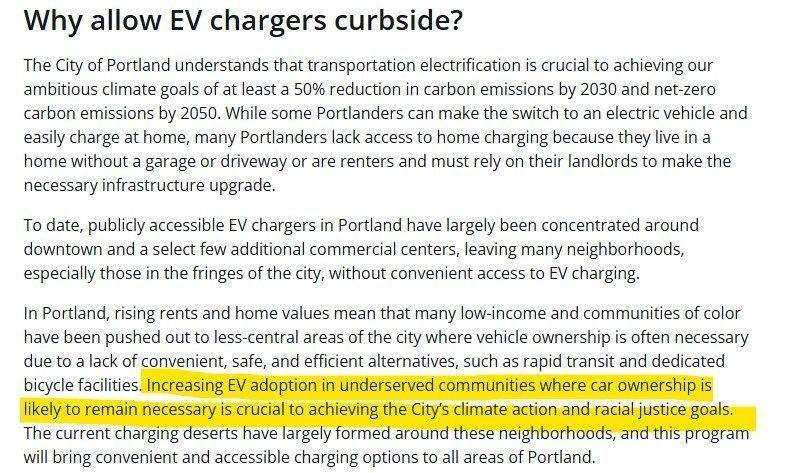
Taxpayer dollars should not go towards funding the social justice agenda of Portland.
The Political Economy of Power
These projects are not only costly and ineffective, but also fund causes that are not in line with the priorities of the American people. Americans want reliable, affordable energy and subsidies for renewables do not deliver that. Solar and wind power depend entirely on weather conditions, such as sunlight and wind that cannot be summoned on demand, making them non-dispatchable and therefore unreliable sources of energy. They cannot provide power when it is needed most, forcing utilities to maintain backup systems powered by fossil fuels or nuclear energy or else be unable to supply power when demand peaks. By subsidizing these projects, American consumers receive more expensive energy with less reliability.
In an attempt to reduce these costs, the government often subsidizes green energy projects through grants or tax credits. However, government subsidies
create more problems than they solve. Instead of fostering genuine innovation, subsidies prop up technologies that cannot compete on their own merit, distorting market signals and discouraging private investment in more efficient solutions.
When the government guarantees profit through tax credits, grants, and mandates, companies are rewarded for political connections and compliance rather than performance and innovation. This results in wasted taxpayer dollars, inflated project costs, and an energy sector that becomes dependent on continual government support. Worse still, once subsidies are introduced, industries rarely wean off them, creating long-term fiscal liabilities without delivering the promised environmental or economic benefits.
Towards Principled Energy Policy
The DOE’s revocation of wasteful Biden-era grants during the shutdown has exposed that billions in taxpayer money was being funneled into advocacy groups, green lobbying efforts, and projects that do not strengthen America’s energy system.
This moment offers lawmakers a clear opportunity to redirect federal spending away from politically motivated initiatives. Future funding must prioritize energy reliability, affordability, and national security, with strict oversight to prevent taxpayer dollars from being misused again. By doing so, policymakers can rebuild trust, protect public funds, and ensure America’s energy policy serves the people rather than special interests.