The Byrd Rule Applies in the Senate
In the Senate, the Byrd Rule keeps a reconciliation bill focused on budgetary changes. The Byrd Rule
only applies in the Senate. The House does not have a comparable rule.
When Members of the House discuss the Byrd Rule, they do so insofar as it will impact the legislation once it reaches the Senate. If a preponderance of provisions violate the Byrd Rule, there is a risk of the full legislation being ruled not a reconciliation bill and thus losing its privileged status in the Senate. This is a subjective determination; there is no firm cutoff number for how many offending provisions tips a bill out of being reconciliation.
The Byrd Rule applies to reconciliation legislation, including amendments and conference reports. It applies to the full text, including titles, table of contents, etc.
The Six Tests of the Byrd Rule
A provision of a reconciliation bill is considered extraneous and subject to a point of order if it:
- Does not produce a change in outlays or revenues or a change in the terms and conditions under which outlays are made or revenues are collected;
- Produces an outlay increase or revenue decrease when the instructed committee is not in compliance with its instructions;
- Is outside the jurisdiction of the committee that submitted the title or provision for inclusion in the reconciliation measure;
- Produces a change in outlays or revenues that is “merely incidental” to the non- budgetary components of the provision;
- Would increase the deficit for a fiscal year beyond the budget window covered by the reconciliation measure; or
- Recommends changes to Social Security.
Points of Order
The Byrd rule is
not self-enforcing. A Senator must raise the point of order. The Byrd Rule may be waived by a three-fifths vote (60) of the Senate. This means that a provision that violates the Byrd Rule can be enacted via reconciliation if it has sufficient support in the Senate.
A Byrd Rule point of order is
surgical, meaning it only strikes the offending provision.
The Senate’s
Presiding Officer rules on points of order. The Presiding Officer receives advice from the Senate Parliamentarian, who reviews established precedents. Senate precedents are set by a vote of the Senate or a ruling by the Presiding Officer.
The “Merely Incidental” Test
The Byrd Rule point of order against a provision that “produces changes in outlays or revenues which are
merely incidental to the non-budgetary components of the provision” is a subject of controversy and consternation.
The terms “merely incidental” and “non-budgetary components” are not defined in the Byrd Rule itself. Understanding of the Rule has evolved under the Senate’s precedents and remains a question of judgement by the Presiding Officer.
The Senate Parliamentarian has provided guidance that a key question is whether the proposal “is a policy change that substantially outweighs the budgetary impact of that change.”
Just because a provision has a budgetary impact does not insulate it from violating the merely incidental test. In fact, proposals that would have significant fiscal impacts have been deemed to violate the merely incidental test, including large-scale legalization of immigrants and an increase in the federal minimum wage.
History of the Byrd Rule
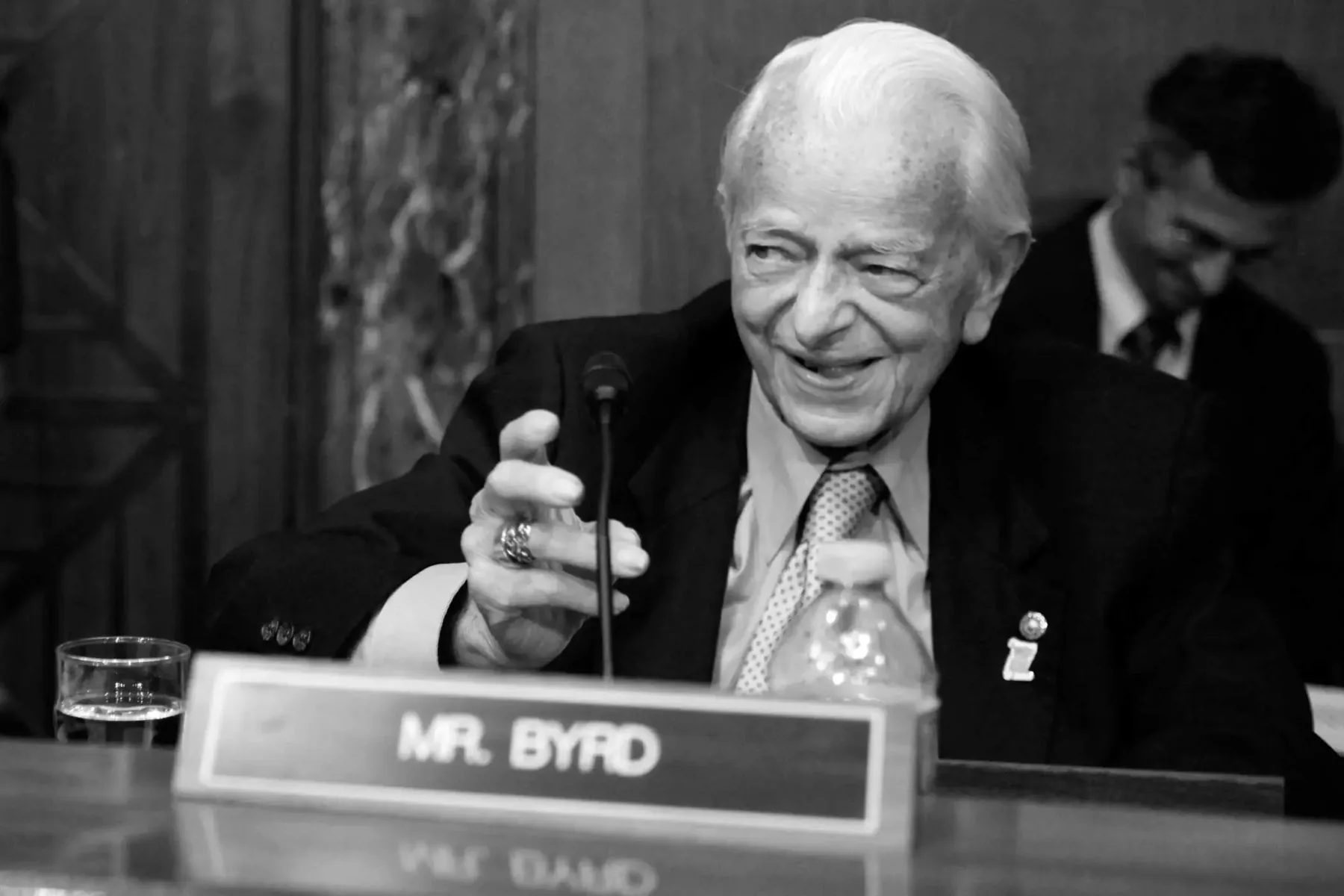
The Byrd Rule is named after former Senate Majority Leader Robert Byrd (D-WV).
The Byrd Rule was first adopted by the Senate in 1985 after reconciliation bills began to include policies outside of the budgetary issues on which the process was intended to focus. For example, President Reagan signed into law reconciliation legislation that eliminated and reduced burdensome regulations, such as a ban on natural gas power plants and building energy performance standards.
The Byrd Rule was later codified as Section 313 of the Congressional Budget Act in 1990.
See also what budget reconciliation is and the Byrd Rule one-pager.
Common questions
Does the Byrd Rule apply in the House?
No. The Byrd Rule only applies in the Senate. The House does not have a comparable rule.
What are the six Byrd Rule tests?
A provision is extraneous if it does not change outlays or revenues or their terms and conditions, breaks a committee's reconciliation instructions, falls outside that committee's jurisdiction, has a budgetary effect that is merely incidental to the policy change, raises the deficit beyond the budget window, or recommends changes to Social Security.
What happens if a provision violates the Byrd Rule?
The rule is not self-enforcing. A Senator must raise a point of order. If it is sustained, only the offending provision is struck. The Senate can waive the point of order with 60 votes.