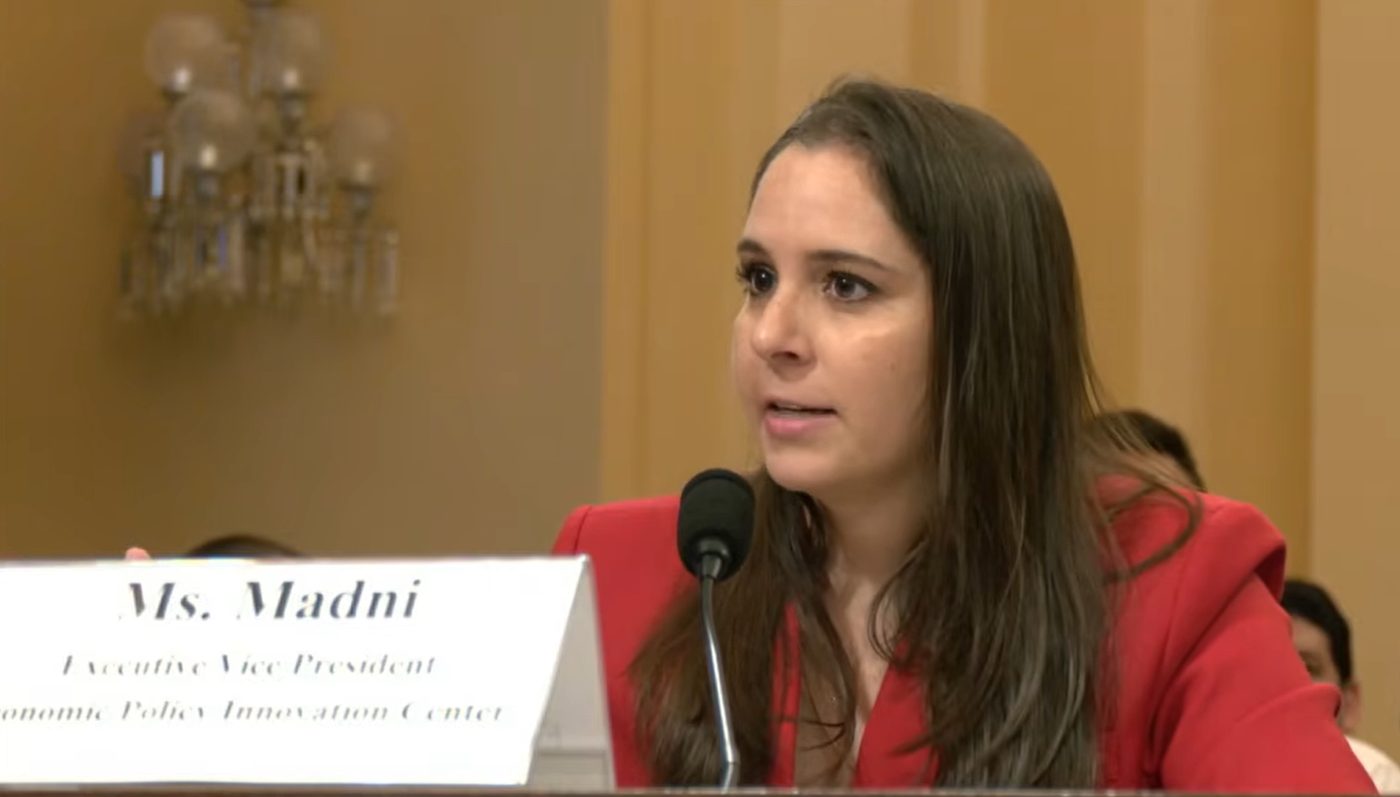
On May 7th, Dr. Paul Winfree, President and CEO of the Economic Policy Innovation Center testified before the House Budget Committee on the Fiscal State of the Nation.
The nation’s fiscal position is alarmingly fragile, strained by extensive pandemic relief and subsequent stimulus initiatives that drove inflation and massively expanded the debt between 2020 and today.
The Return of War-Level Debt but Without the War
Publicly held debt is now at its highest level since World War II.
Without meaningful fiscal reform, the Congressional Budget Office (CBO) projects that debt held by the public will be 99.9 percent by September and will surpass the 1946 peak by 2029. Gross federal debt will be 123 percent of GDP by September which already exceeds the high of 119 percent during WWII.
Between early 2020 and the end of 2023, 76 percent of new federal spending was financed through bond issuance, with another 14 percent covered by money creation. This represents the heaviest reliance on debt and monetary expansion for new spending since the Civil War.
At the same time, federal borrowing remains at record levels, driven largely by the need to refinance a growing volume of maturing debt. The Treasury expects to borrow $815 billion in 2025 – more than double the amount it borrowed just four years prior in 2021.
Pandemic Spending Eroded Fiscal Space
Government spending, driven by both deliberate increases and the inflation adjusted “autopilot” growth of certain programs, has propelled a sharp rise in federal debt. Absent major reforms to reduce long-term liabilities, these autopilot spending increases will continue to undermine America’s borrowing capacity and fiscal state.
The economic and fiscal landscape of the United States has evolved significantly since 2017. During the late-2010s, the economy enjoyed relatively robust growth and moderate government deficits, allowing policymakers to keep concerns about debt sustainability in check.
However, the shock of the COVID-19 pandemic and the related government-imposed closures prompted a sizeable fiscal response which has affected fiscal space and thus the fiscal state of our nation.
Our fiscal state deteriorated sharply as the government enacted large-scale programs to offset the economic fallout associated with the pandemic and related policy decisions. These measures, combined with lower tax revenues as the government-imposed closures that dramatically slowed the economy, led to higher borrowing which accelerated the increase in public debt.
Once the worst of the lockdowns subsided and economic activity resumed, the ensuing rebound helped partially restore some of that lost fiscal space. But despite the groundwork for a strong economic recovery, legislation enacted during the Biden administration contributed to an expansion of federal spending, driving up inflation and borrowing needs as well as putting pressure on rising interest rates.
Therefore, the considerable Biden-era deficit spending slowed any gains that were being made to return fiscal space back to its pre-pandemic level.
What Can Congress Do?
Congress must ultimately begin to reduce the growth in spending. The dramatic increase in spending from pandemic stimulus packages has driven inflation and expanded the debt to unprecedented levels. As the debt and interest payments on it increase, our nation becomes increasingly vulnerable to a national emergency. Congress should use the reconciliation process to cut spending and shore up our fiscal state.
Paul Winfree, Ph.D., is the President and CEO of the Economic Policy Innovation Center (EPIC). He has served in top management and policy roles in the White House, the U.S. Senate, and think tanks. Prior to founding EPIC, Winfree served in multiple positions during three different tours at The Heritage Foundation. These included Distinguished Fellow in Economic Policy and Public Leadership, Director of Economic Policy Studies the Richard F. Aster Fellow, and acting Director of the Center for Data Analysis. Before rejoining Heritage in 2018, Winfree was Deputy Assistant to the President for Domestic Policy, the Deputy Director of the Domestic Policy Council, and the Director of Budget Policy, all at the White House. Winfree was also Chair of the Deputies Committee that oversaw the execution of all domestic policy at the Deputy Secretary level throughout the administration as well as the interagency policy coordination process. During the 2016 Presidential Transition, Winfree led the team responsible for the Office of Management and Budget. Winfree served three terms as Chair of the Fulbright Foreign Scholarship Board , a 12-member board selected by the President of the United States. In 2022, he received a distinguished service award from the U.S. State Department’s Bureau of Education and Culture Affairs for his “stewardship during the COVID-19 pandemic, and for meaningful contributions to advance mutual understanding through the Fulbright Program.” Winfree’s research focuses on U.S. economic history, public finance, political economy, the economics of media, and the economics of education. He is author of a book on the evolution of economic and fiscal policy from colonial America until the present called The History (and Future) of the Budget Process in the United States: Budget by Fire (Palgrave Macmillan, 2019). His research has been featured in The Wall Street Journal , The New York Times , The Washington Post , Investor’s Business Daily , USA Today , and Congressional Quarterly , among other publications. Winfree holds a Ph.D. in economics from Queen’s University Belfast, an M.Sc. in economics and economic history from the London School of Economics and Political Science, and a B.S. in economics from George Mason University. He lives in Virginia with his wife and three children.