
Op-Ed
CBO: One Big Beautiful Bill Grows the Economy, Cuts Taxes & Slows Welfare Spending
February 12, 2026 · David Ditch
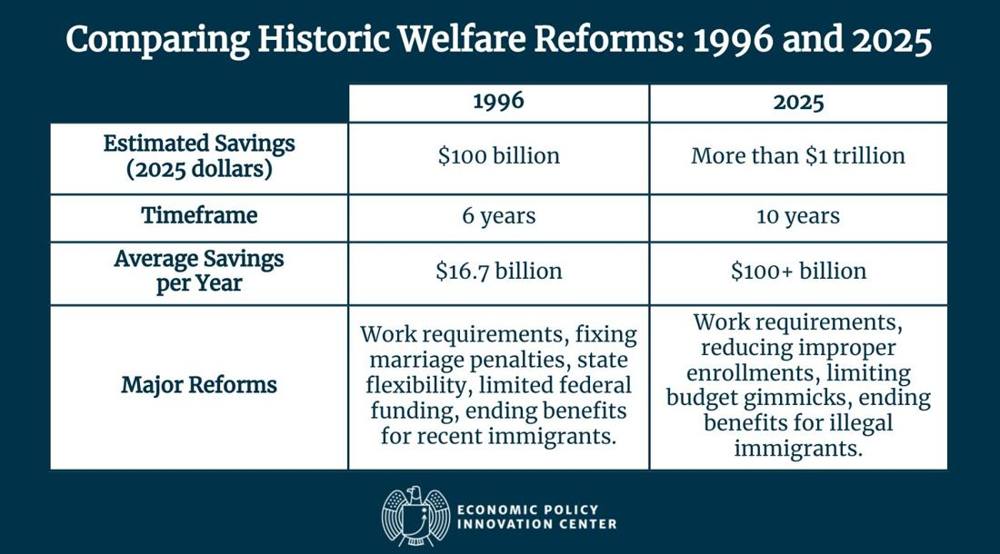 Breaching the $1 trillion savings threshold in a single bill is laudable, especially after Congress spent years avoiding meaningful spending restraint.
Unfortunately, much as the 1996 reforms were met with criticism, the OBBB’s welfare changes are also under assault. Critics claim that welfare has now been “slashed” or “gutted,” even though the savings merely slow the growth of a welfare system that CBO estimated would cost more than $13 trillion from 2025 through 2034.
Supporters of the OBBB must make the case that these welfare reforms are not only necessary to rein in unsustainable spending growth but would be morally justified even if they saved a much smaller amount.
For example, the “community engagement” standard not only reduces unfair transfers from workers to healthy non-workers but also encourages the non-workers to seek opportunities that will put them on a path to economic success and self-fulfillment. The idea that it is “cruel” to move healthy people off the dole is profoundly anti-human.
Implementing procedures to reduce improper and duplicative enrollments ought to be common sense, yet critics conflate any savings from welfare programs as disenfranchising poor children and the disabled. This is exactly backwards: removing ineligible adults from programs will make resources more available for the neediest.
There is an understandable impulse for legislators who backed the OBBB to focus on promoting its pro-growth tax cuts. However, avoiding or minimizing discussion of changes to Medicaid and food stamps allows critics to set the narrative, which can lead to the public having the wrong impression about the law’s positive effects. That would make it more difficult to enact additional spending reforms in the future.
The 1996 welfare reform was a tremendous accomplishment. The welfare reforms contained in the OBBB are even more economically substantial, and the American people deserve to hear the truth about this momentous victory.
Breaching the $1 trillion savings threshold in a single bill is laudable, especially after Congress spent years avoiding meaningful spending restraint.
Unfortunately, much as the 1996 reforms were met with criticism, the OBBB’s welfare changes are also under assault. Critics claim that welfare has now been “slashed” or “gutted,” even though the savings merely slow the growth of a welfare system that CBO estimated would cost more than $13 trillion from 2025 through 2034.
Supporters of the OBBB must make the case that these welfare reforms are not only necessary to rein in unsustainable spending growth but would be morally justified even if they saved a much smaller amount.
For example, the “community engagement” standard not only reduces unfair transfers from workers to healthy non-workers but also encourages the non-workers to seek opportunities that will put them on a path to economic success and self-fulfillment. The idea that it is “cruel” to move healthy people off the dole is profoundly anti-human.
Implementing procedures to reduce improper and duplicative enrollments ought to be common sense, yet critics conflate any savings from welfare programs as disenfranchising poor children and the disabled. This is exactly backwards: removing ineligible adults from programs will make resources more available for the neediest.
There is an understandable impulse for legislators who backed the OBBB to focus on promoting its pro-growth tax cuts. However, avoiding or minimizing discussion of changes to Medicaid and food stamps allows critics to set the narrative, which can lead to the public having the wrong impression about the law’s positive effects. That would make it more difficult to enact additional spending reforms in the future.
The 1996 welfare reform was a tremendous accomplishment. The welfare reforms contained in the OBBB are even more economically substantial, and the American people deserve to hear the truth about this momentous victory.