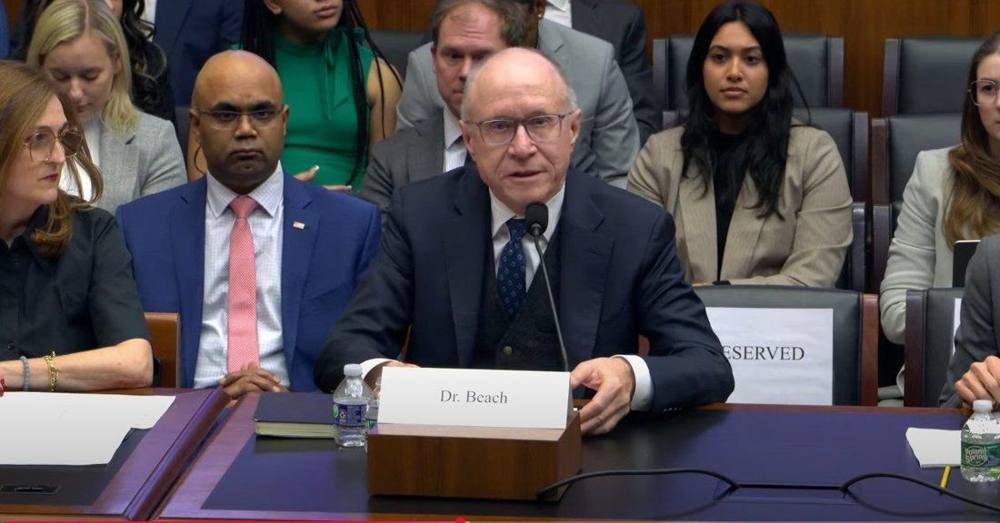
Chairman Walberg, Ranking Member Scott, and Members of the Committee, thank you for inviting me to testify today.
Summary
There are basically two ways to look at labor force trends: from the perspective of a policymaker or from the perspective of a worker. It makes sense to discuss the trends in big labor force indicators like the unemployment rate, labor force participation, non-farm employment changes, and so forth when we are thinking like policymakers. However, when we view changes in the labor force from the viewpoint of a worker, other things come to mind first: such topics as job openings, changes in pay, and how much work is required to maintain and grow a certain standard of living.
I have been asked by this Committee to present on the state of the U.S. labor force, and I certainly will address the concerns of policymakers. That said, an important part of this testimony is to alert the Committee on the ongoing struggle by average workers to regain their standard of living they enjoyed before the devastating effects of the ongoing inflation.
We appear to be at a turning point for America’s workforce. Some labor force data point to growth, others to a continuation of the employment slowdown that started in 2022. Moreover, there appears to be little recovery in the average worker’s purchasing power. Indeed, the high levels of inflation that began in mid 2021 substantially eroded the average worker’s buying power, which resulted in diminished living standards. Everything from housing and food to gasoline and violin lessons cost more, the combined effect being household budget costs rising faster than wages.
Congress needs to make policy moves that support productivity and output growth in the private sector and improved living standards for working families, foremost among these moves being substantial regulatory relief and making the provisions of the TCJA permanent. Higher growth accompanied by higher and sustained worker productivity will support stronger income gains among wage and salary workers.
Parker Sheppard and I recently completed work that shows strong economic gains from regulatory relief. Just freezing regulations over a multi-year period can boost economic activity by as much a fundamental tax reform. Going further and reducing regulations, even modestly, can cut the inflation rate by 0.7 percent, which would bring us much closer to the Federal Reserve’s target rate.
In addition, Congress needs to substantially reduce its budget deficits, which have done more to distort our price system and fuel inflation since 2020 than any other factor. Deficits become publicly held debt that become monetized and turn into demand deposits and private loans. Congress can help the Federal Reserve defeat this inflation by greater fiscal prudence and signaling lower future deficits. Just that, along with higher productivity and economic growth, will go a long way to raising the standard of living for working Americans everywhere.
The Current Labor Market Situation
Let me start with the big picture.
Labor markets are producing distinctly mixed signals. Recent data clearly show signs of a recovery from a two-year slowdown in hiring and job creation.
[1] While the last three months of change in total non-farm employment appears to show growth, we should keep in mind that these three months are subject to revision under BLS’s standard updating procedures.
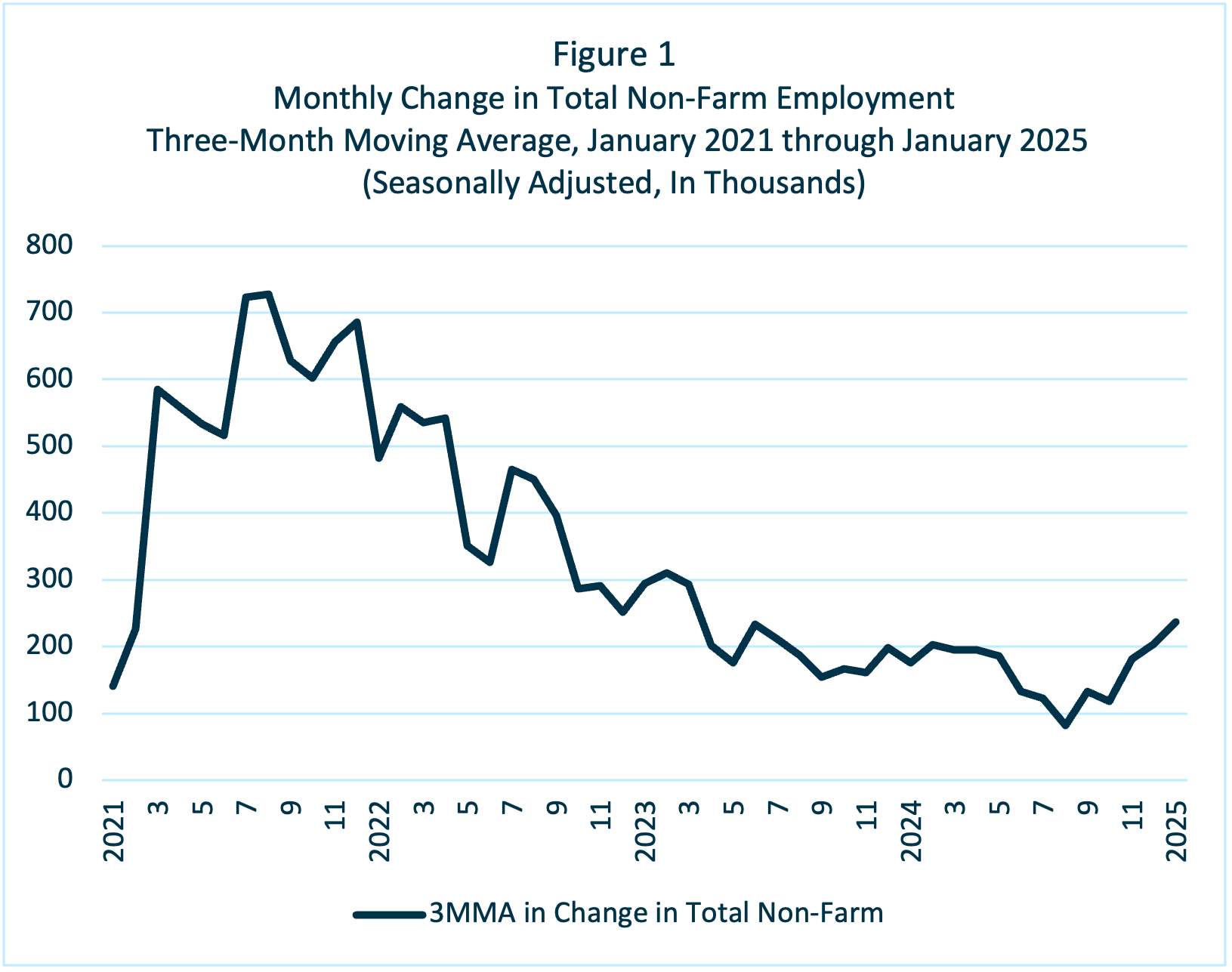
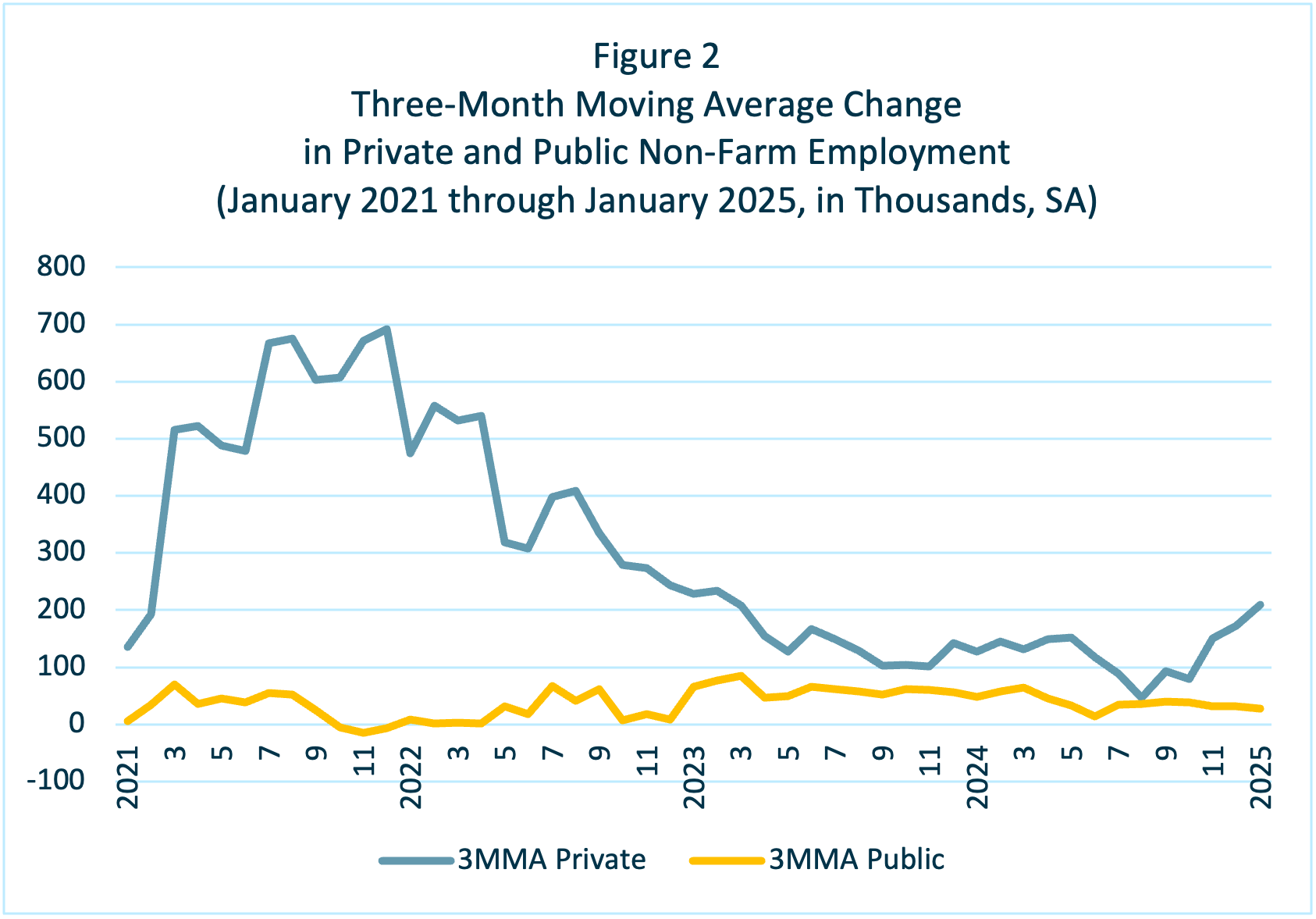
The labor market fully recovered to its pre-pandemic, February 2020 peak in June of 2022. The economy since then has added 6,777,000 jobs. Many of those new jobs stemmed from public sector hiring, but recently the private sector has created the bulk of net employment gains.
Job Openings
At the same time, there is little doubt the overall job openings and hiring has cooled. BLS produces an amazing product called the Job Openings and Labor Turnover Survey (JOLTS). This survey provides monthly estimates of the millions of job openings generated by the US economy, as well as other helpful metrics like total hires, quits, and separations (retirements, dismissals, and so forth). It measures the demand for labor, and JOLTS is unique in providing these demand data.
As Figure 3 shows, job openings and hires have been declining over the past 18 months and show no sign, so far, of the recovery we see in the
net job creation data of Figures 1 and 2. (Note that the JOLTS data runs one month behind the job creation data).
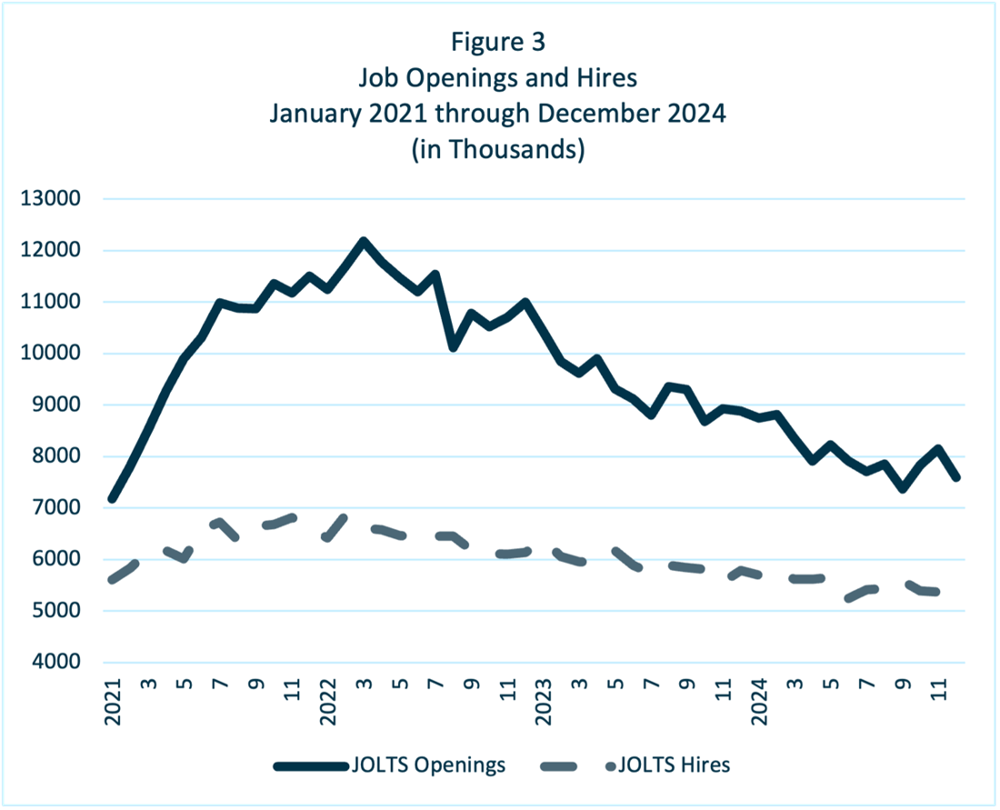
One might conclude after looking at Figures 1 through 3 that the US labor market is tightening to the point where some unemployed workers are now being hired who before had trouble finding work. That could well be the case. However, even this reasonable conclusion is confronted by a mixed signal: the unemployment rate is trending upwards.
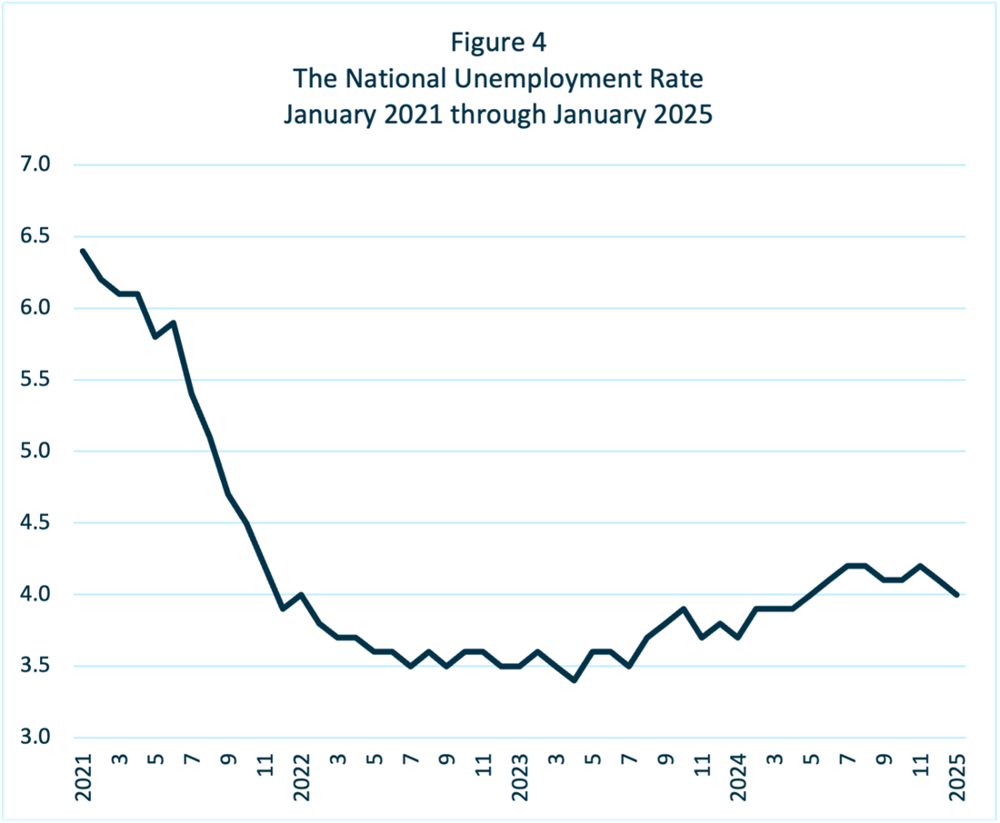
Figure 4 shows the overall unemployment rate since January of 2021 through January of 2025. The graph has several important features. First, the rapid decline in 2021 reflects the general recovery of economic activity. Indeed, we regained what many economists believe is our full-employment unemployment rate of 3.5 percent in July of 2022. Second, after remaining at or close to that rate for about a year, the unemployment began rising again in the middle of 2023. In my view, the rising rate was yet another casualty of the significant inflation beginning in 2021 and the efforts of the monetary authorities to control price growth. The rate is now 50 to 75 basis points higher than the full employment rate. and it is trending up, despite choppy rate variations.
The Labor Market from the Worker’s Perspective
There may be many reasons why people work, but certainly the dominant one is to secure a certain standard of living. True, we seek personal fulfillment, professional enhancement, and social connections; all of which are possible through the work we do. That said, paid work primarily functions to support a stable and, hopefully, growing standard of living.
It does so best, however, when price growth is low and stable. During periods of low-price change or inflation at or below 2 percent, wage growth exceeds or meets price growth. Thus, families dependent on wages and salaries can see their standard of living rise as their purchasing power grows. The opposite is true when price growth outstrips wage change. Now their purchasing power declines, even if wages continue to rise.
That unfortunate situation is one faced by millions of Americans beginning in the middle of 2021. The rapid growth in overall prices exceeded the growth in average earnings from wage and salary sources. Figure 6 shows this growing difference. This chart displays the cumulative percent change in the CPI against the cumulative percent change in nominal average earnings, as reported monthly by BLS.
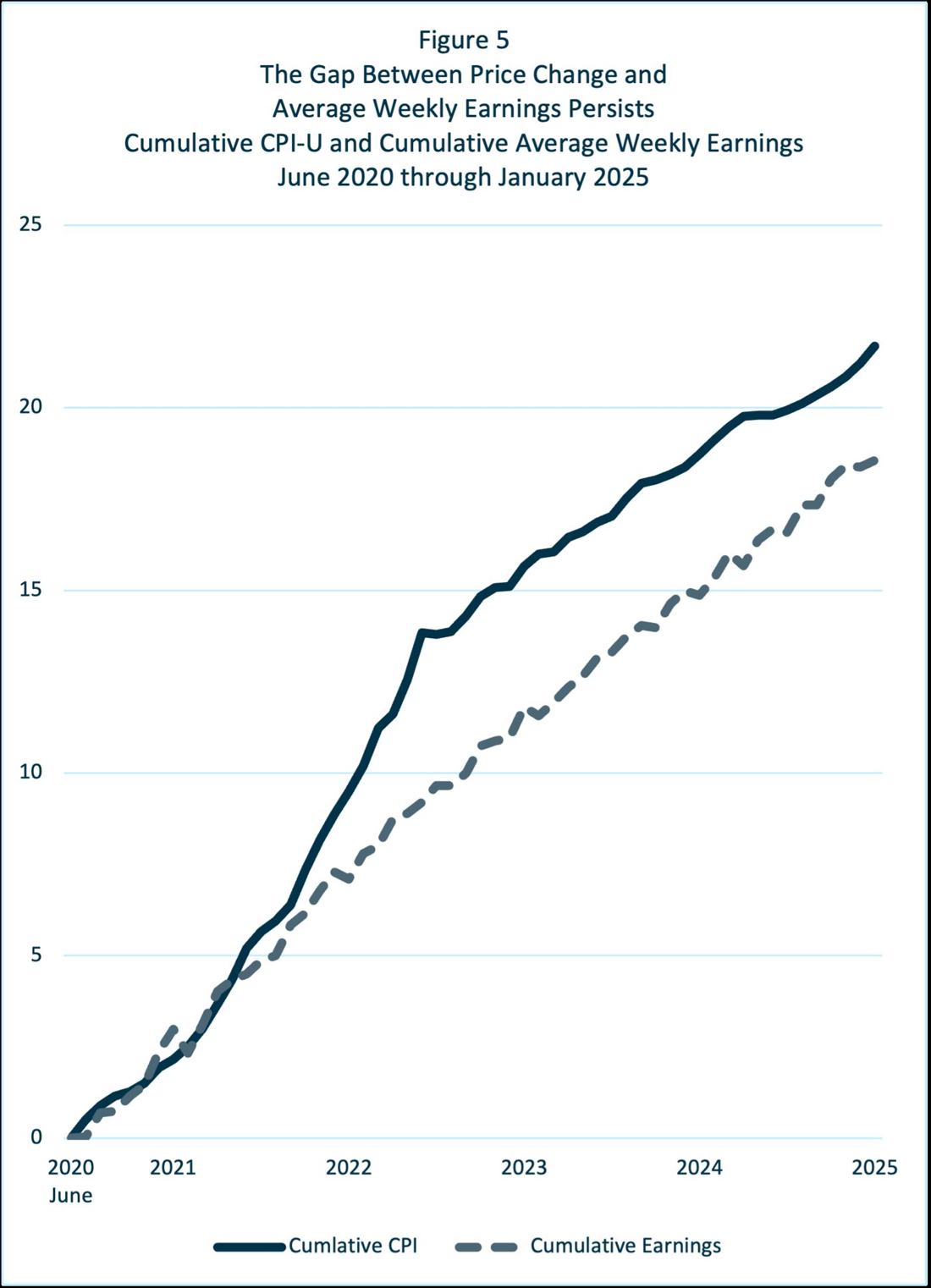
The gap between the CPI and earnings as shown on Figure 6 has only closed by 30 percent since its peak in February of 2023. Until the cumulative rate of change in earnings meets or exceeds price growth, working families will continue to lose ground on their purchasing power and, thus, their standard of living.
If we combine the challenges faced by many workers in maintaining their standard of living with the decline in job openings and the disturbing rise in the unemployment rate, it is little wonder that many American wage earners are concerned about their economic future. We who work in policymaking should constantly remind ourselves that the average worker’s perspective is what ultimately guides our policy efforts. We do disservice to payroll employees if our focus is on anything other than how best to enhance worker productivity, pay and living conditions.
What Can Congress Do to Support Working Americans?
Among the many options before Congress designed to support working Americans from their pay, working conditions, and standard of living, two stand out: extend the Tax Cuts and Jobs Act and significantly reduce regulatory burdens. Each separately would boost economic growth and enhance employments opportunities. Together, however, they can supercharge the economy.
Extending the TCJA will increase GDP by around 0.5 percent, according to work by Nicolo Pastrone and Erica York.
[2] That is a significant contribution to the growth rate that would like result in equally significant expansion of employment. However, vigorous reductions in regulatory burden promise even more growth, as well as price stability.
Recent research by Parker Sheppard and me shows that simply freezing new regulations for a decade would increase GDP by 1.8%—comparable to the economic gains from a major tax cut.[3] Inflation would also ease, with the GDP deflator—a key measure of price levels—falling by 5.7% over the same period. That translates into a reduction in annual inflation of 0.6 percentage points, which would help the Fed get rid of stubbornly high inflation.
These results shouldn’t come as a surprise. Regulations function as a hidden tax, siphoning resources away from productive use. Businesses must redirect capital toward compliance instead of expanding current operations and researching new technological breakthroughs.
The burden of regulation that weighs on businesses is growing. Our measure of regulation shows that it grew 15 percent in the last decade and has nearly doubled since 1980. As regulations pile up over time, they force businesses to spend more on legal and bureaucratic overhead than making products for consumers.
This regulatory drag shows up in two ways: higher costs and lower growth. Compliance expenses drive up production costs, which are passed on to consumers. Meanwhile, firms invest less in workers and innovation, reducing productivity and wage growth.
However, when businesses spend less time complying with government mandates, they spend more time expanding, hiring, and investing. Our findings suggest that deregulation’s impact on economic output mirrors that of the Tax Cuts and Jobs Act (TCJA), which boosted growth by lowering barriers to investment. In addition,
- Investment surges by 7.8%. When compliance costs drop, businesses are more willing to deploy capital.
- Hours worked increase by 1.4%. More job opportunities mean greater workforce participation.
- Consumption rises by 1.7%. Households benefit from lower prices and stronger labor markets.
Conclusion
It is not often that the public sector, specifically the federal government, can support significant change in the American labor force. After all, nearly every change that matters stems from the free enterprise system that our laws protect. However, we stand at a moment in recent history where actions by this 119th Congress can, indeed, shape the near-term productivity of our workforce.
This legislative moment stems from the unique constellation of required work on a law that fundamentally changed our tax laws and new authority provided by the US Supreme Court to reform and refashion regulatory law. Many Congresses before you did not have this opportunity, for reasons of other pressing matters or political “gridlock.”
If you embrace the opportunity, extend and improve the Tax Cuts and Jobs Act and lead the way to substantial deregulation where safety and prudence permits, then you will likely capture the growth, productivity and price effects described in this testimony. Those effects promise to massively boost the fortunes of America’s workers and mark a turning point in US labor history.