The Food Stamp program provided benefits to 1.465 million noncitizens in fiscal year 2022, the
latest data available from the U.S. Department of Agriculture (USDA). Another 2.2 million children living with noncitizens were also on Food Stamps.
These nearly 1.5 million noncitizens collected a total of $4.2 billion in Food Stamp benefit payments.
According to the USDA, the
noncitizens include “lawful permanent residents, refugees, asylees, those granted a stay of deportation, and undocumented individuals… Undocumented individuals are not eligible to receive SNAP benefits, but may be nonparticipating members of SNAP households.”
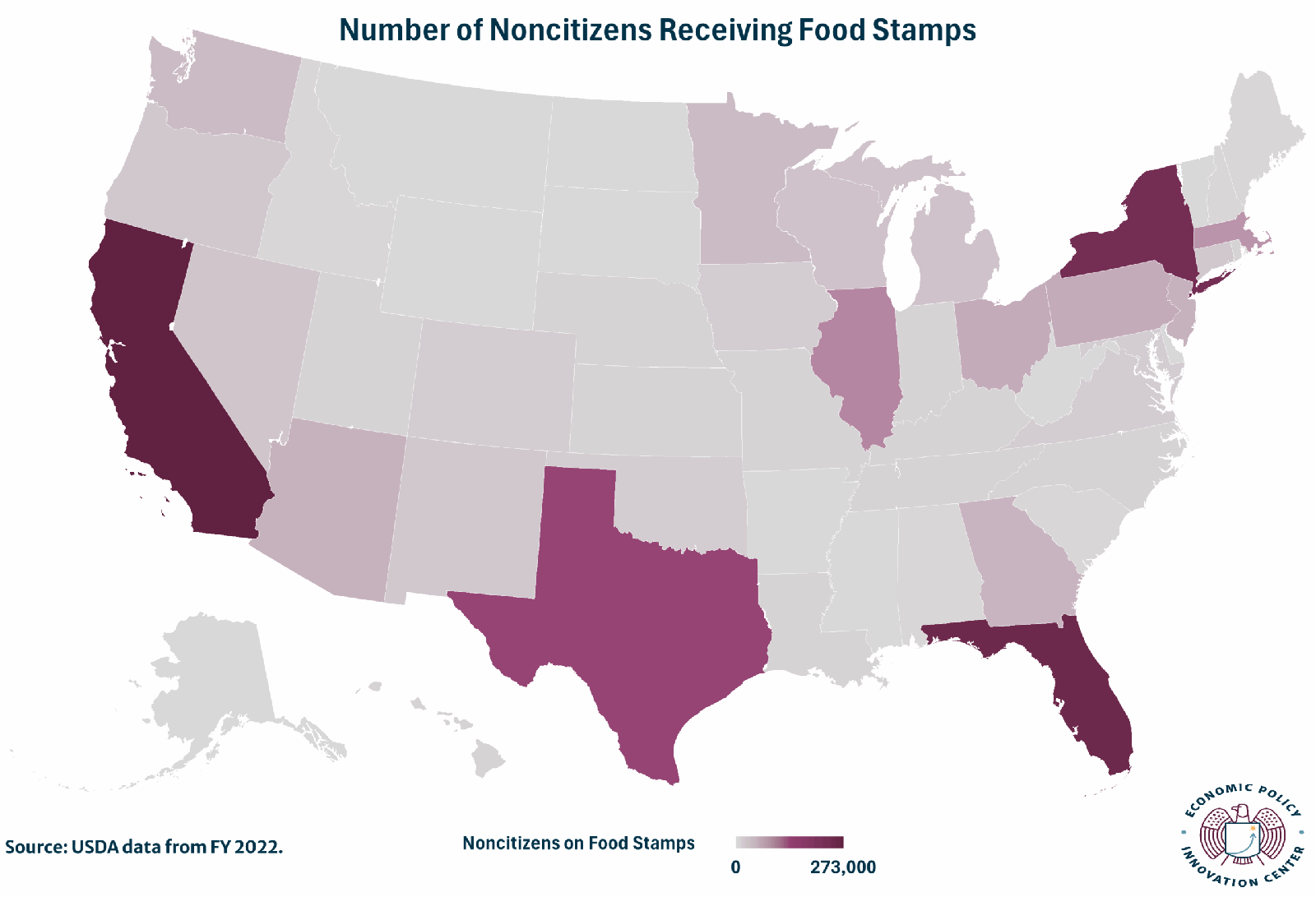
California led the way in enrolling noncitizens on Food Stamps, with 273,000 in FY 2022. Florida had 238,000, New York 218,000, Texas 132,000, and Illinois 73,000 noncitizens. In contrast, Delaware, Mississippi, Montana, West Virginia, and Wyoming reported no noncitizens on Food Stamps.
|
1.5 Million Noncitizens on Food Stamps
|
| State |
Number |
|
State |
Number |
|
State |
Number |
| Alabama |
2,000 |
|
Kentucky |
5,000 |
|
North Dakota |
1,000 |
| Alaska |
1,000 |
|
Louisiana |
4,000 |
|
Ohio |
40,000 |
| Arizona |
35,000 |
|
Maine |
3,000 |
|
Oklahoma |
11,000 |
| Arkansas |
1,000 |
|
Maryland |
9,000 |
|
Oregon |
16,000 |
| California |
273,000 |
|
Massachusetts |
61,000 |
|
Pennsylvania |
41,000 |
| Colorado |
11,000 |
|
Michigan |
20,000 |
|
Rhode Island |
6,000 |
| Connecticut |
14,000 |
|
Minnesota |
25,000 |
|
South Carolina |
2,000 |
| Delaware |
0 |
|
Mississippi |
0 |
|
South Dakota |
1,000 |
| Washington D.C. |
1,000 |
|
Missouri |
4,000 |
|
Tennessee |
6,000 |
| Florida |
238,000 |
|
Montana |
0 |
|
Texas |
132,000 |
| Georgia |
33,000 |
|
Nebraska |
7,000 |
|
Utah |
4,000 |
| Hawaii |
6,000 |
|
Nevada |
18,000 |
|
Vermont |
1,000 |
| Idaho |
3,000 |
|
New Hampshire |
2,000 |
|
Virginia |
12,000 |
| Illinois |
73,000 |
|
New Jersey |
35,000 |
|
Washington |
28,000 |
| Indiana |
7,000 |
|
New Mexico |
15,000 |
|
West Virginia |
0 |
| Iowa |
10,000 |
|
New York |
218,000 |
|
Wisconsin |
20,000 |
| Kansas |
4,000 |
|
North Carolina |
5,000 |
|
Wyoming |
0 |
| Source: USDA data from FY 2022. |
Billions in Benefits for Illegal Aliens
Long-standing
public charge policies of the United States that have expected immigrants to be self-sufficient and not reliant upon government benefit programs.
Despite the public charge doctrine, the federal government
provides billions in benefits each year to noncitizens, including illegal aliens. As the USDA notes, “undocumented individuals” are not supposed to be eligible for Food Stamps. However, the Biden-Harris Administration abused loopholes to confer “status” such as parole or a deferral from deportation to millions of illegal aliens, qualifying them for welfare programs as a part of its catch-and-release agenda.
The Congressional Budget Office (CBO)
estimated that the surge in illegal immigration from Biden’s border policies will cause $15 billion in Food Stamp benefits to be paid to illegal immigrants and their children by FY 2034.
Securing the border is one of the
most important priorities of the American people. The budget reconciliation process will
allow Congress and the Trump Administration to take serious steps to crack down on the chaos at the border. This should include closing the loopholes and cutting off the billions in welfare benefits that are spent on illegal aliens.