
The federal government reported at least $2.6 trillion in improper payments over the last 20 years.
In fiscal year 2023, improper payments totaled $236 billion. That equates to a 5.42 percent improper payment rate.
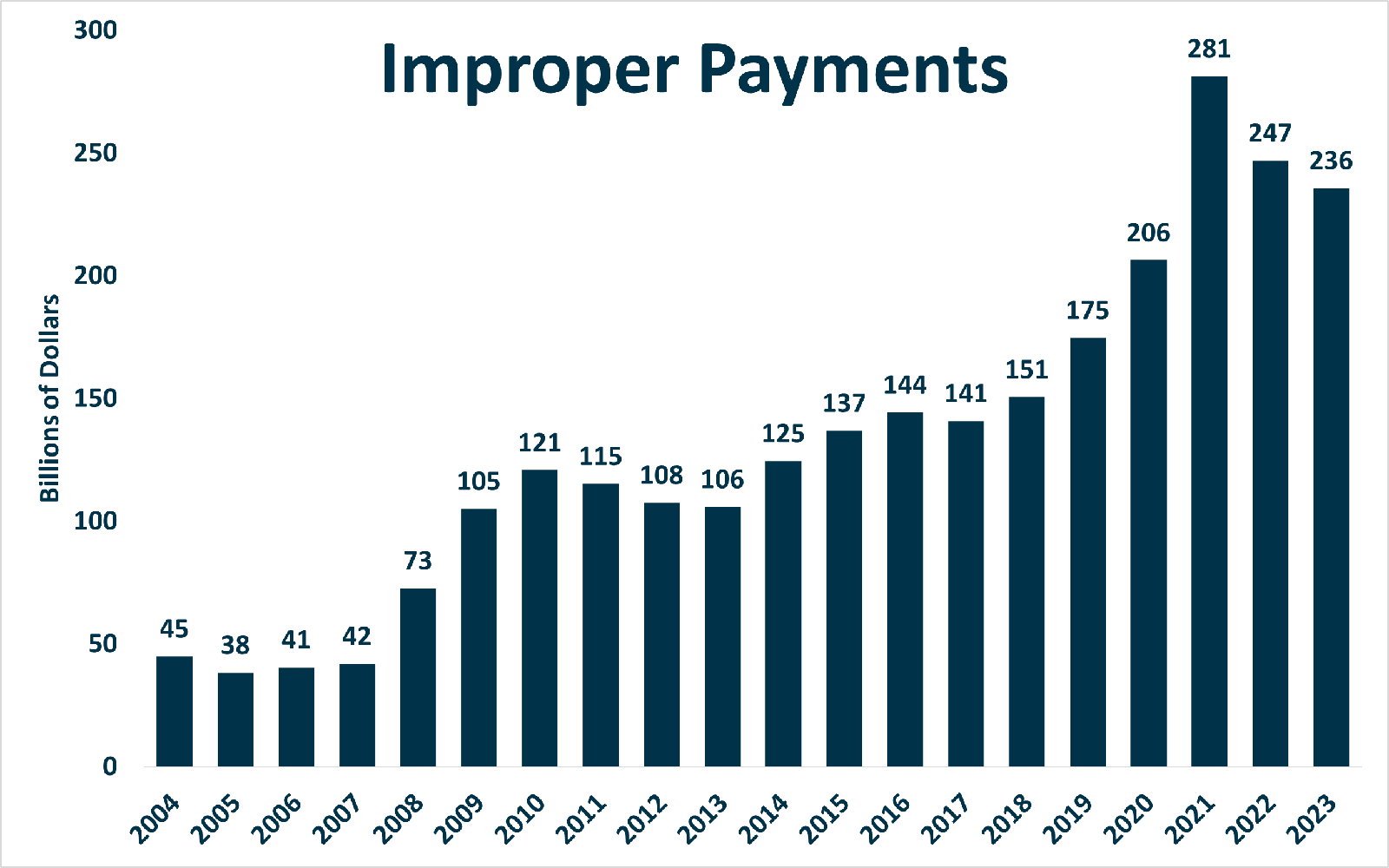
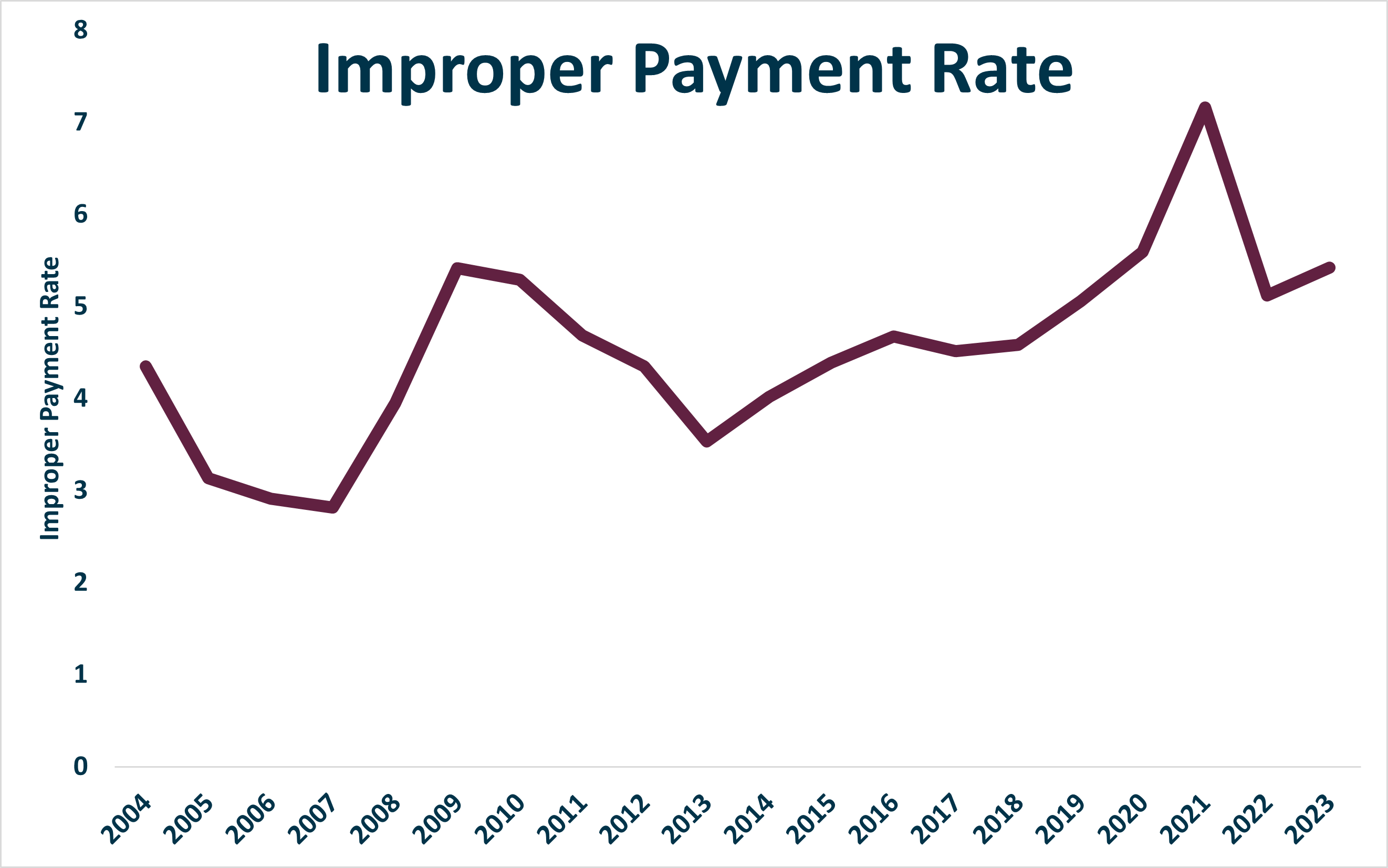
Due to a lag in reporting, the 2023 data includes improper payments for the entirety of the Pandemic Unemployment Assistance (PUA) program, most of which took place in 2020 and 2021. The Department of Labor reported $43.6 billion in improper payments for PUA, a 35.9 percent improper payment rate. Excluding PUA from the 2023 data would have still resulted in $192 billion of improper payments and a 4.55 percent improper payment rate.
Biden’s Record
The Biden Administration has reported a total of $764 billion in improper payments in just three years.
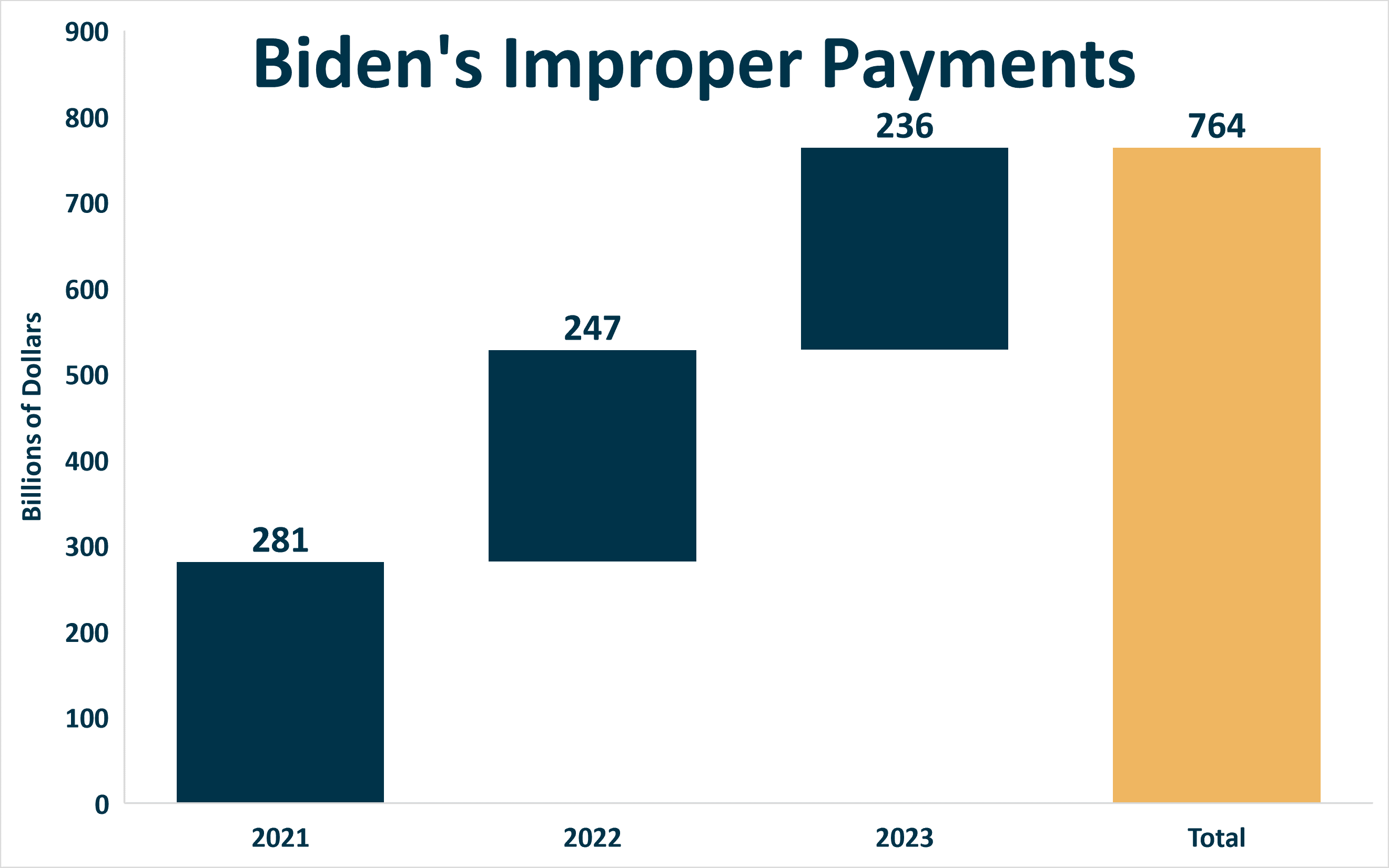
The improper payment rate has averaged 5.9 percent during President Biden’s administration. The pre-pandemic historical average was a 4.23 percent improper payment rate.
If the Biden Administration had simply kept improper payments at the historical norm, improper payments would have been $210 billion lower over the last three years.
Health Care, Entitlements, Welfare Programs Contribute to High Improper Payments
Many of the largest programs in the federal budget have the highest improper payments.
Medicare, Medicaid, CHIP, and Obamacare reported more than $104 billion in improper payments in 2023.
Other welfare programs, including the Earned Income Tax Credit, Food Stamps, SSI, and the Child Tax Credit reported more than $40 billion in improper payments, with high improper payment rates.
While Social Security had a low 0.7 percent improper payment rate, it reported more than $8 billion in improper payments.
| Programs with High Improper Payments | ||
| Program | Improper Payments (in billions) | Improper Payment Rate |
| Medicaid | 50.332 | 8.6% |
| Federal Pandemic Unemployment Assistance | 43.551 | 35.9% |
| Medicare Fee-for-Service | 31.229 | 7.4% |
| Earned Income Tax Credit | 21.881 | 33.5% |
| Paycheck Protection Program (PPP) Loan Forgiveness | 18.738 | 40.5% |
| Medicare Advantage (Part C) | 16.551 | 6.0% |
| Supplemental Nutrition Assistance Program (SNAP) | 8.773 | 11.5% |
| Social Security (OASDI) | 8.345 | 0.7% |
| Supplemental Security Income (SSI) | 5.299 | 9.2% |
| Unemployment Insurance | 4.636 | 16.5% |
| Paycheck Protection Program (PPP) Loan Guaranty Purchases | 4.066 | 49.1% |
| Medicare Prescription Drug Benefit (Part D) | 3.355 | 3.7% |
| COVID-Economic Injury Disaster Loan (EIDL) | 3.172 | 8.1% |
| Children's Health Insurance Program (CHIP) | 2.136 | 12.8$ |
| American Opportunity Tax Credit | 1.651 | 31.6% |
| VA Purchased Long Term Services and Supports | 1.418 | 38.7% |
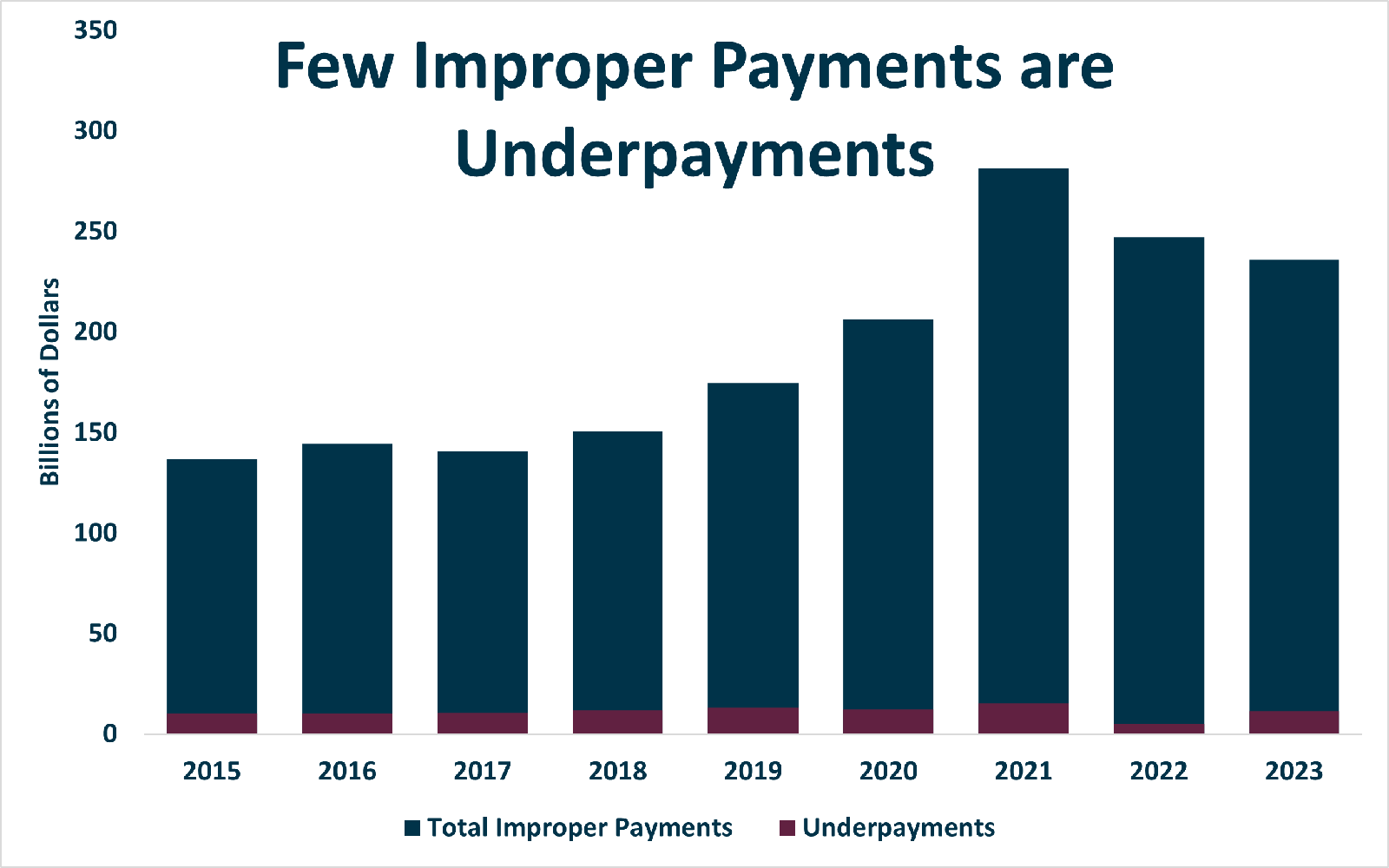
Few Improper Payments Are Underpayments
Improper payments are defined by the Government Accountability Office as “payments that should not have been made or were made in the incorrect amount.”
This definition includes payments where the government underpays a recipient. However, in practice, very few improper payments are underpayments. In 2023, less than five percent of the $236 billion of improper payments were underpayments.
Misplaced Priorities
Improper payments misallocate taxpayer funds on a stunning scale.
In fiscal year 2023, improper payments eclipsed the combined total funding of the Department of Commerce, Department of Energy, Department of Housing and Urban Development, Department of the Interior, Department of Justice, Department of State, Environmental Protection Agency, and National Aeronautics and Space Administration.
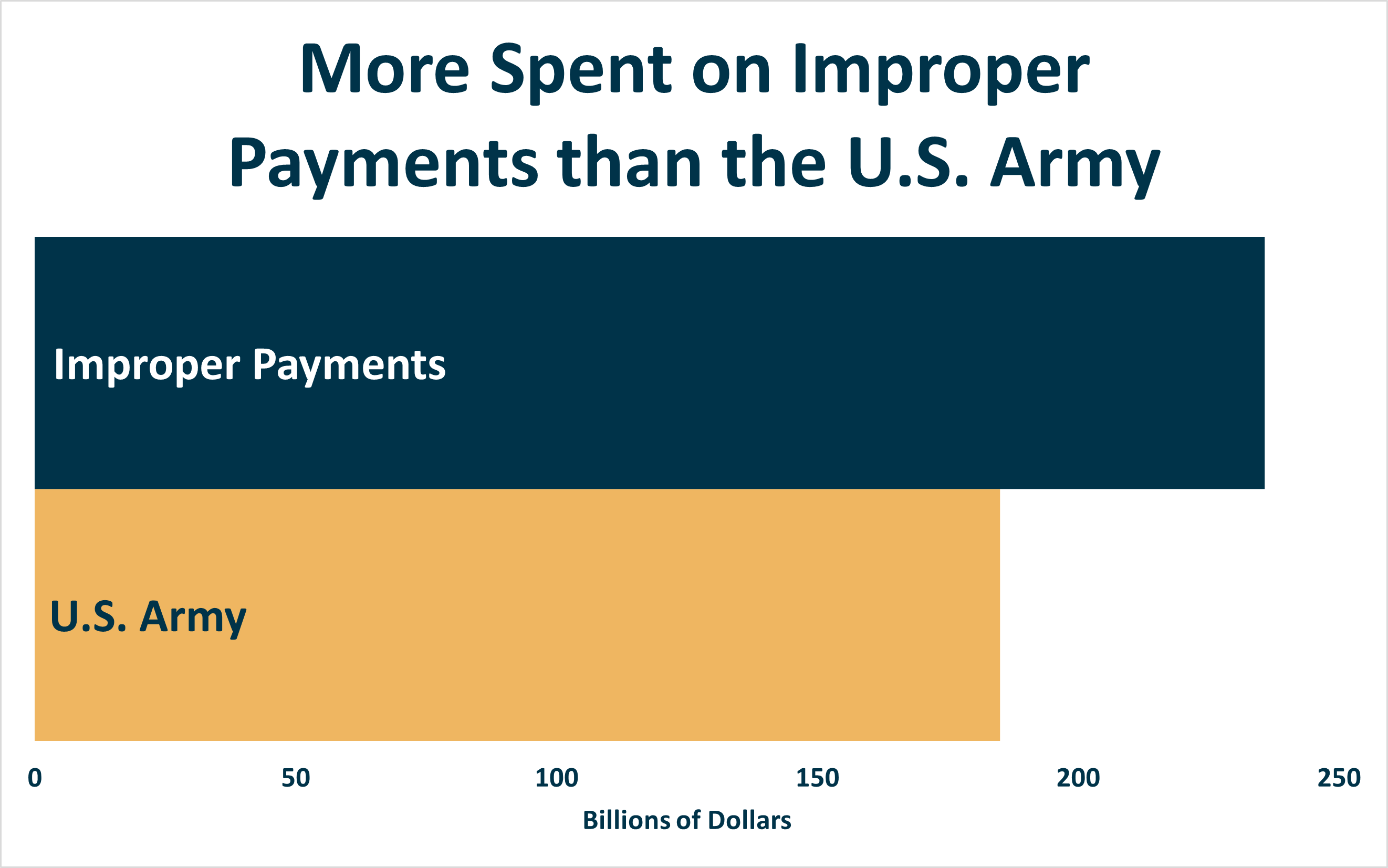
The $236 billion in improper payments was even $50 billion more than the $185 billion provided for the U.S. Army in 2023.
To Reduce Improper Payments, Reduce Government Spending and Demand Accountability
My colleague Rachel Greszler has proposed a litany of reforms to reduce improper payments.
The best way to prevent improper payments would be to restrain government spending. Preventing improper payments before they occur is vital to protect taxpayers, because it can be difficult and costly to attempt to recoup funds once they have already left the Treasury.
The American people should also demand accountability. Federal officials spend hundreds of billions improperly each year, seemingly without consequence.