The U.S.
Treasury and the
Congressional Budget Office’s (CBO) most recent monthly updates indicate some alarming vital signs of the Fiscal Year (FY) 2025 federal budget. One marker of a healthy nation is the ability to pay off its debt. However, the United States faces debt levels not seen since World War II and the interest payments on that debt are growing out of control. Let’s further explore our “patient’s” chart.
Temperature Rising Along With Debt Levels
Despite caution warnings throughout the years to stave off spending and exercise more fiscal restraint, the federal government has not heeded the budget doctor’s warnings.
According to CBO’s
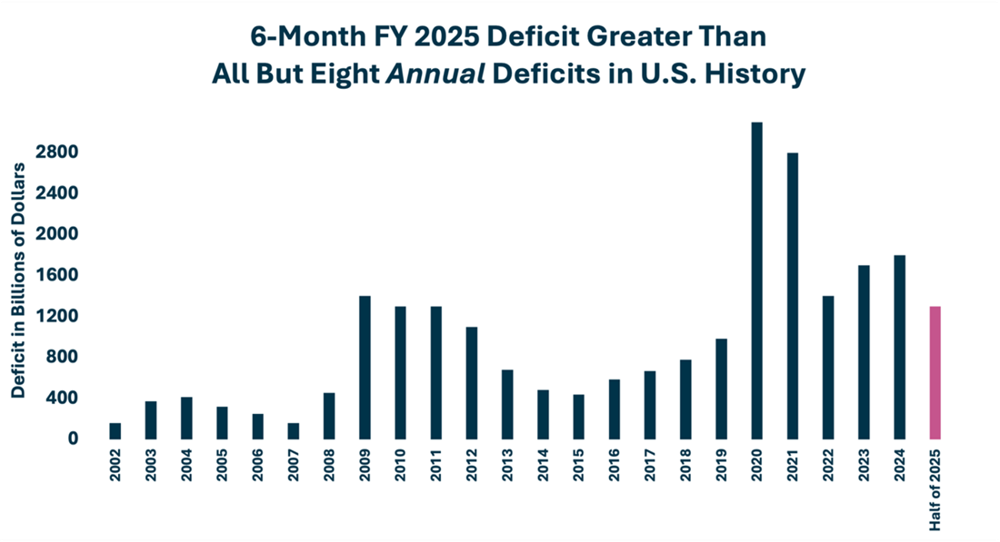
Monthly Budget Review, the United States federal budget deficit totaled $1.3 trillion dollars in just the first six months of FY 2025.
Excluding FY 2021, this is the largest mid-year deficit in the previous 248 years of our nation’s history and beats all but eight
annual deficits (in nominal terms).
While the mid-year budget data does not include the April tax filing season, revenues from the first six months of the fiscal year are up $72 billion, while outlays are up $314 billion compared to the same period in FY 2024. The main causes of this increase in spending are Social Security, Net Interest, and Medicare. With a debt-to-GDP ratio near 100%, the United States government cannot afford to avoid taking its medicine and controlling spending.
More Debt Means Mounting Interest Payments
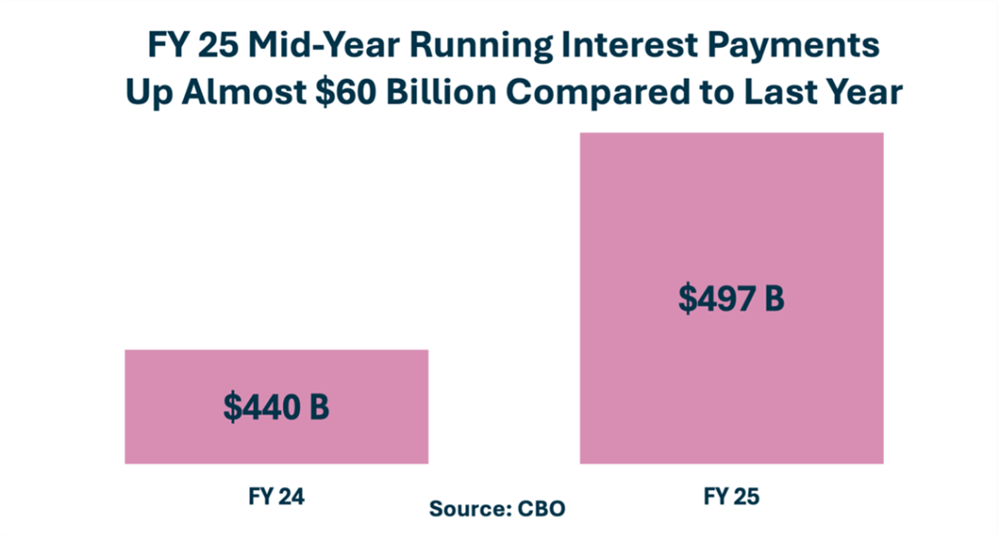
According to CBO’s monthly projections, interest payments through March increased by 13% compared to this time last year, bringing the FY 2025 running total to $497 billion.
Interest Topples Defense Spending
Historically, spending on national defense comprised the
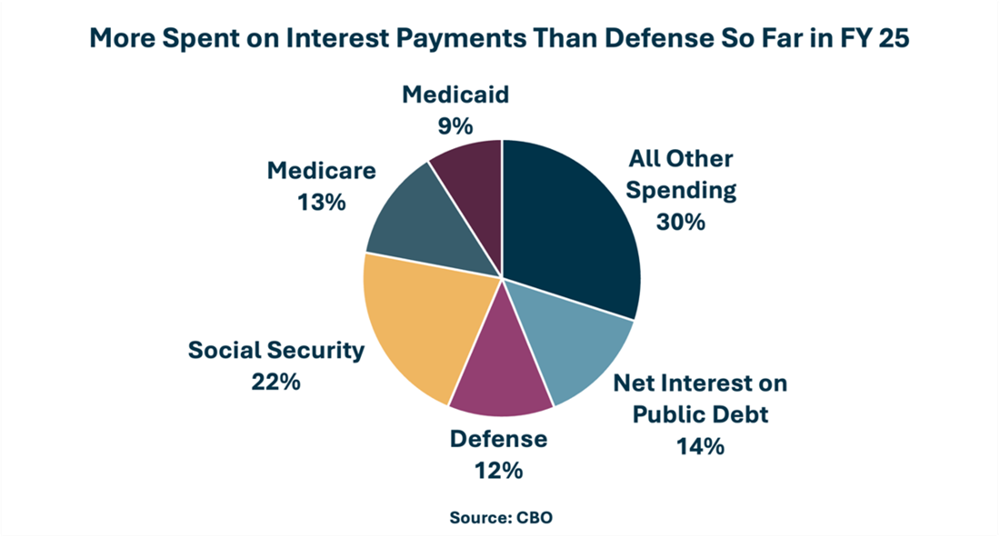
largest part of the federal budget. Through March of this fiscal year, our federal government has spent $445 billion defending our nation but $497 billion on interest payments – $42 billion more.
By 2050, CBO projects that interest payments will
double defense spending, even with defense spending increases.
The government’s largest entitlement programs are growing unsustainably. Through the first half of this fiscal year, Social Security spending totaled $777 billion, Medicare $466 billion, and Medicaid $320 billion. These programs grew 7% compared to the same period in FY 2024. All other spending totaled $1.1 trillion, also growing 7% above FY 2024.
Future Generations Will Pay Budget Health Bills
If interest payments on the national debt get too large for the U.S. to sustainably pay off, the nation could face loss of
fiscal space. Spending must be reduced or future generations will pay the cost through higher taxes and a weakened global position of the U.S.
As our nation moves forward, spending reductions are essential to address rising debt and net interest payment costs. In order to preserve the blessings of our nation for future generations, Congress should take action in reconciliation to “reverse the curse” of our national debt burden and restore our budget back to health.