The Congressional Budget Office’s (CBO)
Budget and Economic Outlook reviews and projects federal spending and revenues on a ten-year basis. As part of the report, the CBO include analysis of the federal deficit and interest payments on those debts. Here are some highlights from their recent January report.
Deficit Disasters
According to the CBO’s Budget and Economic Outlook report, the deficit and interest payments are both expected to rise dramatically over the next ten years. In Fiscal Year 2024, the total federal budget deficit reached
$1.9 trillion with interest payments of
$892 billion. This was caused by years of fiscally irresponsible spending and government abuse of taxpayer funds.
CBO projects that the federal total deficit will reach $
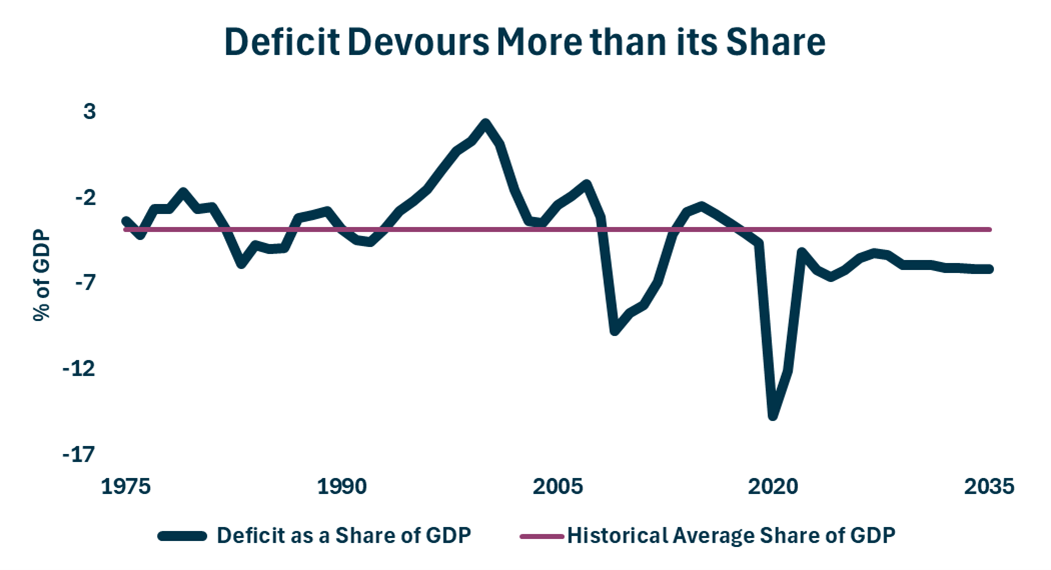
2.7 trillion in 2035, a 70% increase from 2024. The deficit is snowballing and pushing America down a path towards
fiscal disaster. To highlight the seriousness of this situation, the total deficit is projected to increase to
6.1% of GDP by 2035, a 62% increase compared to the average total deficits of 3.8% of GDP in the last 50 years.
The Net Interest Noose Tightens
As the deficit rises, interest payments on the national debt also increase. In terms of revenues, interest payments are set to increase from an average of 12.1% of federal revenues to a
projected 22.2% of federal revenues by 2035.
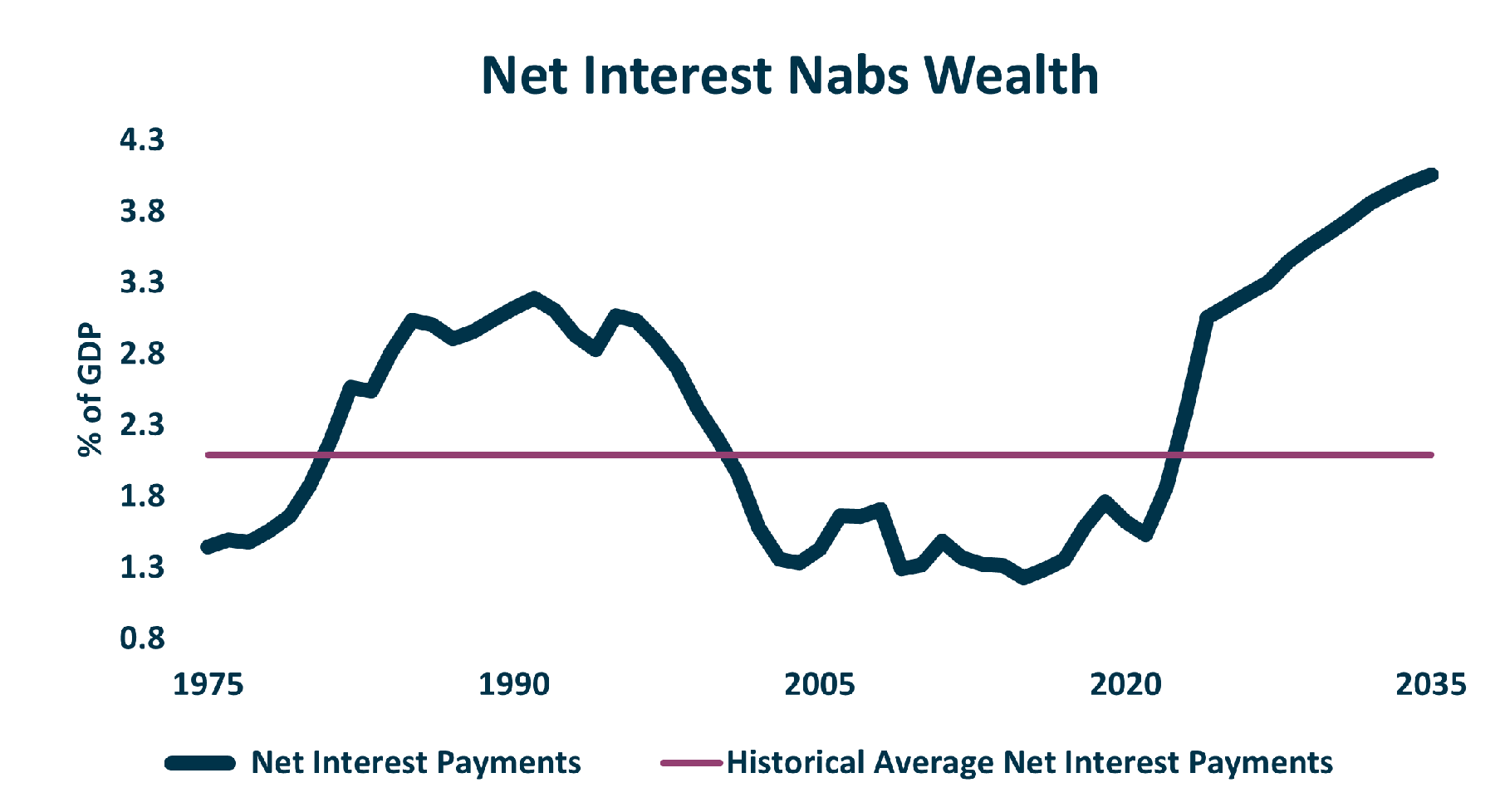
To put the net interest costs in perspective, payments towards interest are projected to rise from 3.1% of GDP in Fiscal Year 2024 to
4.1% of GDP by 2035. This would be the highest recorded level of spending on interest in America’s history and nearly double the historical average of 2.1% of GDP.
A Spending Spiral
Federal debt has reached a level not seen since after World War II and risks a
fiscal space crisis. A fiscal crisis occurs when the deficit and interest payments rise to a level that forces lawmakers to begin choosing between financial stability and continuing federal spending at the same level. With CBO’s recently released data, the United States’ fiscal space is projected to continue to decrease as spending continues to rise.
Starting in 2035,
one sixth of all federal spending must be put towards interest payments on the national debt or risk a default. This means less funding can be allocated towards Social Security, national defense, or other programs.
The reality is that fiscally irresponsible spending has increased the deficit and the payments on that debt to historic levels. Congress should
reduce the deficit and treat the national debt with the seriousness it deserves. Lawmakers must begin maintaining economic stability and promoting fiscal restraint for the benefit of their constituents.
The American taxpayer deserves a government that responsibly spends their money and reducing the deficit, along with the net interest payments, offers lawmakers an opportunity to do that.