The
Infrastructure Investment and Jobs Act (IIJA) marked a major expansion of federal involvement in transportation policy, directing $1.2 trillion taxpayer dollars toward infrastructure investments, including electric vehicles and charging infrastructure. Alongside new and expanded subsidy programs, the law created additional federal offices to push a transition to electric transportation nationwide.
Yet the results have fallen short of expectations. Charger deployment has been slow, while a growing share of IIJA funding has been consumed by administrative efforts, planning initiatives, and grant programs that channel resources through advocacy organizations. Rather than prioritizing the construction of physical infrastructure, many funded projects emphasize environmental justice, identity-based policy goals, and global climate priorities. This rightfully raises questions about whether the law is being implemented as Congress intended and in line with American priorities.
A Detour from Congressional Intent
The IIJA provides funding to projects and initiatives intended to accelerate electric vehicle (EV) adoption and development. An
earlier report in this series exposed controversial grants made by the IIJA’s Communities Taking Charge Accelerator program.
This report focuses on the
Ride and Drive Electric program. Administered by the
Joint Office of Energy and Transportation (JOET), the program has
awarded $46.5 million in grant money to organizations and municipalities since fiscal year 2023.
The JOET was
established in the IIJA as a joint operation between the Department of Transportation and the Department of Energy. They are responsible for supporting EV expansion programs through grant facilitation and standards creation.
Many of these Ride and Drive Electric grants explicitly fund projects that promote environmental justice and racial equity initiatives, or list partner organizations in the award announcements that actively advocate for those causes.
Each Ride and Drive Electric grant relies on a network of partner organizations, all of which are listed on the JOET’s award
page. These partners play an active role in shaping project design, implementation, and stated priorities, working closely with lead recipients to influence how projects are carried out. Even when they do not receive federal funds directly, their involvement allows them to exert influence over how taxpayer dollars are used.
This funding structure raises serious concerns. Federal funding should support the construction and deployment of transportation infrastructure—not to route federal dollars through partnerships that function as advocacy pipelines. When IIJA grants are directed toward planning, coordination, and partnership activities that fail to produce tangible infrastructure, they instead function as subsidies for advocacy for controversial policies rather than investments in infrastructure.
Ride and Drive Electric Grants Go Off Track
The following examples represent some of the most egregious uses of these funds in the Ride and Drive Electric Program.
GRID Alternatives, CO - $1.5 Million
GRID Alternatives received funding through Ride and Drive Electric for a project titled “Leverage Low-Income Electricity Discounts to Unlock Equity at Public EV Charging.” The project aims to offer discounted public charging to minority groups to create “equitable access to EV charging infrastructure.”
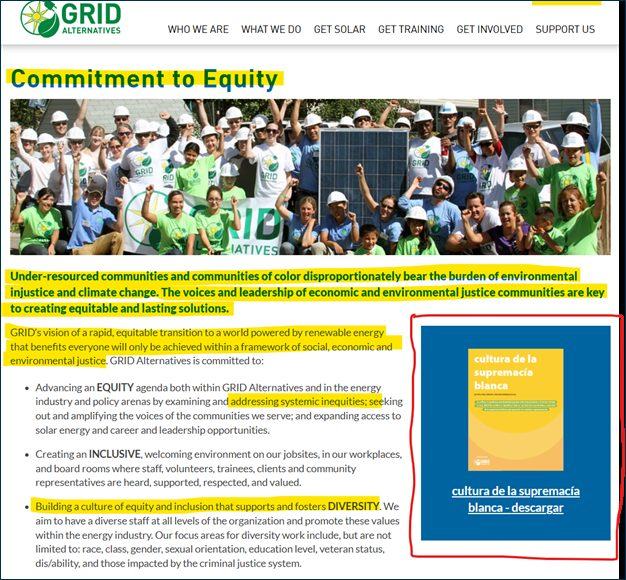
GRID Alternatives is an advocacy organization that
aims to “advance economic and environmental justice through renewable energy.” Their website has a page highlighting their commitment to equity. On that page is a
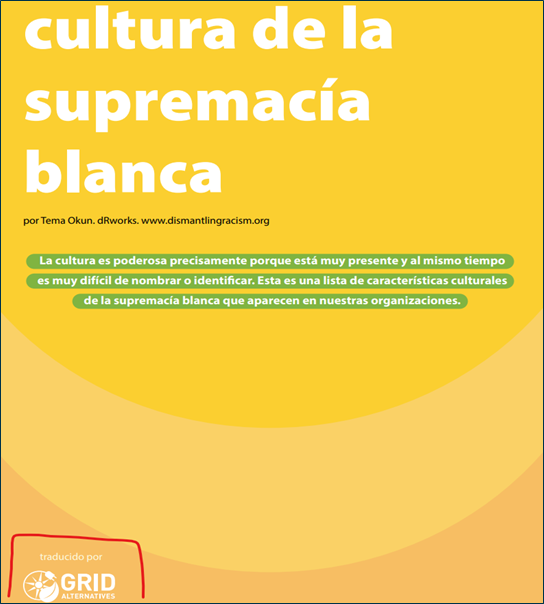
link to a pamphlet titled "cultura de la supremacia blanca” or translated, “White Supremacy Culture.”
This pamphlet was translated by the GRID Alternatives staff and provides a list of “negative white supremacy characteristics” including a sense of urgency in life/work, individualism, and objectivity.
This grant illustrates how IIJA funds are being used to advance equity-based pricing schemes, rather than to deploy broadly accessible transportation infrastructure.
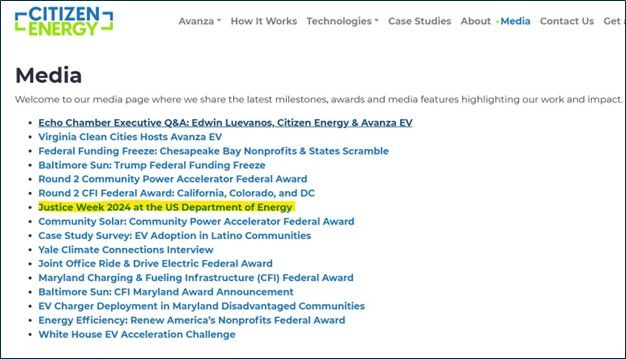
Citizen Energy, LLC, Washington, DC - $1.4 Million
JOET’s Ride and Drive Electric program funded a project by
Citizen Energy, LLC to create “community-driven models for EV charging deployment” in DC, Maryland, and Virginia with IIJA Funds. Congress intended IIJA funds given to JOET to facilitate EV and charger deployments. This project focuses on finding ways to encourage EV adoption and charging infrastructure in Latino multi-family housing in DC, Maryland, and Virginia. Rather than focus on broad guidelines and standards, this prioritizes one specific ethnic community.


Citizen Energy works to accelerate the transition to a 100% clean energy economy. They focus their efforts on low-income housing areas to promote EV and solar power. They also
spoke at the Biden Department of Energy Justice Week 2024: Equity in Action panel on their work promoting equitable EV access.
 CASA
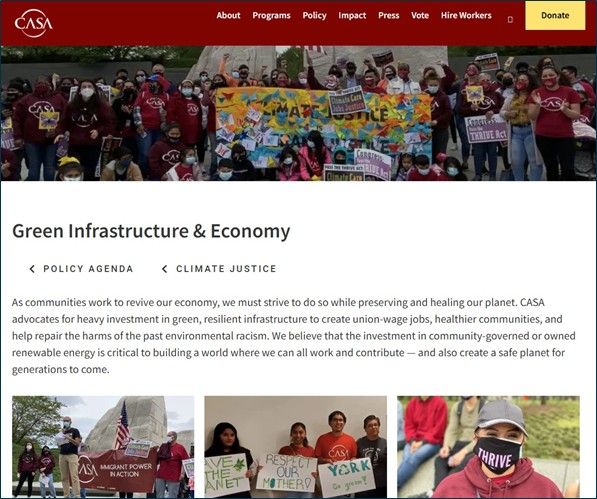
CASA is a community partner listed on the grant announcement. They are an immigrant advocacy organization based in the DC-Maryland-Virginia area. Their home page displays anti-immigration enforcement initiatives such as an anti-Immigration and Customs Enforcement (ICE) tipline and a
post highlighting CASA’s advocacy for legislation limiting local law enforcement from working with ICE in Virginia.

Along with these efforts undermining the rule of law, they also
advocate for a transition to a “green economy” as reparation for “past environmental racism.”
Taxpayer dollars should not go to projects that partner with organizations undermining efforts to enforce immigration law and calling for environmental reparations. Instead of supporting infrastructure, IIJA funding is being used to undermine American principles.
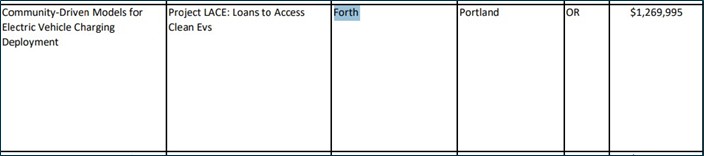
Forth, OR - $1.2 Million
Forth is an advocacy organization focused on promoting clean and “equitable” transportation policies. Through the Ride and Drive Electric program, Forth received $1.2 million as the lead organization on a project to implement the Biden Administration’s Justice40 initiative through EV charger deployment. The
Justice40 Initiative is a federal equity mandate that directs at least 40 percent of certain climate and infrastructure spending based on “disadvantaged community” criteria.

Forth co-operates the
Toward Equitable Electric Mobility (TEEM) initiative, which is designed to channel IIJA funds toward projects explicitly centered on racial and environmental equity objectives such as the Justice40 initiative.
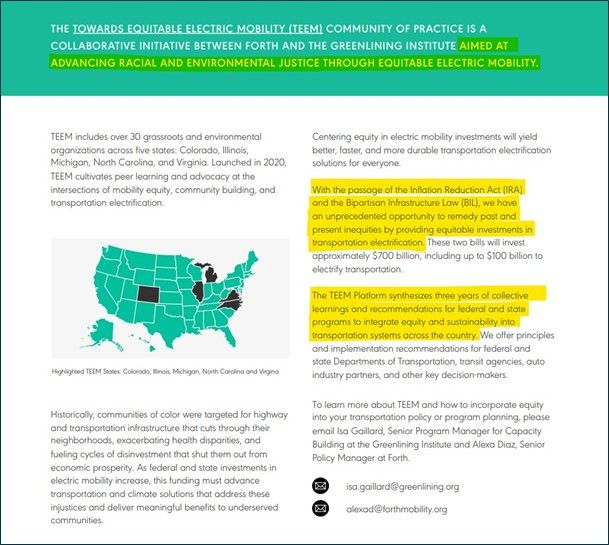
This project exemplifies how IIJA funds are being diverted from the objective of building deployable infrastructure. Rather than prioritizing broad-based EV access and measurable infrastructure outcomes, the grant channels federal dollars toward advancing the Justice40 equity framework and related advocacy goals.
New York Mayor’s Office of Climate and Environmental Justice, NY - $1.4 Million
The
New York City Mayor’s Office of Climate and Environmental Justice received IIJA funding through JOET to develop guidance for an electric school bus system in New York City. The Office’s stated
mission is to ensure that all city projects and programs advance climate and environmental justice objectives, including accelerating a transition away from a “fossil-fueled economy.”
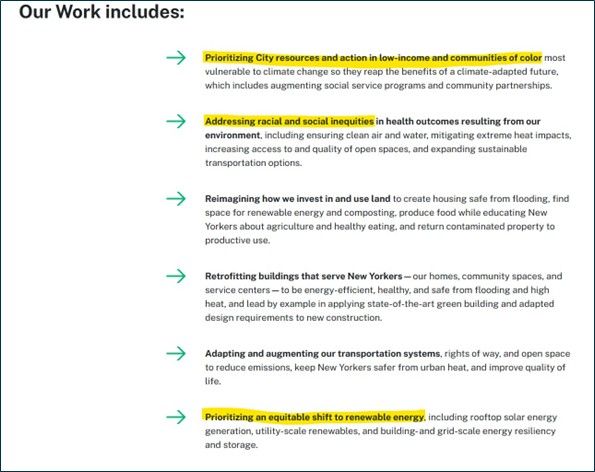
Developing environmental justice-based guidance does not fall within the core mission of highway infrastructure and should not continue.
Infrastructure Funding Should Serve Infrastructure Goals
IIJA funding has too often been directed toward organizations whose primary objectives are political advocacy and ideological policy frameworks, rather than the construction and deployment of infrastructure.
Federal infrastructure programs should be judged by their ability to deliver usable, reliable infrastructure, not by their alignment with activist priorities. Congress should avoid reauthorizing IIJA programs that allow taxpayer dollars to be steered through advocacy organizations instead of toward infrastructure investments.