
Under the auspices of the Inflation Reduction Act (IRA) and Infrastructure Investment and Jobs Act (IIJA), the federal government gave woke non-profit organizations millions of dollars in grants to make plans and conduct studies on how to make infrastructure less “racist.” Their proposals involve spending millions more in taxpayer dollars on ideologically driven projects of questionable value.
What Makes Good Infrastructure
The federal government of the United States is $38.5 trillion dollars in debt. This has put the U.S. in a precarious position, with less and less fiscal space to respond to any emergencies that may arise. Policymakers must consider spending decisions more closely, especially with something as vital as infrastructure. Ideally, federal infrastructure dollars should go to projects that provide more economic value than they cost, and they should be focused on projects with high expected usage, not highly localized projects. Local projects are the responsibility of state and local governments, and they should be the ones to pay for and handle them if they choose to prioritize doing so. Lastly, infrastructure spending should put national priorities first, benefitting all Americans rather than any particular “stakeholders” or ideologies.Concerning Grants to Ideologues
The U.S. Department of Transportation (DOT) gave grants for projects to study and replace “racist” roads and highways under two programs: the Neighborhood Access and Equity Grant Program (NAE) and the Reconnecting Communities Pilot Program (RCP). The IRA provided $3.2 billion to the NAE, and while the IIJA provided $1 billion to the RCP. Of those funds, the NAE allocated $50 million and the RCP $250 million for planning grants, which non-profit organizations were also qualified to receive. These funds will remain available until the end of fiscal year (FY) 2026. The NAE and the RCP, despite being enacted in two separate laws, are closely linked programs that serve very similar purposes: addressing supposed systemic racism caused by infrastructure. Being so similar, the Biden Administration DOT paired them together in their spreadsheets of awarded grants. These programs were framed a way to improve infrastructure for “disadvantaged and underserved communities” and “build racial equity in America’s roads.” They actually fund left-wing activist organizations.$4 Million for a Land Bridge - MN
The first case comes from the St. Paul, Minnesota, area. The non-profit organization ReConnect Rondo proposes building a land bridge over the I-94 highway and establishing an “African American cultural enterprise district” to “reverse systemic oppression once and for all.” ReConnect Rondo received $2 million in federal RCP grants in FY 2022 and another $2 million in FY 2024, totaling at least $4 million for this project.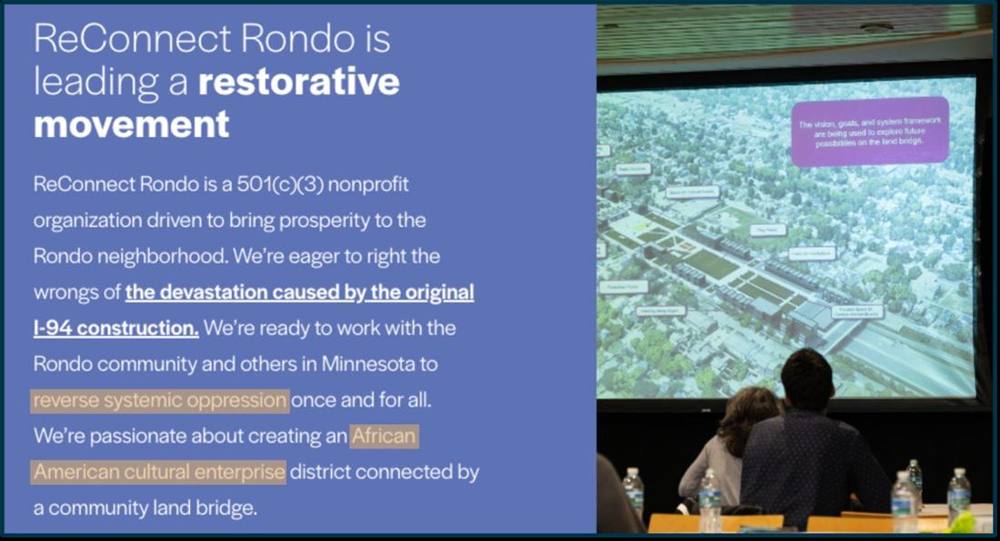 Whether or not I-94 was purposefully built in the 1960s to divide the predominantly African American neighborhood of Rondo is one matter. Regardless, the federal government should not fund a project explicitly designed to benefit only one racial group. Using racial favoritism to fix alleged past discrimination only perpetuates the problem.
If the city government of St. Paul or the Minnesota DOT believes that I-94 had such negative effects, they can take it upon themselves to fund and build whatever infrastructure they deem necessary. Federal dollars should not go to projects that exclusively benefit one locality, much less one racial group in that area.
Whether or not I-94 was purposefully built in the 1960s to divide the predominantly African American neighborhood of Rondo is one matter. Regardless, the federal government should not fund a project explicitly designed to benefit only one racial group. Using racial favoritism to fix alleged past discrimination only perpetuates the problem.
If the city government of St. Paul or the Minnesota DOT believes that I-94 had such negative effects, they can take it upon themselves to fund and build whatever infrastructure they deem necessary. Federal dollars should not go to projects that exclusively benefit one locality, much less one racial group in that area.
$2 Million to Detroit DEI Dilettantes - MI
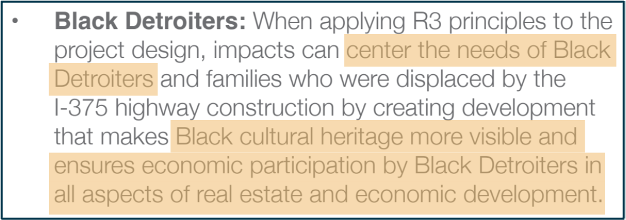
The Downtown Detroit Partnership (DDP) received federal planning grants totaling $2 million under the NAE. Among their self-stated core values are “diversity, equity, inclusion, and belonging,” and their guiding principles are to “honor, repair, and restore Black Bottom legacy.” Black Bottom is a historically African American community in Detroit, Michigan, which the DDP argues was unfairly hurt and displaced by the I-375 highway. They propose removing the highway and replacing it with a surface street. Average daily traffic was 46,263 commuters on the segment of I-375 in 2024, according to the Michigan Department of Transportation.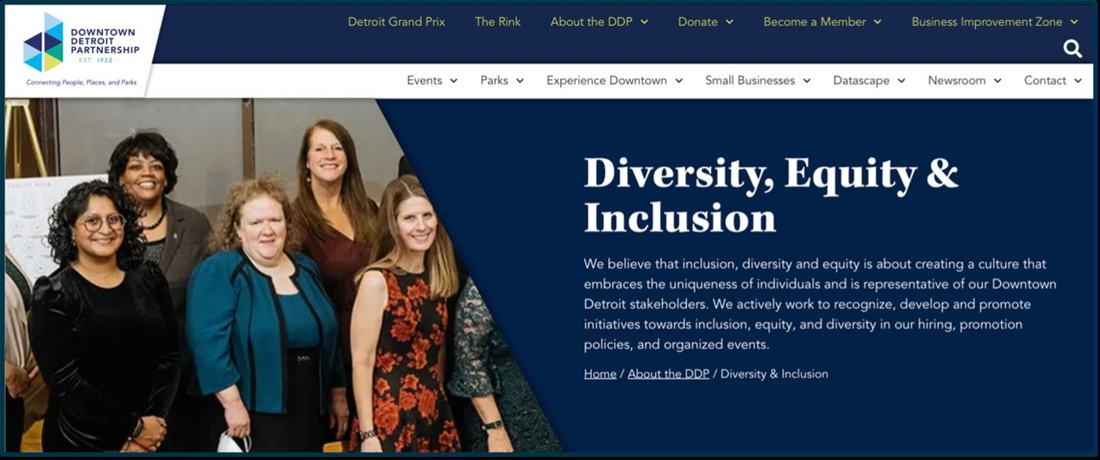 In one of their white papers for redeveloping I-375, they often repeat their phrase “reconnect, restore, and repair,” which they call the “R3 principles.” They state that special attention should be paid to impacts that “creat[e] development that makes Black cultural heritage more visible and ensures economic participation by Black Detroiters in all aspects of real estate and economic development.”
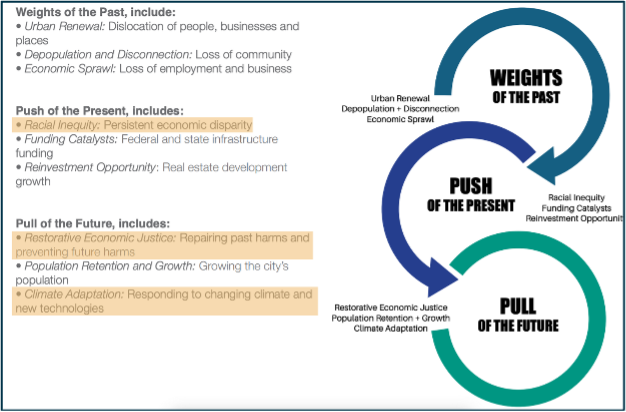 Similarly to ReConnect Rondo, this focus on one racial group in one locality runs contrary to the principles of good infrastructure policy and is another case of blatant racial favoritism that will not actually repair any past harms.
$2 Million to a Social Justice Community Garden - CA
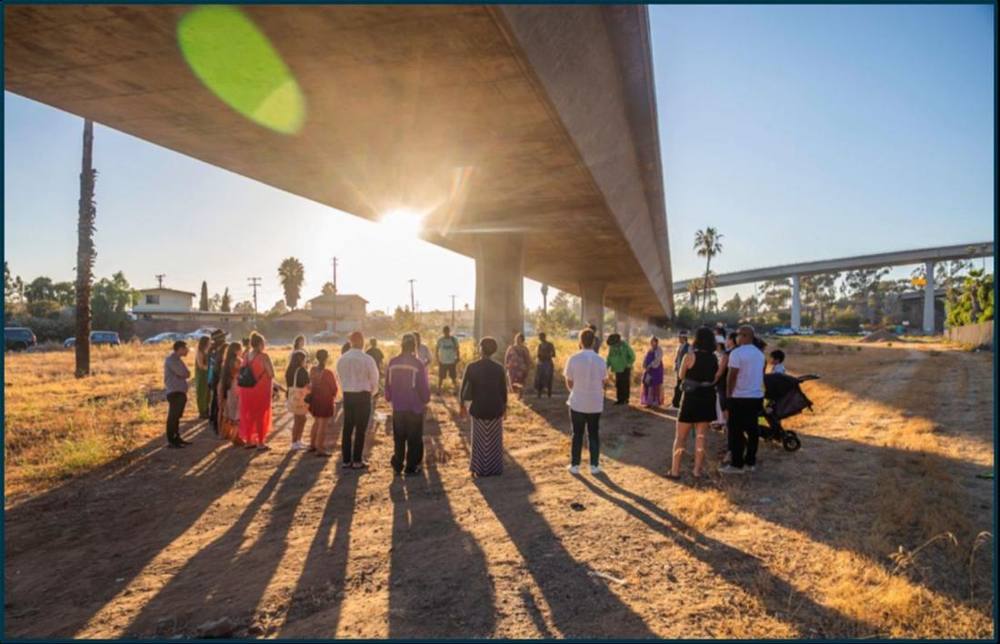
Mundo Gardens in San Diego, CA, which describes itself as a “community garden and social justice organization,” received $2 million via the NAE in FY 2023. Mundo Gardens highlights that, outside of their community garden, they also teach classes for “gardening, art, nutrition, cooking, music, and yoga.” The grant summary states that Mundo Gardens partnered with local government agencies in San Diego to create a plan to remove a single off-ramp from Interstate 805 and replace it with a “community land trust, affordable housing, and active transportation infrastructure that connects communities who have been divided from one another.” An average of 13,400 vehicles per day used the north and southbound I-805 offramps to 43rd street, according to data from the Caltrans Traffic Census Program.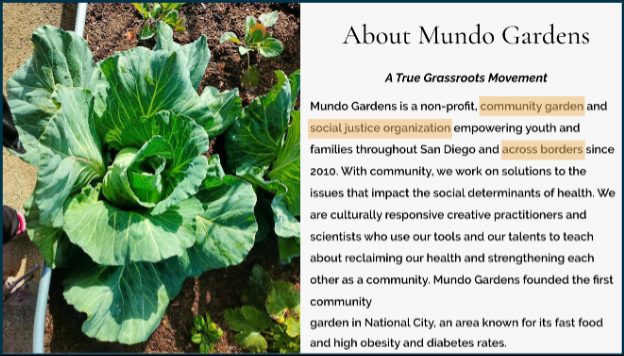 According to Transportation for America, they also performed a land acknowledgement ceremony on the grounds of the off-ramp they reportedly plan to turn into a community park, pictured below.
 Funding these sorts of projects does not align with Americans’ priorities, especially when run by blatantly left-wing organizations like a social justice community garden. There are likely much more worthy interstate projects that federal infrastructure dollars could go towards, rather than a local project to remove an off-ramp.