The current federal debt has escalated to levels not seen since World War II, marked by a sharp increase due to the public debt rising by $9.1 trillion since the beginning of the pandemic. This trend poses a crucial question about the sustainability of the federal government's budget.
Debt, while essential for addressing wars, pandemics, and recessions, does not inherently indicate a problematic position. Instead, it reflects a nation’s economic resilience. However, the risk arises when a government nears its borrowing limit, potentially threatening its response to future challenges and undermining the federal government's creditworthiness, which has been a cornerstone of fiscal and monetary policy since the 1790s.
Economists assess a government's borrowing capacity by gauging the fiscal space, defined as the difference between current public debt and the maximum sustainable debt level. This space is under threat from persistent structural deficits, higher interest rates, and slower economic growth, which could significantly limit borrowing capacity.
Estimates in a new
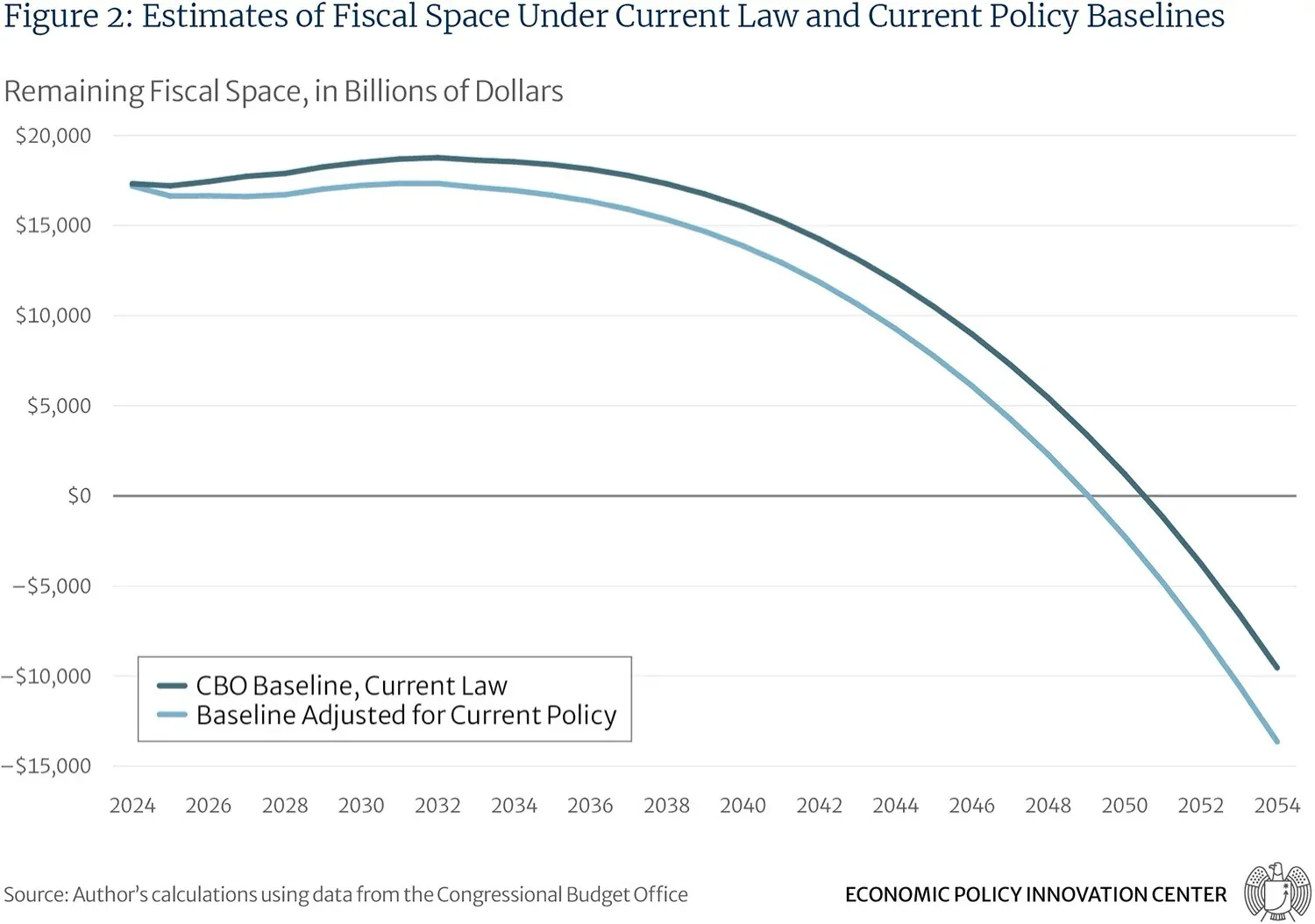
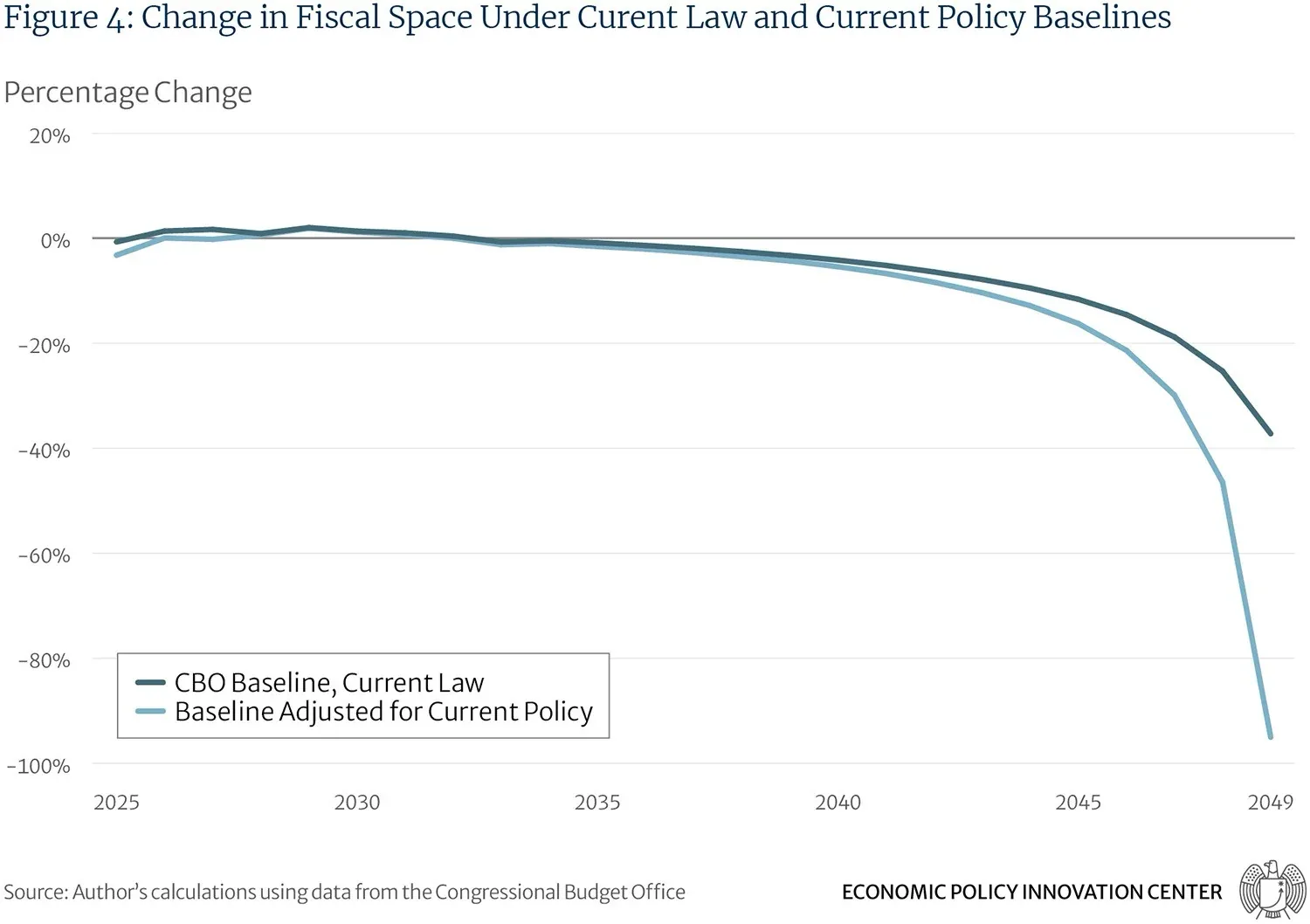
EPIC paper show that the federal government will deplete all fiscal space by the 2050s under current fiscal projections by the Congressional Budget Office (CBO). If current policies continue without allowing tax and spending provisions to expire or without other offsets, the erosion of fiscal space will commence as early as 2032.
Various factors, including institutional stability, fiscal records, economic growth potential, and fiscal commitments influence fiscal space. An open economy and lower interest rates typically increase fiscal space, while higher government debt interest rates and large adverse fiscal events can reduce it. The United States experienced an increase in fiscal space before the pandemic due to very low real interest rates, offset by increased debt and lower economic growth potential.
Interest rates and economic growth are key components in the availability of fiscal space. Increasing debt due to fiscal imbalance puts financial stability at risk, affecting interest rates for safe assets like Treasuries and eroding fiscal space. Without enough economic growth to counterbalance this, a debt spiral could be triggered.
EPIC’s analysis of the erosion of the federal government’s fiscal space attributes the decline to higher interest costs and spending on federal health programs. Current CBO projections show even higher health spending but also increased revenues and overall lower spending, impacted by higher migration levels and unsustainable discretionary spending limits.
Maintaining current policies would erode fiscal space roughly two years earlier than under current law. Macroeconomic factors, including potential growth, migration, and trade play significant roles in these projections. Reduced fiscal space can be a consequence of restrictive immigration or trade policies by reducing potential growth.
To prevent the permanent erosion of fiscal space, the report suggests that deficit reduction, especially in federal health program spending, is necessary. Preserving economic growth is also vital. The Fiscal Responsibility Act’s lower limits on discretionary spending improve fiscal space, which must be maintained alongside health spending reductions. A comprehensive deficit reduction package equating to 1% of GDP over a decade, or $2.4 trillion, could preserve fiscal space through the 2030s.
It is important to consider the broader implications of deficit reduction, not just as political trade-offs but as essential to maintaining low interest rates, risk-free government debt, and maximum potential growth. These factors, more than any political debate over trading spending cuts and tax increases, define the borrowing constraints of a nation.