
Op-Ed
CBO: One Big Beautiful Bill Grows the Economy, Cuts Taxes & Slows Welfare Spending
February 12, 2026 · David Ditch

Taxpayer costs for Food Stamps skyrocketed from $31 billion (in inflation-adjusted terms) to $135 billion between 2001 and 2023.
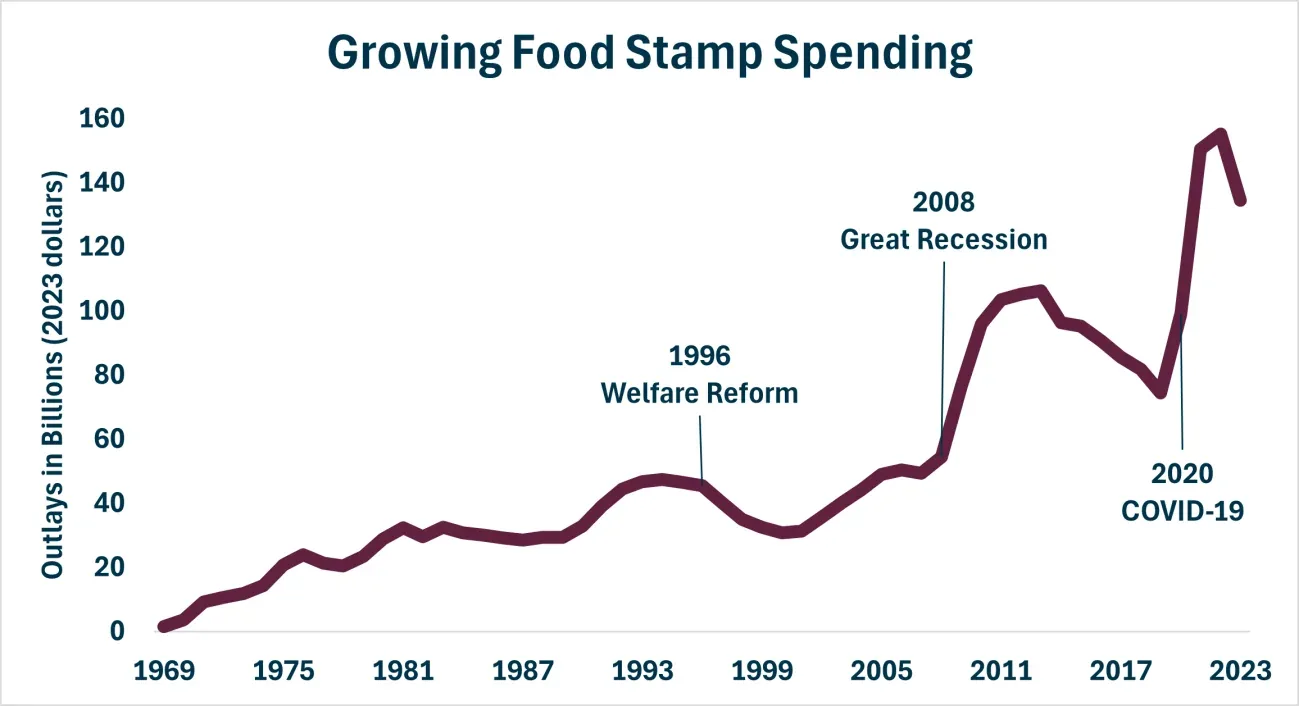
Food stamp spending has grown significantly.
Outlays for food stamps totaled $134.6 billion in FY 2023.
In FY 2001, inflation-adjusted outlays for the program were $31 billion (19.1 billion in nominal terms). That means in constant 2023 dollars, annual spending on food stamps has increased by more than $100 billion over the last 23 years.
The trend in food stamp outlays shows significant spikes in 2009 and 2020.
This is due to two related factors: 1) increased enrollment in the wake of the Great Recession and the COVID-19 pandemic and government shutdowns of the economy; and more significantly, 2) major increases in benefit payments and eligibility enacted by Congress and the USDA.
The food stamp program is the largest non-healthcare welfare program by total spending. It is one of the largest programs in the federal budget, exceeding the combined costs of the U.S. Departments of Commerce, Energy, Interior, Justice, and the Environmental Protection Agency.
Unlike some other welfare programs, food stamps are funded by the federal government without a state matching requirement for benefit payments. The federal government also reimburses 50 percent of state administrative expenses.