
Op-Ed
CBO: One Big Beautiful Bill Grows the Economy, Cuts Taxes & Slows Welfare Spending
February 12, 2026 · David Ditch


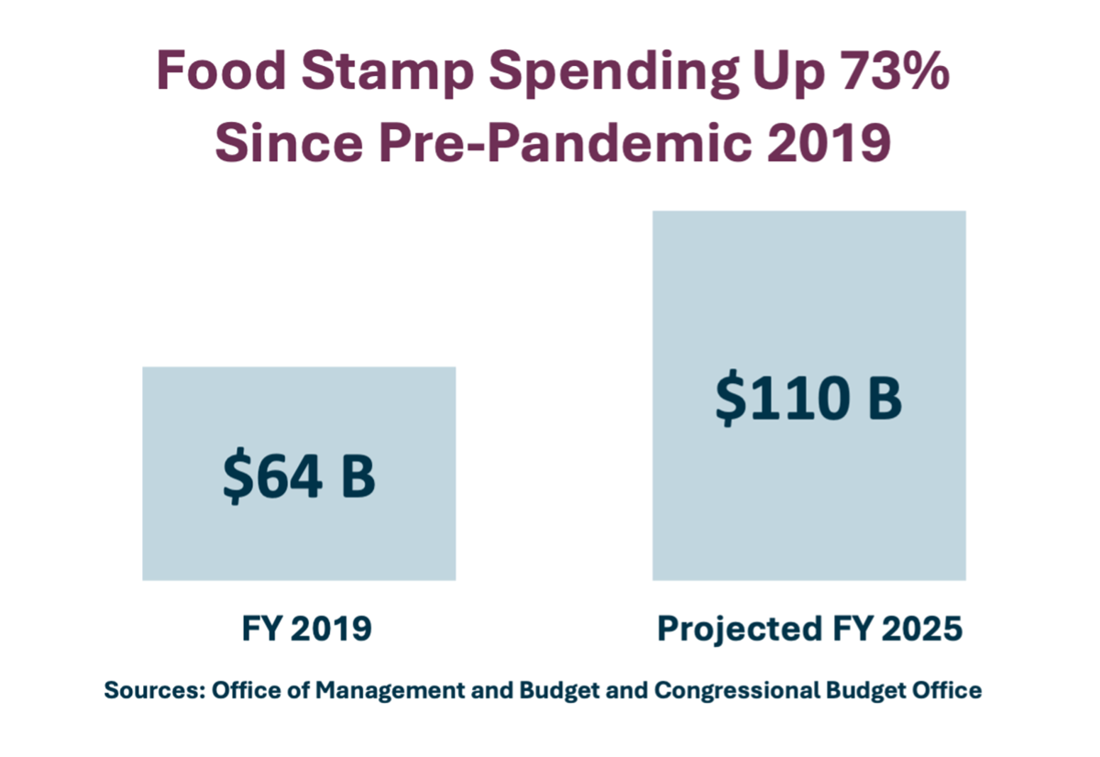 Food stamp spending figures were taken from the Office of Management and Budget and the Congressional Budget Office.
In theory food stamp spending should coincide with national poverty levels, yet here they do not come close.
The number of impoverished people from FY 2019 – FY 2025 is expected to increase by 14 percent, while food stamp spending will increase by a drastic 73 percent.
Food stamp spending figures were taken from the Office of Management and Budget and the Congressional Budget Office.
In theory food stamp spending should coincide with national poverty levels, yet here they do not come close.
The number of impoverished people from FY 2019 – FY 2025 is expected to increase by 14 percent, while food stamp spending will increase by a drastic 73 percent.
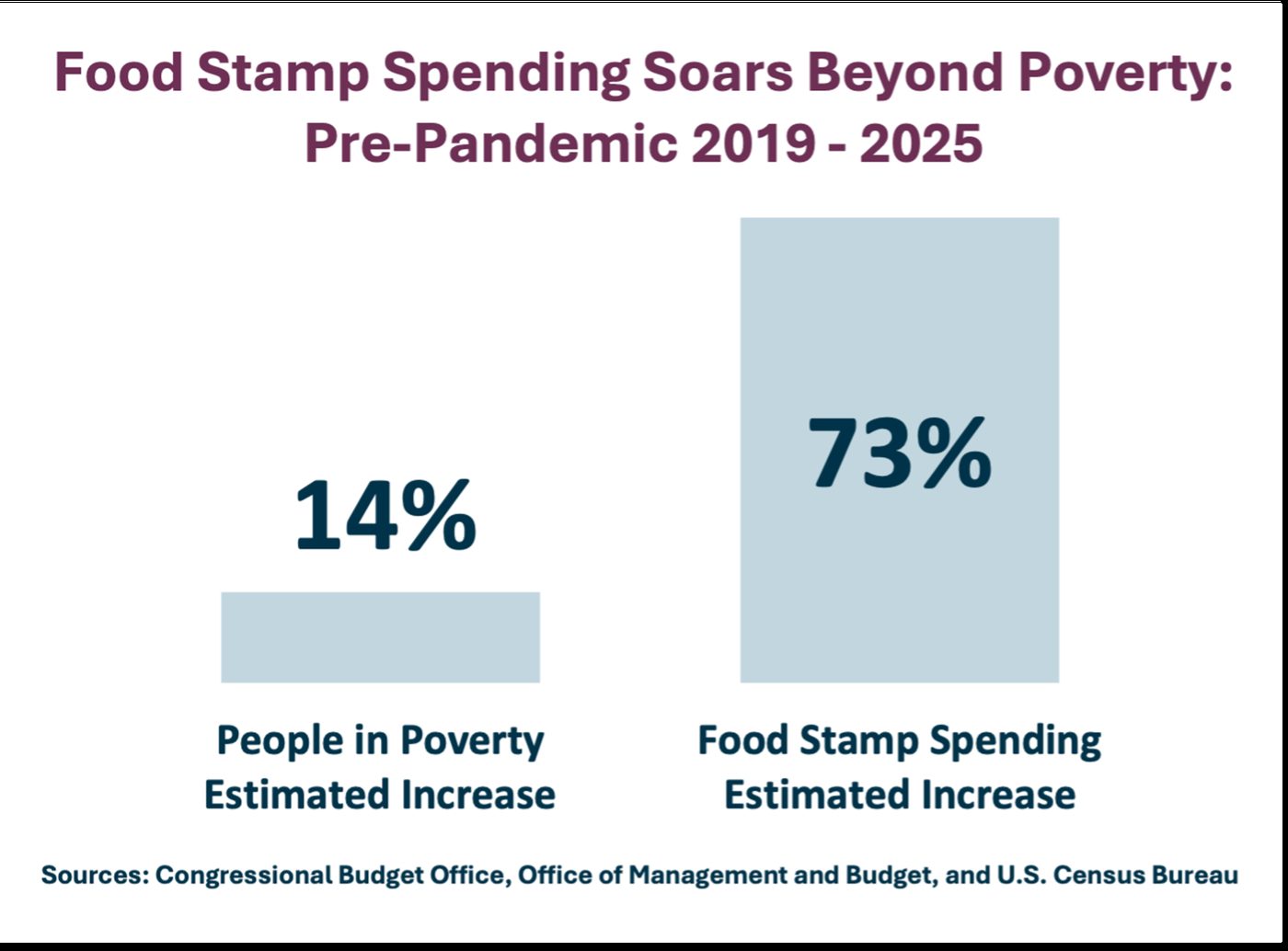 The rise in poverty was estimated using the U.S. Census Bureau’s most recent poverty rate along with the Congressional Budget Office’s 2025 demographic projections.
The main issue here is not simply that we have yet to return to pre-pandemic spending levels – it is that the money is going to a program that discourages independence and human dignity.
According to EPIC’s Director of Budget Policy, Matthew Dickerson, the percentage of people on food stamps skyrocketed in recent years along with the amount of time spent in the program, all while work requirements slipped.
Dickerson also found that between 2017 and 2019, 62 percent of work-capable recipients did not work.
Congress should stop pouring billions of more taxpayer dollars into a system that traps able-bodied people in cycles of dependency.
It should instead use these resources to provide healthier food options to those who genuinely cannot provide for themselves and reinvent the system to ultimately encourage independence for those who need a short-term safety net.
The rise in poverty was estimated using the U.S. Census Bureau’s most recent poverty rate along with the Congressional Budget Office’s 2025 demographic projections.
The main issue here is not simply that we have yet to return to pre-pandemic spending levels – it is that the money is going to a program that discourages independence and human dignity.
According to EPIC’s Director of Budget Policy, Matthew Dickerson, the percentage of people on food stamps skyrocketed in recent years along with the amount of time spent in the program, all while work requirements slipped.
Dickerson also found that between 2017 and 2019, 62 percent of work-capable recipients did not work.
Congress should stop pouring billions of more taxpayer dollars into a system that traps able-bodied people in cycles of dependency.
It should instead use these resources to provide healthier food options to those who genuinely cannot provide for themselves and reinvent the system to ultimately encourage independence for those who need a short-term safety net.