
Op-Ed
CBO: One Big Beautiful Bill Grows the Economy, Cuts Taxes & Slows Welfare Spending
February 12, 2026 · David Ditch

Biden unilaterally increased welfare benefit spending in 2021, costing taxpayers hundreds of billions of dollars without Congress’s explicit approval.
Food stamp allotments have grown significantly faster than inflation in recent years. Benefit levels have grown primarily due to policy changes meant to intentionally increase allotments faster than inflation.
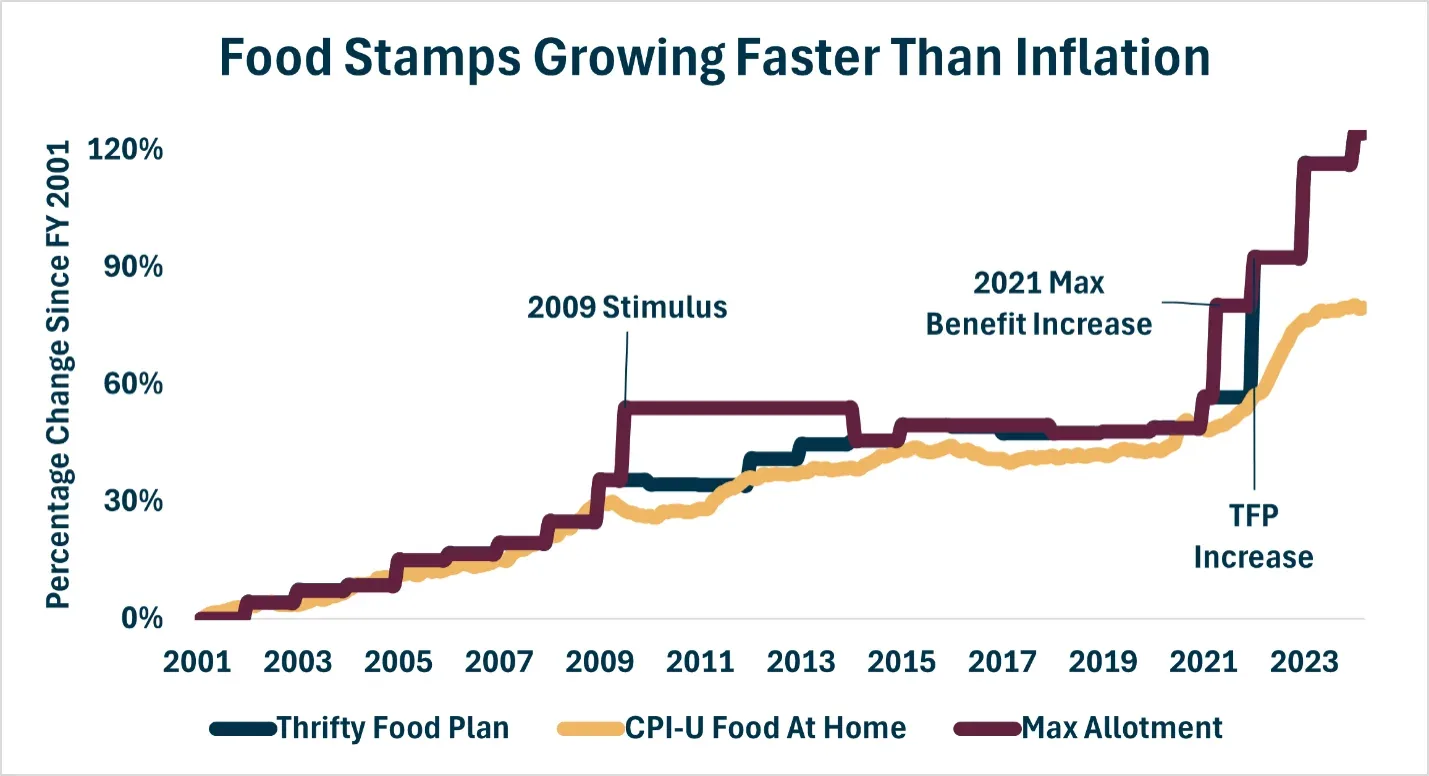
President Joe Biden unilaterally increased welfare benefit spending in 2021, costing taxpayers hundreds of billions of dollars without Congress’s explicit approval. By modifying the food stamp benefit calculation, allotments increased by 21 percent above inflation.
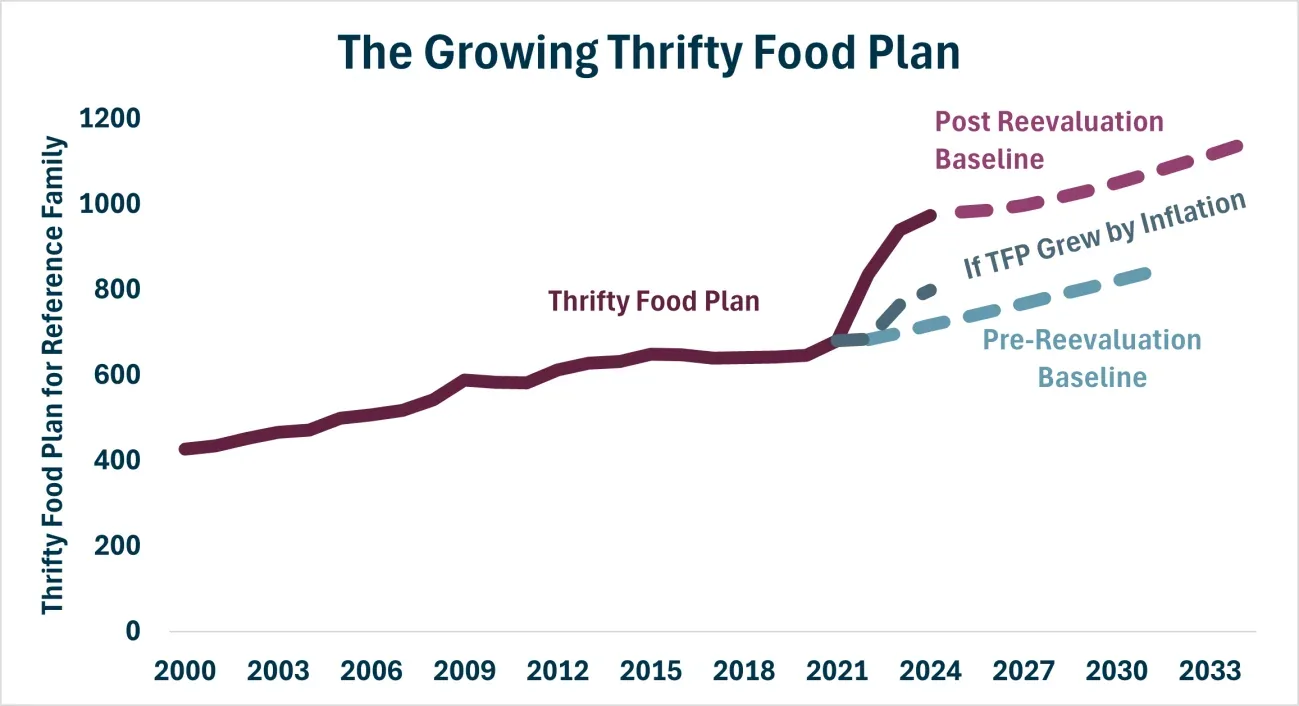
The Thrifty Food Plan (TFP) is used to calculate food stamp benefit levels, which are called allotments. The TFP is meant to represent the cost of “a nutritious, practical, cost-effective diet prepared at home,” for households.
The maximum allotment for a household of four people is equal to the TFP for a “reference family” of an adult man, an adult woman, and two children. Maximum allotments for different recipients are adjusted for factors such as household size and income.
The TFP calculation is normally updated each year for inflation to provide a cost-of-living-adjustment for food stamp benefits.
The TFP also underwent three prior reevaluations in 1983, 1999, and 2006 to update changes in dietary guidelines and consumption patterns, but importantly, these reevaluations remained cost neutral with only adjustments for inflation.
The Biden Administration broke precedent and violated Congress’s budget neutrality intent.
The Congressional Budget Office estimated that the TFP reevaluation will result in $250 to $300 billion in higher spending over the fiscal year 2022-2031 period.
The USDA’s process in reevaluating the TFP was severely criticized by the U.S. Government Accountability Office (GAO).
The 2021 TFP increase followed significant food stamp benefit increases in recent years.
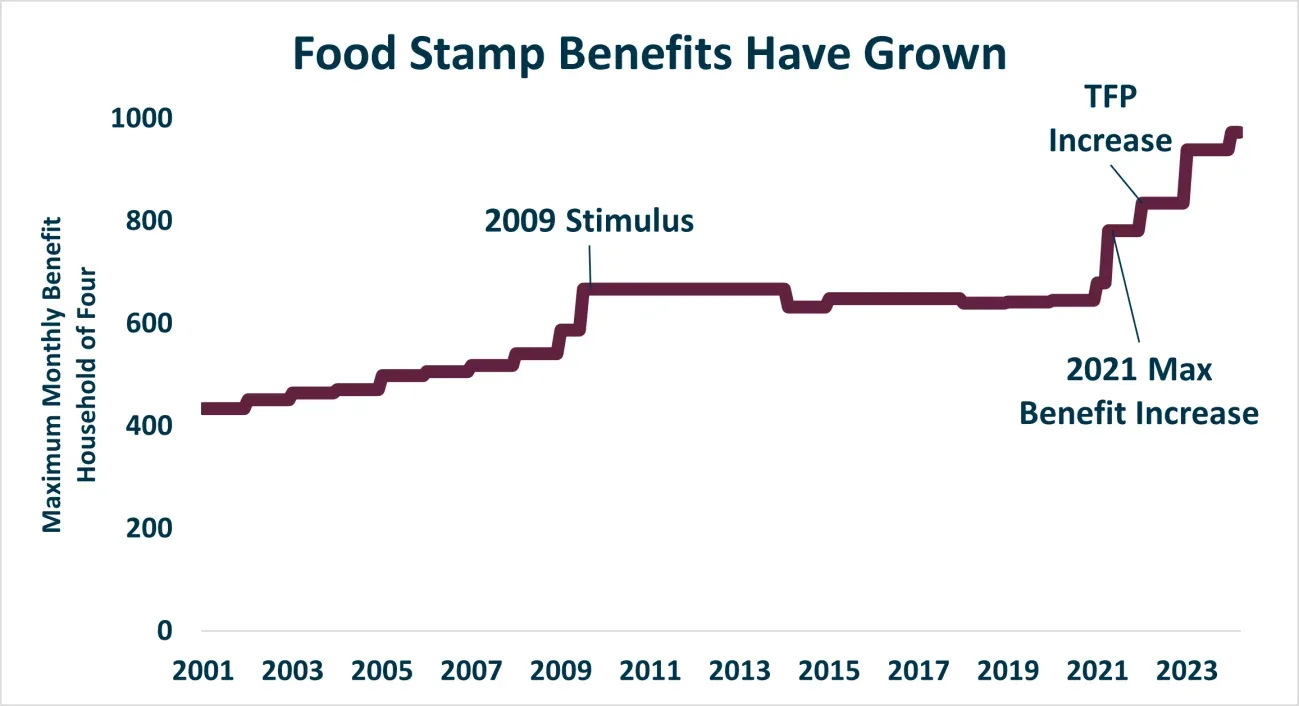
President Obama’s 2009 stimulus law that raised the maximum allotment by 13.6 percent above inflation. The stimulus law set the artificially increased benefit as a new floor, keeping the 2009 maximum benefit in place even when the normal formula indicated it should be lower. However, Congress later repealed the floor effective October 31, 2013. This allowed the normal Thrifty Food Plan calculation to set the maximum benefit for FY 2014.
In March 2020, the Families First Coronavirus Response Act provided “emergency allotments” to all food stamp recipients, overriding the normal 30 percent contribution calculation to provide allotments equal to the maximum benefit for the household size.
In April 2021, the Biden Administration issued guidance allowing emergency allotments to even exceed the maximum statutory benefit.
Emergency allotments finally ended in February 2023, well after President Biden declared “the pandemic is over,” pursuant to a provision in the FY 2023 Consolidated Appropriations Act.
The FY 2021 Omnibus signed into law in December 2020 included a provision increasing the maximum benefit by 15 percent through June 30, 2021. President Biden’s American Rescue Plan Act extended the increased maximum benefit through September 30, 2021.
Read the EPIC Report: Biden’s Unilateral Food Stamp Benefit Increase.