
Op-Ed
CBO: One Big Beautiful Bill Grows the Economy, Cuts Taxes & Slows Welfare Spending
February 12, 2026 · David Ditch


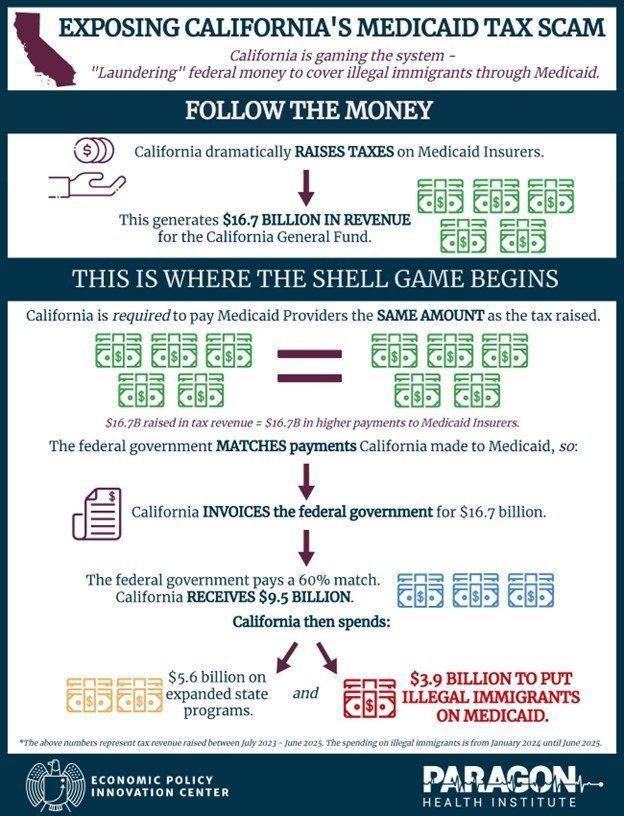 This enticement of free money has been too empowering. California used the windfall to extend full Medicaid benefits to illegal immigrants in the prime working-age bracket of 26 to 49 (a group that now accounts for roughly three-quarters of the nation’s unauthorized population), and to abolish the asset test for long-term care. Those expansions would have been much more difficult if California had needed to raise taxes openly or cut other spending to pay for them. Instead, federal taxpayers covered the entire bill without even knowing it, even though federal law explicitly bars Medicaid funding for illegal immigrants.
The mechanics of the provider tax are complex; this has only facilitated its abuse. California levies a fee of roughly $187 dollars per Medicaid managed care enrollee each month while charging a tax of only $2 on commercial plans. Because the state raises capitation payments by the same amount, Medicaid insurers face no net burden. In fact, they pocket an extra $4.3 billion dollars in “plan augmentations” set aside to sweeten their side of the arrangement. Meanwhile, the federal government matches the inflated payments, having sent $9.5 billion to the state general fund in the first two years alone. This allowed California to cover the full cost of the expansion using federal dollars.
This enticement of free money has been too empowering. California used the windfall to extend full Medicaid benefits to illegal immigrants in the prime working-age bracket of 26 to 49 (a group that now accounts for roughly three-quarters of the nation’s unauthorized population), and to abolish the asset test for long-term care. Those expansions would have been much more difficult if California had needed to raise taxes openly or cut other spending to pay for them. Instead, federal taxpayers covered the entire bill without even knowing it, even though federal law explicitly bars Medicaid funding for illegal immigrants.
The mechanics of the provider tax are complex; this has only facilitated its abuse. California levies a fee of roughly $187 dollars per Medicaid managed care enrollee each month while charging a tax of only $2 on commercial plans. Because the state raises capitation payments by the same amount, Medicaid insurers face no net burden. In fact, they pocket an extra $4.3 billion dollars in “plan augmentations” set aside to sweeten their side of the arrangement. Meanwhile, the federal government matches the inflated payments, having sent $9.5 billion to the state general fund in the first two years alone. This allowed California to cover the full cost of the expansion using federal dollars.