
Op-Ed
CBO: One Big Beautiful Bill Grows the Economy, Cuts Taxes & Slows Welfare Spending
February 12, 2026 · David Ditch


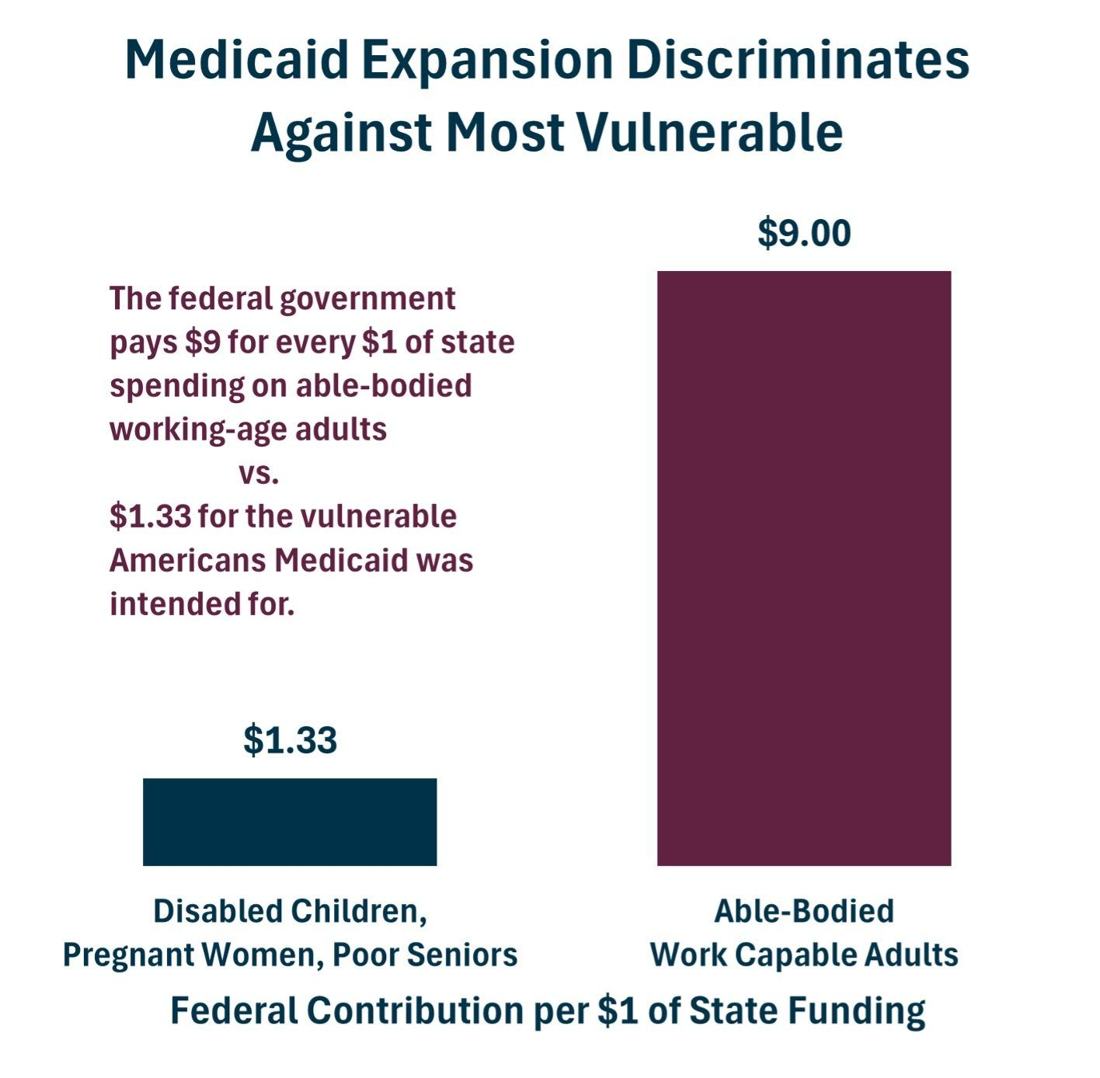 The disparity in the FMAP between the traditional vulnerable population Medicaid was intended to serve and the expansion population made eligible by Obamacare has extremely perverse incentives. States and providers are encouraged to push services for able-bodied adults, who bring in higher federal reimbursements, rather than the people who need help the most. Almost 700,000 people with disabilities are on Medicaid waitlists for home and community care.
The elevated federal reimbursement for work-capable adults on welfare is indefensible. Lawmakers should fix this problem by phasing the 90%-10% split back down to the normal rates.
The disparity in the FMAP between the traditional vulnerable population Medicaid was intended to serve and the expansion population made eligible by Obamacare has extremely perverse incentives. States and providers are encouraged to push services for able-bodied adults, who bring in higher federal reimbursements, rather than the people who need help the most. Almost 700,000 people with disabilities are on Medicaid waitlists for home and community care.
The elevated federal reimbursement for work-capable adults on welfare is indefensible. Lawmakers should fix this problem by phasing the 90%-10% split back down to the normal rates.