The Obamacare Problem
The entire Obamacare (Affordable Care Act, “ACA”) system is predicated on government control of health insurance plans and government distortion of the health insurance market.
The ACA required significant new regulations on health insurance plans available in the individual Marketplace, including mandating 10 “essential health benefits” that drive up costs without improving access to care or considering patients’ unique needs.
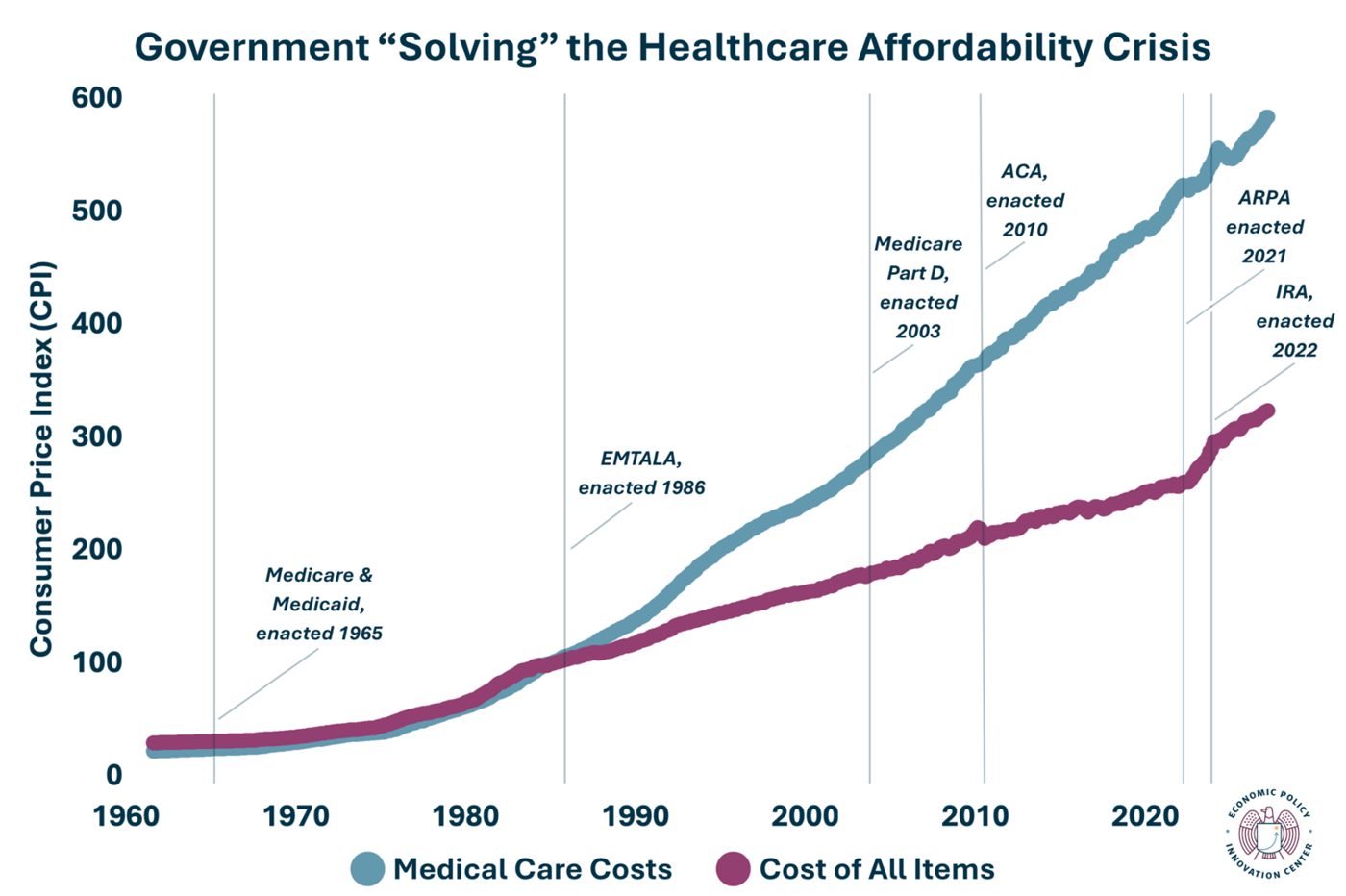
The federal government’s attempts to “solve” the healthcare affordability crisis have made the situation worse, not better. Not only did intervention
result in plans that are poorly structured and in narrow networks that limit care, but it spiked out-of-pocket costs, soared premiums, and opened the door to
massive fraud.
The Scheme to Cover It Up
To cover up the extraordinary cost of plans and trick people into participating, Obamacare created a
subsidy scheme to hide the true cost from enrollees and taxpayers alike by sending subsidies straight from the U.S. Treasury to health insurance companies. This scheme
does nothing to actually control premium rates; instead, it drives costs up and quality down at the expense of the American taxpayer, just like all
other government subsidies.
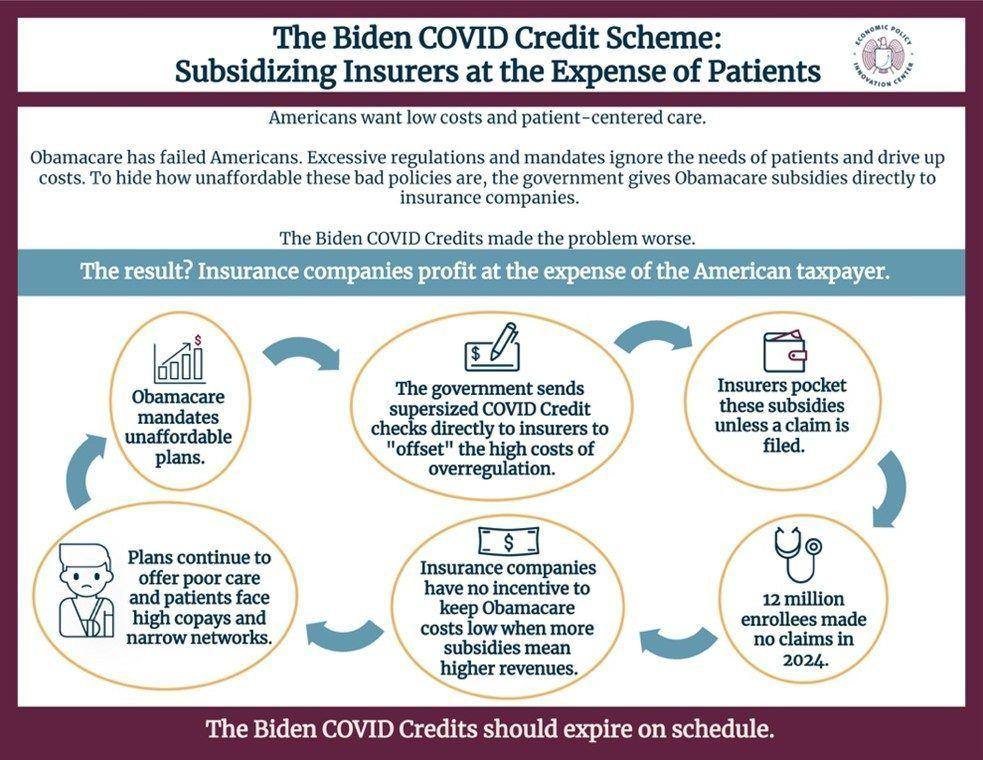
To add to the problem, the Biden Administration
supersized these subsidies during the COVID pandemic.
Extending these temporary COVID Credit subsidies would cost taxpayers another
$410 billion. The real solution is moving towards transparency, options and freedom for patients.
Obamacare is a failure and propping it up further will not expand health care access, lower costs, or improve health outcomes for Americans. It will only mean a
greater burden for taxpayers while insurance companies reap both financial and political benefits.
Premium Subsidies Line Insurers’ Pockets
While premium rates increase for
both enrollees and taxpayers as the subsidies (both original and COVID Credits) continue to roll in, insurers are making out like bandits. Premium rates are increasing 18% on average nationwide. If the temporary COVID Credits expire on schedule, taxpayers will still pay for
80.3% of the premium share based on the original Obamacare subsidies. In other words, taxpayers will still be covering rising premium costs for plan year 2026 and beyond. Insurers will keep collecting the original taxpayer-funded subsidies and enjoy
rising stock prices alongside rising government checks.
Centene, the
largest provider of health insurance through the ACA by market share, makes it clear in its
annual 10-K filing just how entrenched their corporate revenues are with Obamacare subsidies: “The majority of our revenues come from government subsidized healthcare programs including… Health Insurance Marketplace premiums.” Centene also
states: “If eligibility for the enhanced advance premium tax credit for Marketplace members expires without renewal or the eligibility for the credit is modified or delayed, our results of operations, financial condition, and cash flows could be materially and adversely affected.”
Centene’s 2024 revenues
totaled $163.1 billion, representing 6% growth year-over-year, with premium revenues accounting for the vast majority of that figure. According to the company itself, their gross margin increases “were primarily driven by 12% membership growth in the Marketplace business along with improved margin[s]” directly related to risk adjustment “
outperformance.” In other words, the company made a lot more money from the ACA system and they did not expend as much as projected in approved claims.
This demonstrates another part of the problem. Health insurance companies are raising rates largely paid for by taxpayers and
still denying an average of one in five claims, with as many as one in three claims being denied by major ACA insurers like UnitedHealth, all while collecting big in out-of-pocket expenses. For plan year 2026, out-of-pocket expenses for a family on an Obamacare plan are capped at a ludicrous
$21,200 on top of monthly premiums. This combination of claims denials and high out-of-pocket maximums allows insurers to avoid paying for medical expenses, pocket premiums, and still expect patients to suffer under tens of thousands of dollars of medical
debt before plans start to pay.
Health Insurers Spend Big in Politics
With the big windfall from Obamacare premium subsidies and a vested interest in keeping the gravy train running, it comes as no surprise that the health insurance industry is spending big on political campaigns and lobbying.
In 2024, America’s Health Insurance Plans (“AHIP,” the trade association for health insurance companies) spent
nearly $12 million on lobbying. In terms of campaign contributions, AHIP’s top donation amount tracked by OpenSecrets went to House Democratic Whip Katherine Clark,
the same Congresswoman who openly admitted to shutting down the government and letting families suffer for “leverage” to extend the Obamacare subsidies’ COVID Credit plus-up. The full health insurance industry spent over $7 million in political contributions.
The California Con
Taking a look at the
biggest Obamacare insurer in the State of California, Blue Shield of California, the political involvement becomes even more obvious. Blue Shield of California, which
denied one in six claims in plan year 2024, operates as a 501(c)(3) nonprofit while raking in over
$27 billion in revenue. It claims to contribute significant revenues toward charity, even filing a
990 form with the IRS under its foundation name.
Reviewing grant data from the Blue Shield of California Foundation reveals that much of this “charity” is actually just political spending or investment in radical policy projects. For example, they donated
$200,000 to Governor Newsom’s “Racial Equity Commission” in his official climate office. In 2019, during the first Trump Administration,
nearly a quarter of their funding went directly to supporting illegal immigrants and fighting the public charge rule. Perusing the Blue Shield of California Foundation’s website reveals grant funding for a
variety of other Leftist agenda initiatives, including fighting climate change, protecting illegal immigrants, pushing abortion, and advocating for LGBTQ issues.
It should come as no surprise that Blue Shield of California is bankrolling Governor Newsom’s Prop 50 political campaign,
donating $500,000 in support of the ballot measure. This certainly raises questions about how and why a “nonprofit” health insurance company, operating a nonprofit charitable foundation, funding a radical agenda, and making billions in revenue from taxpayers while denying claims is
desperate to continue the Biden COVID Credits. Something is amiss in California and, unfortunately, it is all possible thanks to Obamacare’s subsidy scheme.
What Congress Can Do
Patients and taxpayers are struggling to access quality care at low costs while insurance companies and politicians collude and prosper. It is past time to end this subsidy scheme and start respecting taxpayers and prioritizing health freedom for patients.
Congress should allow the Biden COVID Credits to expire on schedule, removing at least the top layer of this taxpayer-funded subsidy scheme that enriches health insurance corporations and expands government control.
Congress should also review Obamacare’s mandates and explore ways to increase health care freedom and plan options for American patients, so they are no longer trapped in the ACA Marketplace.