The One Big Beautiful Bill versions that passed the House and the proposed Senate version would both make important investments in border security, extend and expand the 2017 tax cuts, and make progress in addressing waste, fraud, and abuse.
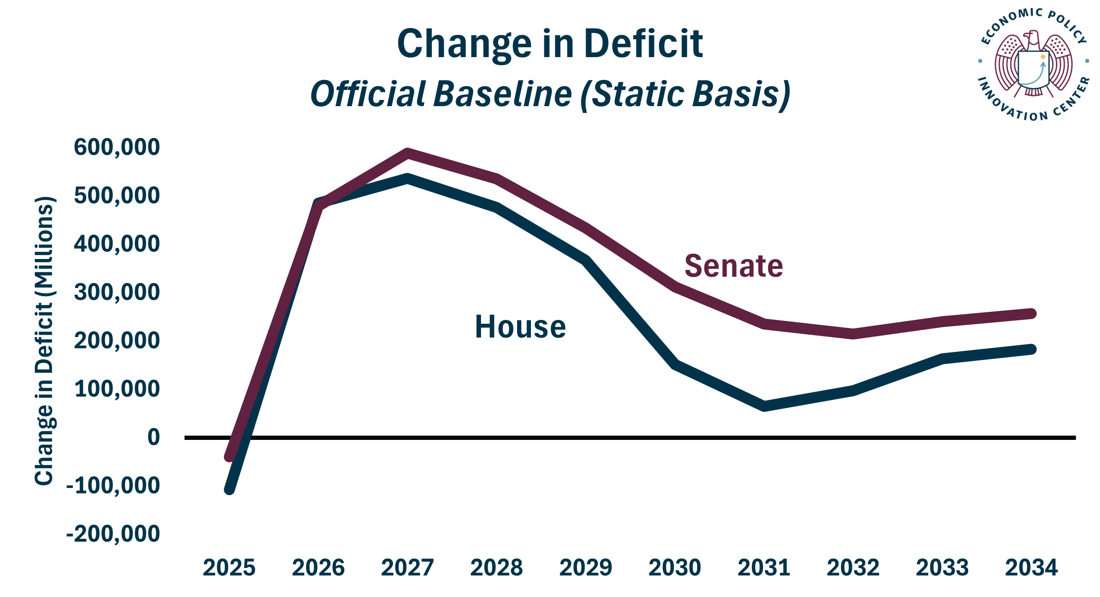
This report compares the fiscal effects of the two proposals.
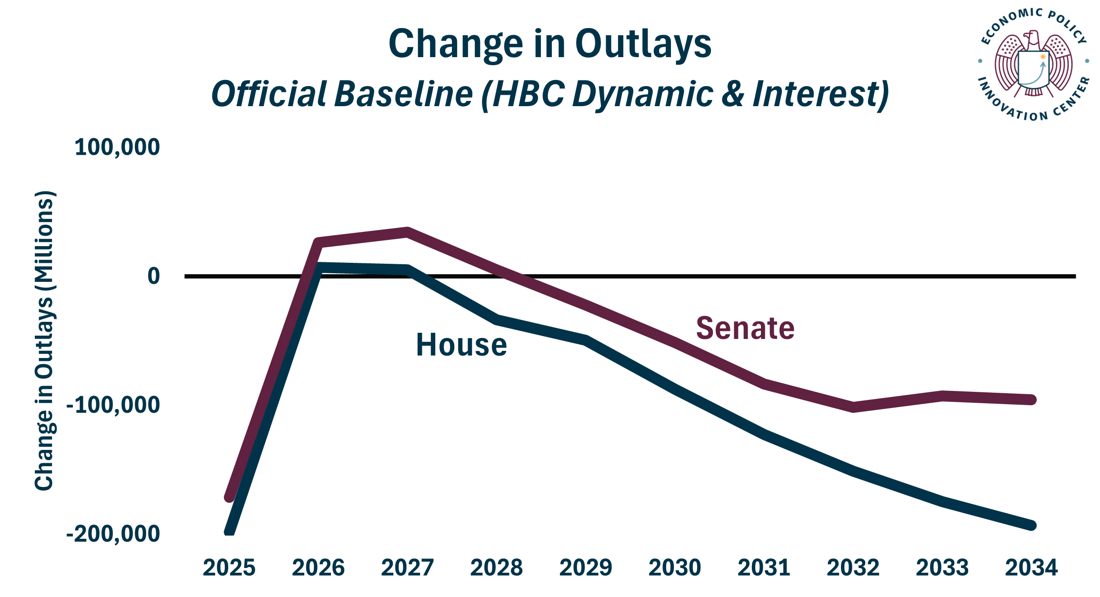
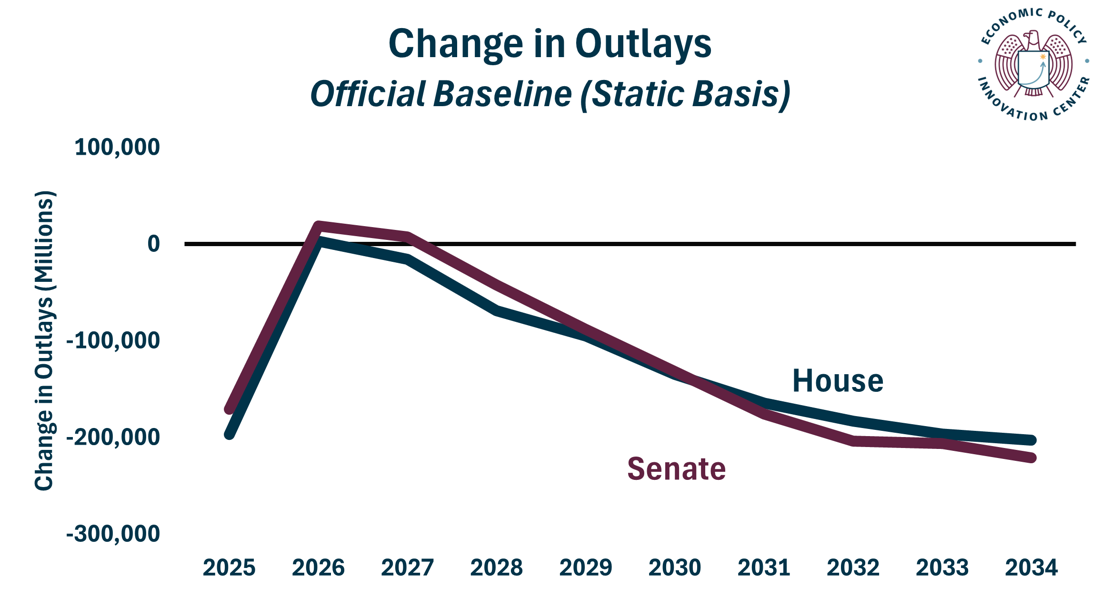
The House and Senate bills both produce similar net changes in outlays, reflecting reductions in autopilot spending programs and new investments in border security and national defense.
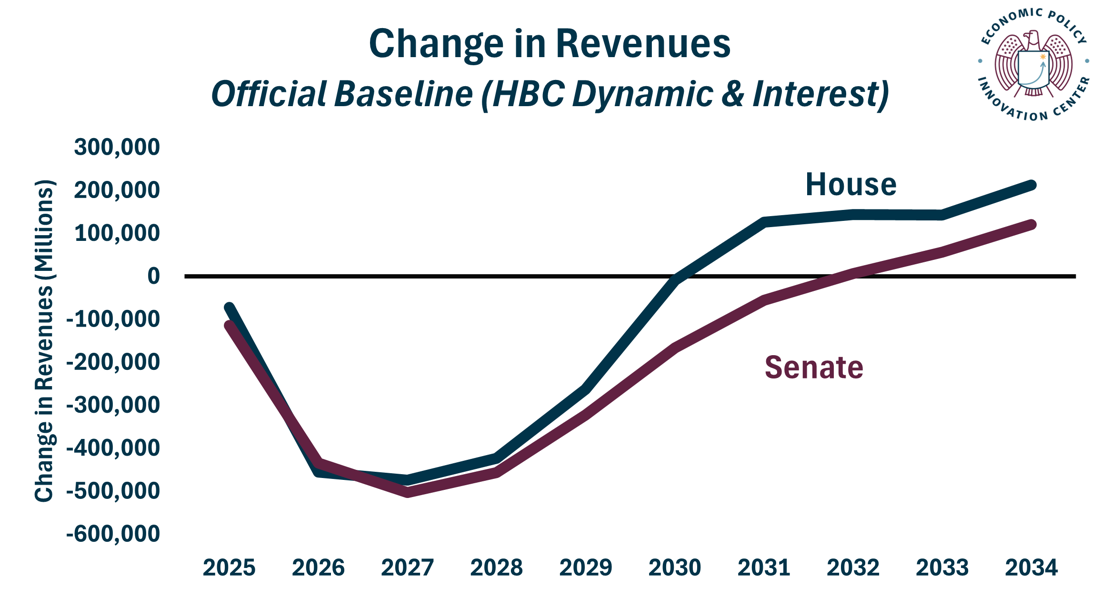
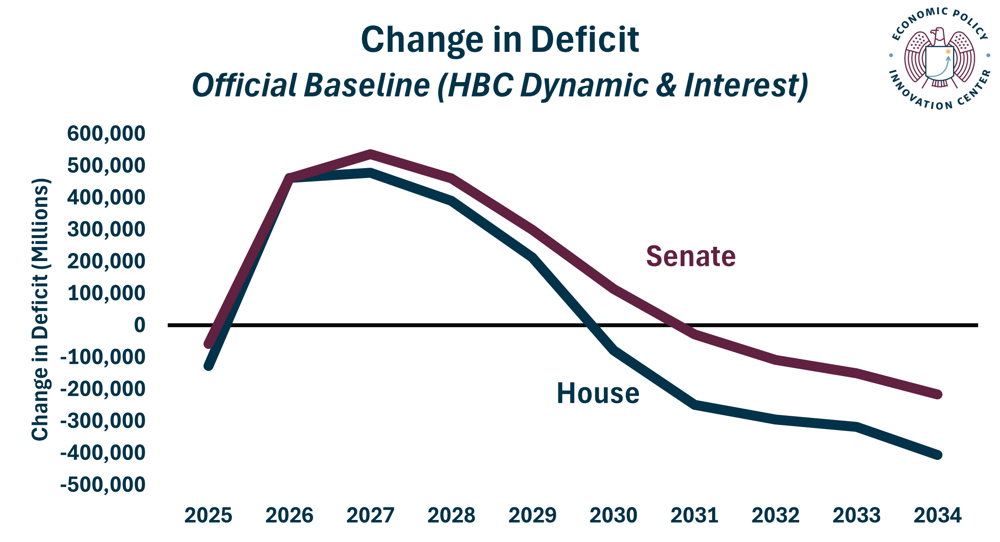
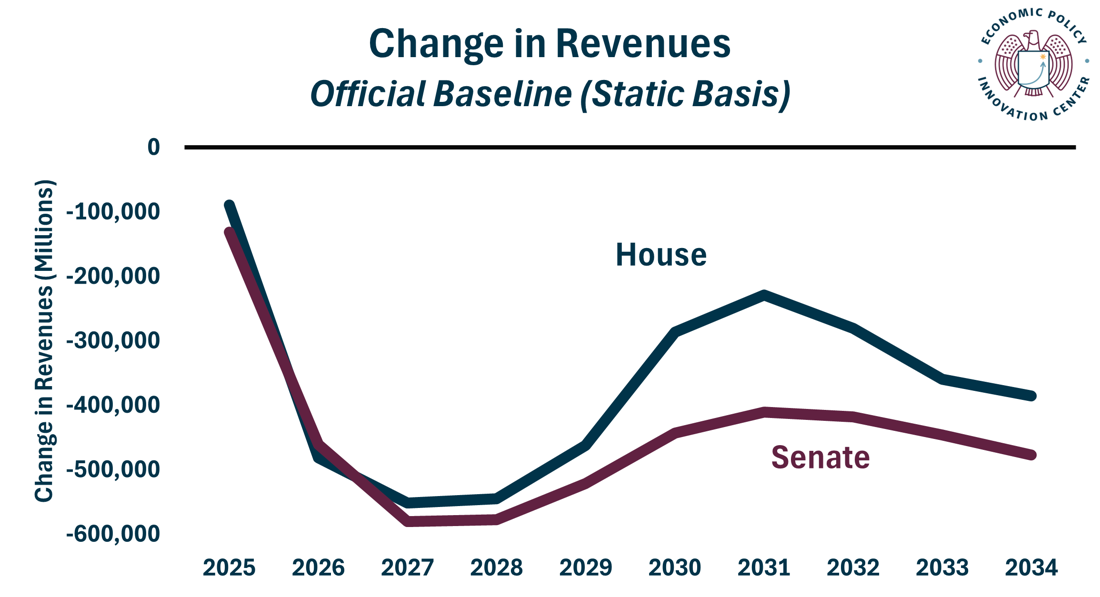
However, the Senate bill includes larger reductions in revenue and larger deficits. As a consequence, the Senate version of the One Big Beautiful Bill
violates the Fiscal Framework agreed to in the budget resolution.
Figures for the Senate bill are based on the Congressional Budget Office (CBO)
cost estimate produced on June 28, 2025, for the Amendment in the Nature of a Substitute, relative to the official baseline.
Official Baseline – Conventional Scoring
Dynamic with Interest
The
House Budget Committee “estimates that economic growth will average 2.6 percent over ten years—generating a substantial $2.6 trillion in deficit reduction.”
The figures below incorporate the House Budget Committee’s dynamic assumptions for both the House and Senate versions and the resulting net interest costs for each. Because of the Senate bill's larger deficits, interest outlays would be higher than under the House-passed bill.