The national debt recently
surpassed $38 trillion dollars, which concerningly leaves our government with little
fiscal space to respond to any potential future crises. The debt continues to spiral out of control as spending grows larger. Some of the largest budget items growing our debt are federal healthcare programs such as Medicare and Medicaid.
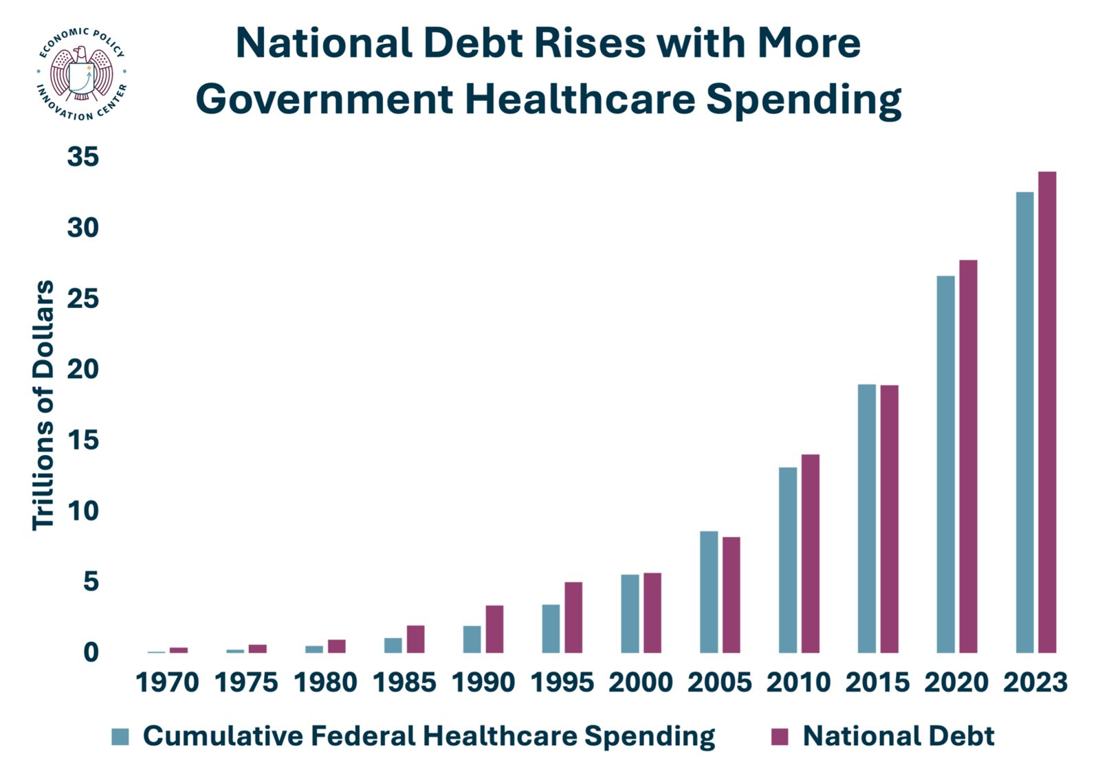
As the chart below shows, federal spending on healthcare programs is linked to the national debt. After adding together all of the federal healthcare program spending from 1960 onward, we get a cumulative total of federal healthcare spending. Comparing it to the national debt, which is a cumulative total of federal deficits (minus surpluses), we see the two track each other extremely closely. Between 1960 and 2023, the federal government
spent $32.6 trillion on health programs while the national debt grew from under $0.3 trillion to $34 trillion.
In 2023, federal spending on healthcare programs totaled
$2.1 trillion dollars; the federal deficit for the same year was
$1.7 trillion dollars. Despite the growing amount of government spending and intervention in healthcare, outcomes and access have only gotten worse for patients.
Currently, the government is “
shut down” due to debates over adding an
additional $1.5 trillion in spending over the next 10 years. Part of that spending increase would include making temporary, COVID-era
subsidies to health insurance companies permanent and reversing Medicaid reforms that reduce waste, fraud, and abuse.
The United States cannot afford to keep spending and accumulating debt at our current pace. Allowing the subsidies to expire and continuing the Medicaid reforms of the One Big Beautiful Bill are good first steps to bringing our spending under control and making healthcare truly affordable for both patients and taxpayers alike.