The 2025 government shutdown, the longest in American history, concentrated on disagreement over the Biden COVID Credits and whether or not these should be extended rather than phased out as is currently planned. While the left continues to frame the Biden COVID Credits as a tax credit that makes healthcare premiums more affordable for the average American family, this could not be further from the truth.
The Biden COVID Credits, as EPIC’s research has shown, have
enriched insurance companies at the
expense of American taxpayers and
increased healthcare costs. These subsidies are distorting the market, lining the pockets of large insurers directly from the United States Treasury Department, and causing
skyrocketing premiums.
Obamacare is Expensive by Design
Senator Peter Welch (D-VT) made
a stunning admission on the Senate floor
on November 6, 2025, noting that, “we did fail to bring down the cost of healthcare.” In essence, he said the quiet part out loud: Obamacare was never designed to reduce the cost of healthcare. Its architects secured the support of the healthcare industrial complex by offering massive subsidies and used budgetary gimmicks to paper over the long-term fiscal consequences. What they created was a system that entrenched, rather than reformed, the underlying cost structure.
In practice, the law worked even better for its corporate beneficiaries than its drafters expected. Highly regulated insurers — many of which lack viable business models without government support through the exchanges and Medicaid Managed Care — successfully marketed themselves to investors as “recession-proof.” Whether the economy expands or contracts, federal subsidies and enrollment continue to expand.
Insurance Company Stock Prices Increase
The result has been
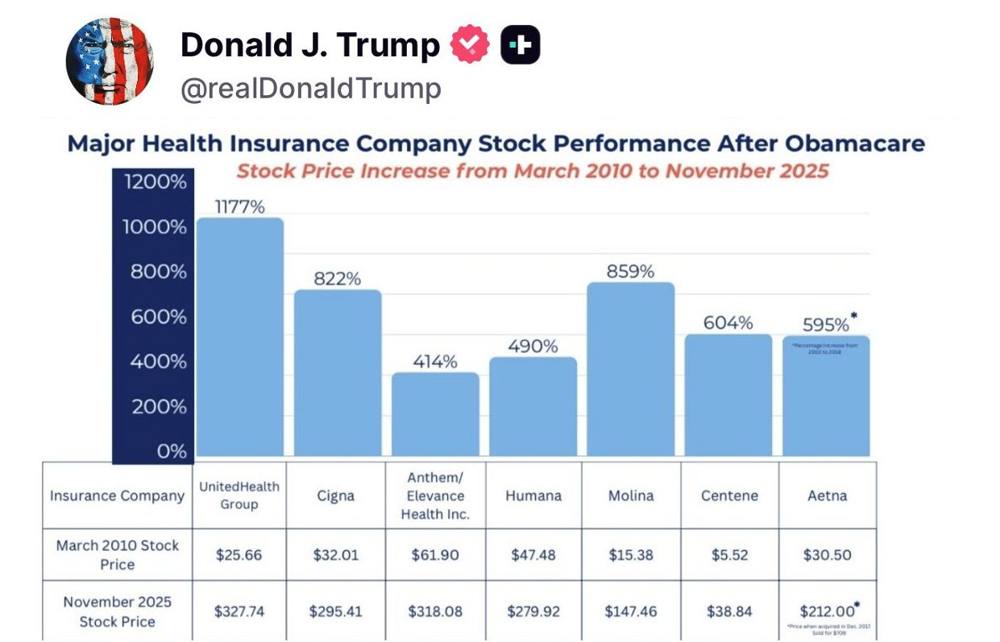
higher stock valuations for insurers and, in turn, soaring executive compensation, all underwritten by taxpayers. President Trump even highlighted the stock price increases since Obamacare was enacted in a
Truth Social post.
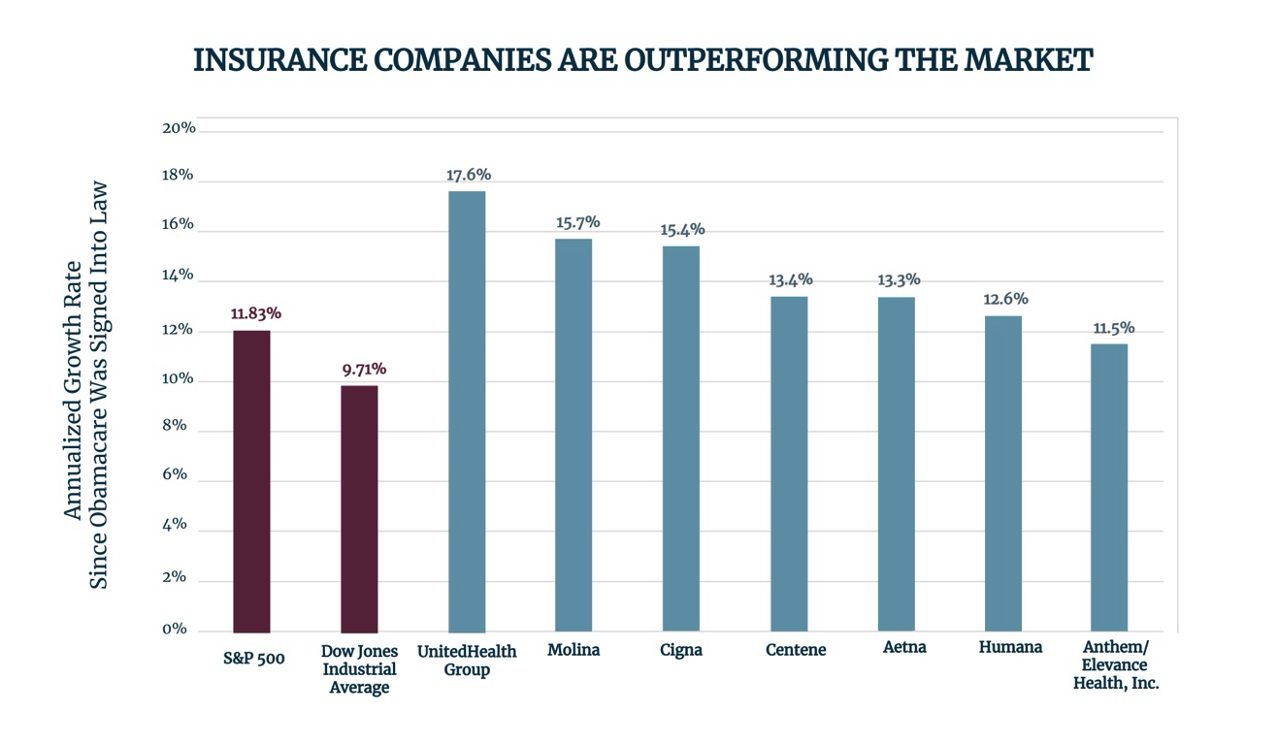
Those who need convincing that Obamacare has enriched insurers at the expense of American families need look no further than the annualized growth rate of the major insurance companies since Obamacare was signed into law. The S&P 500 grew at an annualized rate of 11.83 percent, while the Dow Jones Industrial Average grew at an annualized rate of 9.71 percent. Major insurance companies – UnitedHealth Group, Molina, Cigna, Centene, Aetna, Humana, and Anthem/Elevance Health, Inc. ALL outperformed the Dow Jones Industrial Average in that timeframe.
For additional context, Bernie Madoff was averaging annualized returns of 15 percent at the height of his Ponzi scheme. Let that sink in: UnitedHealth Group, Cigna, and Molina outperformed
Bernie Madoff's fraudulent fund on the backs of American taxpayers.
The Path to Healthcare Reform
This cannot be allowed to continue. As Americans are left stunned by the increases in premiums and high costs of healthcare, they need to know that the answer does not lie in perpetually extending subsidies that do nothing but guarantee that big insurance companies will increase their stock market price.
Now, those on the left are working to preserve and extend the system by offering new lifelines to insurers as a way to sustain political pressure, buy time, and keep the path open for a larger government takeover of healthcare in the future.
This should not be the opening for continued discussion over the merits of a move to a single-payer system. Rather, we need to address problematic regulations, remove barriers to health care innovation in the private sector, and reduce government spending. Americans deserve a free market and competition within the healthcare industry that will result in lower costs and enhanced care.