Tax Day: the United States federal government collects trillions of hard-earned dollars and Americans walk away feeling that the system is rigged.
According to a
Pew Research survey, 61% of Americans say they feel that some rich people do not pay their fair share in taxes.
Do lower income brackets take a hit while the rich get off easy?
The
2021 tax data from the Congressional Budget Office appears to tell a different story.
EPIC charts below show the reality of who bears most of the tax burden and who benefits from the income transfer.
Taxes on the Rich Provide Most of the Federal Government’s Revenues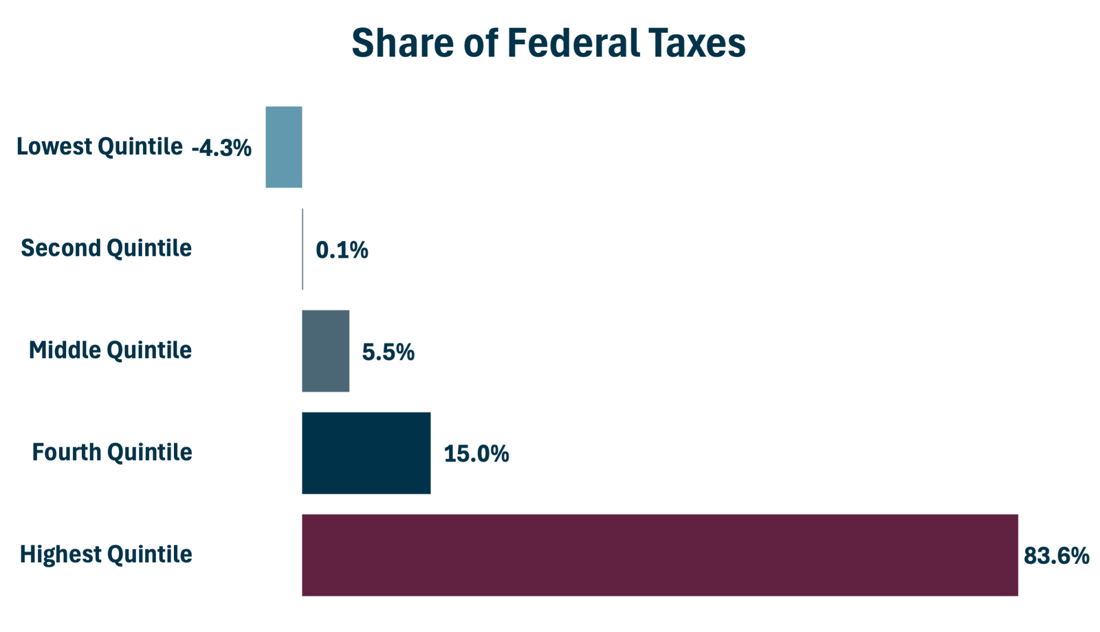
In 2021, the highest quintile (top 20% of earners) accounted for 58.8% of American incomes but paid 83.6% of federal taxes. Their share of the tax burden was more than
four times higher than the middle 60% of taxpayers – even with the Tax Cuts and Jobs Act (TCJA) of 2017.
The lowest quintile (bottom 20% of earners) effectively does not pay federal taxes. They receive tax credits over any amount they would owe, such that they receive a “negative” tax rate.
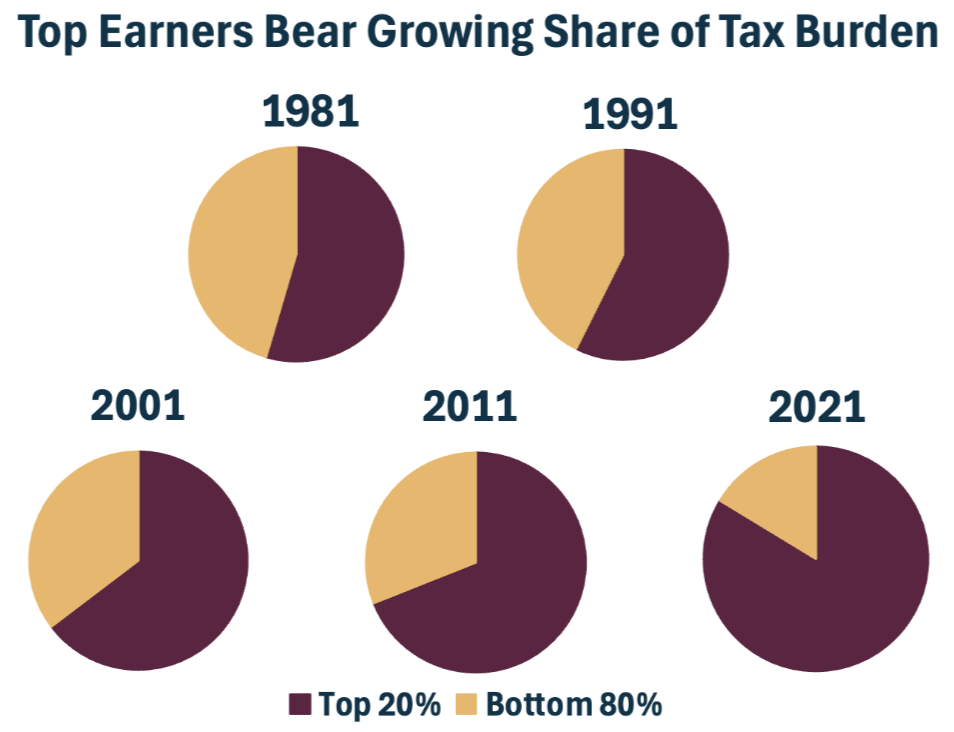
The Share of Taxes Paid by the Rich Keeps Increasing
Over the last 40 years, the share of taxes paid by the top quintile has increased from 54.5% to 83.6%. Even with tax cuts under President Reagan, President Bush, and TCJA under President Trump, the share paid by the rich still rose.
For comparison, the middle three quintiles each paid around 7% less in tax revenues during that same time period and the bottom quintile went from paying 2% in taxes to receiving a tax refund of 4.3%.
Who Receives the Income Transfer?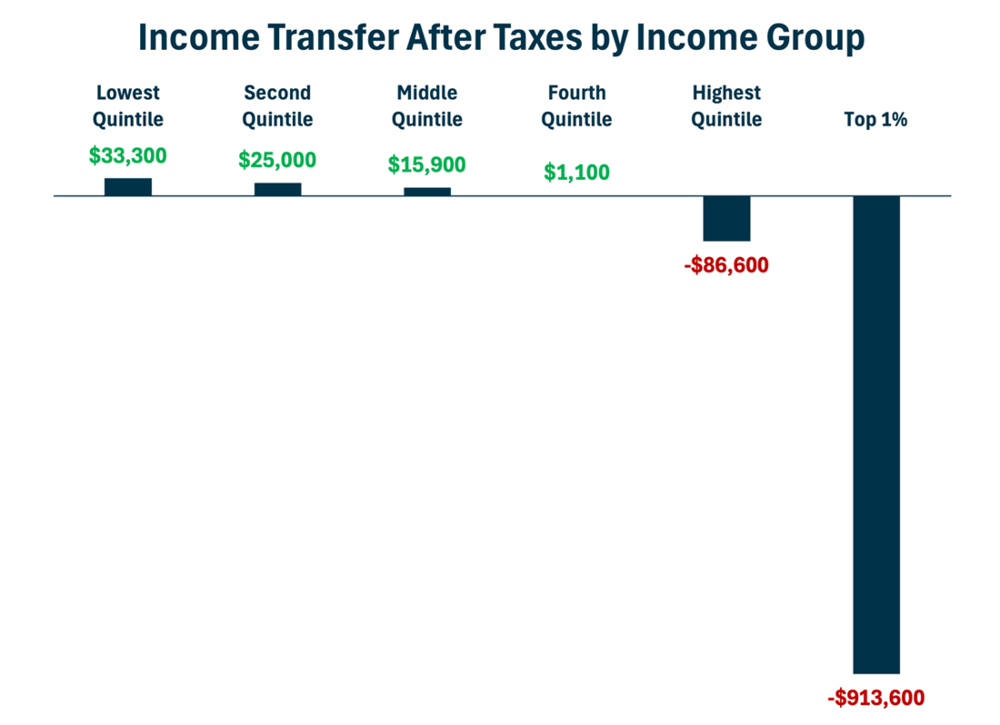
When the federal government taxes and spends, it transfers wealth from those who earned it to groups who did not.
Households in the top 1% each lost nearly a million dollars on average in 2021. Meanwhile, those in the bottom quintile each received an average of $33,300 through tax credits and other welfare programs.
The Necessity for Tax Reform
Many of the successful provisions of the 2017
Tax Cuts and Jobs Act are set to expire in 2025 and the American people mandated an extension through the election of President Donald Trump. Tax reform is an essential priority for Americans.
In order to prevent one of the largest tax increases in American history, Congress should use the
reconciliation process to preserve and expand the 2017 tax reductions for all income brackets as well as set America back on a course to fiscal sanity by reducing spending.