



Background
Known Challenges and Expirations in 2025
The inflection points facing Congress and the President in 2025 will include some of the most consequential budgetary decisions in modern American history. Lawmakers must address the reinstatement of the debt limit, extend statutory caps on discretionary spending, and Statutory PAYGO sequestration, all while growing autopilot spending erodes the government’s fiscal space. Most notably, major provisions from the 2017 Tax Cuts and Jobs Act (TCJA) will expire at the end of 2025, including the lower individual rates, child tax credit expansion, increased standard deduction, state and local tax deduction (SALT) cap, passthrough deduction, Death Tax exemption, and other provisions. Pro-growth policies that reduce the tax disincentives against investment are phasing out or have expired, such as expensing for capital investments and research and development.The TCJA Created a Stronger Economy and a Better Tax Code
The TCJA was an important success. Prior to the TCJA, the tax code had not been reformed since 1986. Over the decades, the tax code had grown increasingly complex and uncompetitive. The TCJA implemented much needed reforms, including:- lowering the top corporate income tax rate from 35 percent (the highest in the industrialized world at the time) to 21 percent;
- providing full expensing for capital investments;
- ending the uncompetitive worldwide taxation of American-headquartered businesses and instituting a modified territorial tax system;
- lowering income tax rates for most Americans;
- doubling the standard deduction;
- expanding the child tax credit;
- limiting many itemized deductions and loopholes; and
- ending the Obamacare individual mandate penalty tax.[1]
2025 Provides an Impetus for Important Reforms
The expiration of TCJA provisions will trigger an urgency to consider tax legislation in 2025, providing lawmakers with an opportunity to preserve and expand on the 2017 law. Certain dynamics increase the importance of considering additional policies beyond just a simple extension of current policy. A simple extension of the expiring 2017 provisions would not provide the same economic growth boost.[3] And a simple extension of just the expiring provisions would have a much larger fiscal impact than the original 2017 bill. The most impactful policies responsible for the economic growth stemming from the 2017 bill were the corporate reforms that lowered tax rates. These are permanent law, and the benefits are already baked into the current baseline.[4] To further increase growth rates, policymakers will need to look for additional policies, such as permanent expensing for capital expenditures and research, neutral cost recovery for investments in buildings, and further corporate tax reform. The TCJA was originally projected to increase the deficit by about $1.5 trillion between FY 2018 – 2027, while an extension of the expiring provisions would reduce revenues relative to current law by more than $4 trillion between FY 2026 - 2035. The differences in the 10-year fiscal impacts between the TCJA and a simple extension of the expiring provisions result from the fact that the 2017 law was comprehensive tax reform that traded lower rates for individuals and businesses for a broader tax base.[5] Many of the base-broadeners were permanent law, including corporate tax reforms. In contrast, the tax cuts for individuals are expiring and need to be extended. At the same time, federal spending is projected to unsustainably grow faster than the economy. As a consequence, the extension in 2025 will need to be paired with spending reductions and other reforms.Principles for Tax Reform
Sustainable Economic Growth and Opportunity for All
Economic growth is essential for the prosperity of individuals, families, local communities, and the whole nation, as well as for the sustainability of the federal budget. Taxes, by their very nature, are destructive. The goal for policymakers is to ensure that the tax system is the least destructive possible. The level of taxation must be as low as possible while raising only the necessary revenues to fund the essential and constitutional activities of the federal government. The tax code should not be biased against investment and savings, which are essential for increasing productivity (and therefore real wages) and spurring new innovations that improve the lives of everyday people. The U.S. tax code must be competitive with other countries. American workers and businesses should not be disadvantaged by the federal government’s tax code. Policymakers must be focused on creating an environment for economic growth that is sustainable — not based on government cronyism — and fostering widely available opportunity for all Americans.Fairness
A pro-growth tax code would have the benefit of being a much fairer tax code. A fair tax code would be one that treats people the same. It would be neutral and not distort decision making. Needless to say, the tax code is neither neutral nor fair. It is riddled with loopholes that benefit special interests. Over the last 50 years, the number of tax expenditures has quadrupled.[6] These loopholes push up the costs for everyone else. A priority of the Biden-Harris administration has been to punitively raise taxes generally, and then to provide special tax breaks, subsidies, and incentives to those who comply with the ideologically motivated policy goals of the current regime. The first Economic Report of the President stated that “a core aim of the Biden-Harris Administration’s economic policy agenda is to restore the public sector as a partner in long-run growth, with a particular focus on the economy’s supply side – from physical infrastructure to the vitality of the workforce.”[7] The Administration has termed its efforts to grow the federal government “modern supply side economics” or the “new Washington consensus.” Government politicians and bureaucrats picking winners and losers is fundamentally unfair and unAmerican. Leveraging economic policy to support the Administration’s political coalition is counterproductive to broad-based economic growth and increases costs for consumers.[8] A fairer tax system would also limit double taxation (the taxation of the same dollar more than once). Double taxation distorts decision making, taxes certain types of investment differently than others, and increases compliance costs. Some politicians use rhetoric about requiring the wealthy to pay their “fair share” of taxes. Putting aside the fact that “fair share” is never defined by the advocates of tax increases, the tax code is already highly progressive, meaning that high income individuals pay significantly higher tax rates than lower income people. In 2021, the highest quintile earned 58.8 percent of American incomes (before transfers and taxes) but paid 83.6 percent of federal taxes. The lowest quintile (bottom 20 percent of earners) effectively does not pay federal taxes because they receive tax credits over any amount that they would owe such that they face a “negative” tax rate.[9]Chart 1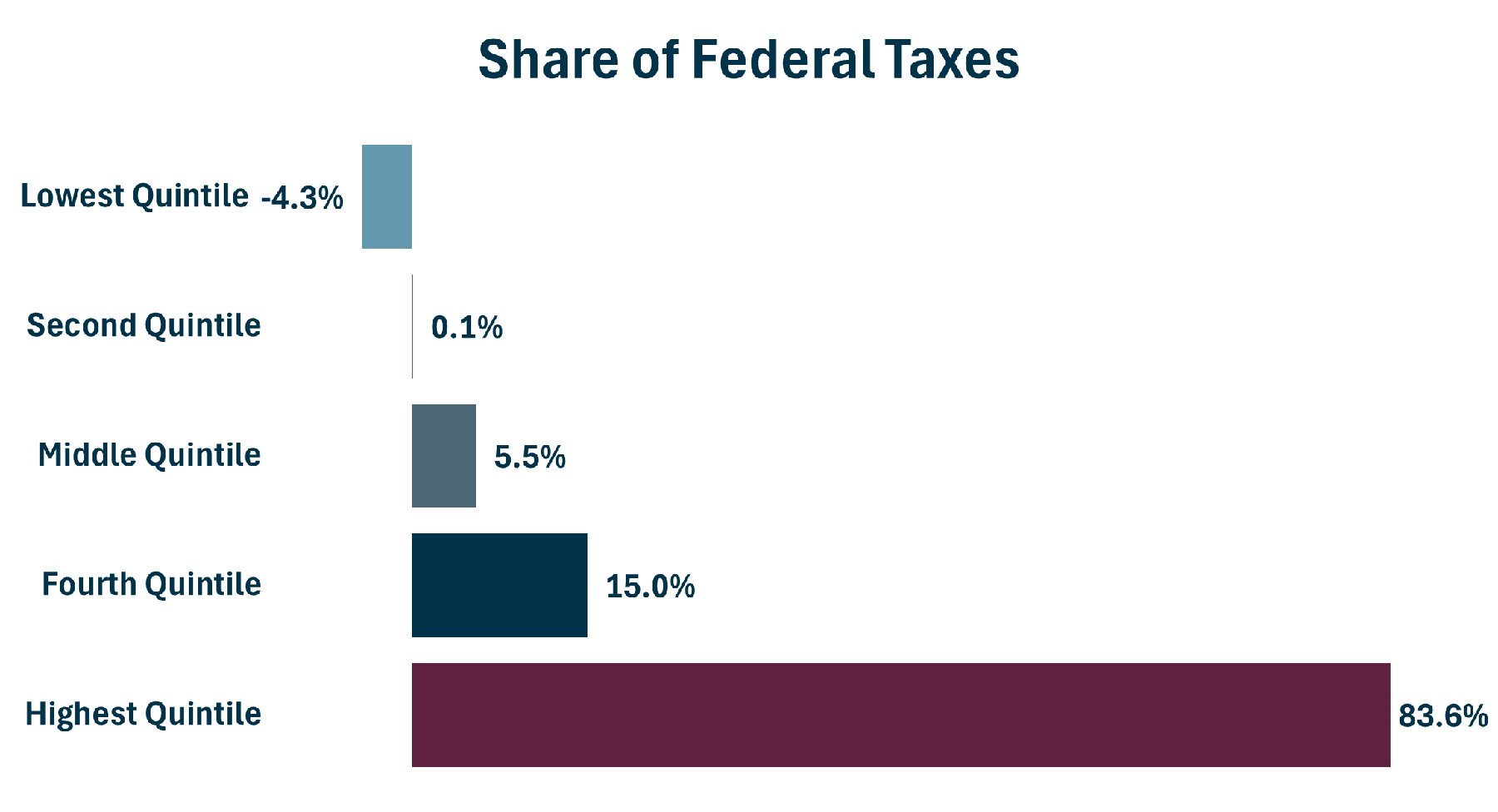 Source: CBO
Simplicity
A fairer tax code would inherently be simpler. One of the original goals of tax reform in 2017 was to dramatically simplify the tax code. The TCJA doubled the standard deduction, which dramatically reduced the number of taxpayers who needed to file itemized deductions. At the same time, the TCJA cleared out many unnecessary and harmful special interest provisions. This made tax liability simpler to calculate and easier to file. Prior to TCJA, nearly 31 percent of taxpayers itemized; this immediately fell to 11 percent in 2018. The TCJA also substantially reduced the number of taxpayers who are subject to the Alternative Minimum Tax (AMT). Despite these important advances, taxes are still too complex and burdensome. The National Taxpayers Union Foundation has found that compliance with the tax code consumed 6.6 billion hours in 2023, at an economic cost of more than $280 billion. Taxpayers also spent at least $133 billion on tax preparation.[10] Indeed, many economists now believe that growth in tax and regulatory compliance reduced economic growth over the past 25 years.[11]Reforms to Promote Sustainable Economic Growth and Opportunity for All Americans
Prevent Tax Increases on American Workers and Families
The TCJA implemented essential pro-growth tax reforms that lowered corporate and individual rates, allowed expensing of investments, expanded the standard deduction, and curtailed many tax expenditures. Congress must preserve and expand the 2017 tax cuts. Prior to the TCJA, the tax code had not been reformed since 1986. Over the decades, the tax code grew increasingly complex and uncompetitive. Congressional Republicans began work on tax reforms to address these problems in 2011, which culminated in the TCJA framework. The TCJA cut taxes for families by reducing tax rates, doubling the standard deduction, and reducing the burden of the Alternative Minimum Tax (AMT). The TCJA also simplified the tax code by ending and limiting a number of itemized deductions and exemptions. Many of these important policies will expire at the end of 2025, resulting in a massive tax increase for workers and families.Make Expensing for Capital Investments Permanent
Permanently restoring full and immediate expensing for capital investments must be a priority. The TCJA allowed businesses to immediately deduct the full costs of capital investments, such as new factory equipment. This full and immediate expensing (also referred to as bonus depreciation) removed a significant tax bias against investment. Because investment is key to increasing productivity, expensing is an essential component of pro-growth tax policy. When a worker’s productivity rises because of new equipment or a new factory, the common result is an increase in the worker’s pay. Thus, expensing ultimately improves the standard of living among working families. Expensing replaced the longer depreciation schedules, which were complicated, inefficient, and subject to political manipulation. Allowing expensing for investments is an important way to simplify the tax code. Under current law, expensing began phasing out in 2023 and is set to expire completely by 2027.Make Expensing for Research & Development Permanent
Research and development (R&D) is vital for producing the new products and services on which we all rely. R&D is the foundation for American innovation and enables new opportunities through advancements in technology, manufacturing, agriculture, medicine, and more. Indeed, few tax policy changes are better calculated to spur long-term economic growth than those that support innovation and experimentation. Expensing for R&D should be made permanent. Investments in R&D were eligible for expensing for nearly 70 years. However, beginning in 2022, R&D was required to be deducted over a five-year period. This amortization requirement is highly inefficient and creates a negative bias against innovation. Restoring expensing for R&D has significant bipartisan support, including for H.R. 2673, the American Innovation and R&D Competitiveness Act of 2023, sponsored by Rep. Ron Estes (R-KS-04) and Rep. John Larson (D-CT-01).Provide Neutral Cost Recovery for Investments in Buildings
The bonus depreciation provided by the TCJA only applied to capital investments that had relatively short depreciation schedules. Under current law, investments in structures must instead be depreciated over much longer periods: 27.5 years for a residential building or 39 years for a commercial building. This means that the tax punishment for these important investments is particularly harmful, as significant costs are borne by the business up front, but the costs can only be recovered over several decades. There are many reasons why the U.S. currently faces a shortage in housing and updated factories. However, inadequate cost recovery is a major factor. Housing, factories, commercial buildings, and other structures should be eligible for neutral cost recovery so that the tax deduction is adjusted for inflation and the time value of money. This would eliminate the tax bias against vital investments. According to analysis by the Tax Foundation, neutral cost recovery for investments in buildings would provide the highest “bang for the buck” in terms of economic growth relative to the 10-year reduction in revenues.[12] Legislation to provide neutral cost recovery has been introduced, including H.R. 9069, the Renewing Investment in American Workers and Supply Chains Act, by Rep. Kevin Hern (R-OK-01) and S. 314, the CREATE JOBS Act, by Sen. Ted Cruz (R-TX).Prevent Tax Increases for Small Businesses
Lawmakers must ensure that taxes do not increase on small businesses. Many small businesses are taxed through the individual side of the tax code as passthrough entities. These include S-corporations, LLCs, partnerships, and sole proprietorships. The TCJA reduced the tax burden on these job creators in two major ways. First, tax rates were reduced across the board. Additionally, individuals can deduct 20 percent of certain passthrough business income. This 199A deduction is subject to limitations for high-income taxpayers and based on the types of business activities. The goal of the passthrough deduction was tax equity: small businesses would have paid higher taxes than corporations, even after the tax rate reductions in TCJA, because corporations have more deductions and credits than those provided by the tax code for small, passthrough businesses. Both the lower rates and the 199A deduction are scheduled to expire at the end of 2025 when the individual provisions of the TCJA phase out. Not renewing the rates and deductions will strike a major economic blow to millions of small business job-creators.Lower the Corporate Rate to Increase American Competitiveness
To increase American competitiveness and the quality of life for American families, the corporate tax rate should be reduced. The corporate income tax is one the most harmful and destructive taxes because it is a tax on the results of economically productive activity in the private sector.[13] In addition, the corporate income tax results in corporations being taxed twice, once on their income and once on the earnings of the corporation’s owners. Because of the corporate tax, workers face lower wages, investors face lower returns, and consumers face higher prices. Business taxes are, of course, ultimately paid by real people. Workers bear 70 percent or more of the corporate tax burden in the form of lower wages, according to studies and literature reviews by the Tax Foundation and the Cato Institute.[14] The TCJA made key improvements to the corporate tax. Most importantly, it permanently reduced the corporate tax rate to 21 percent. This was by far the most pro-growth policy in the 2017 law. Before the TCJA’s change, the U.S. corporate tax rate was 35 percent, the highest in the industrialized world. However, the corporate tax rate is still a drag on the competitiveness of U.S. headquartered businesses. Adding the average state tax rate to the 21 percent federal rate brings the average total corporate tax rate to 25.8 percent. That means employers in the United States face a higher corporate tax rate than the 25 percent rate imposed by the Chinese Communist Party on businesses. The U.S. corporate rate is higher than the average of our major international competitors in the Organisation for Economic Cooperation and Development (OECD).[15]Chart 2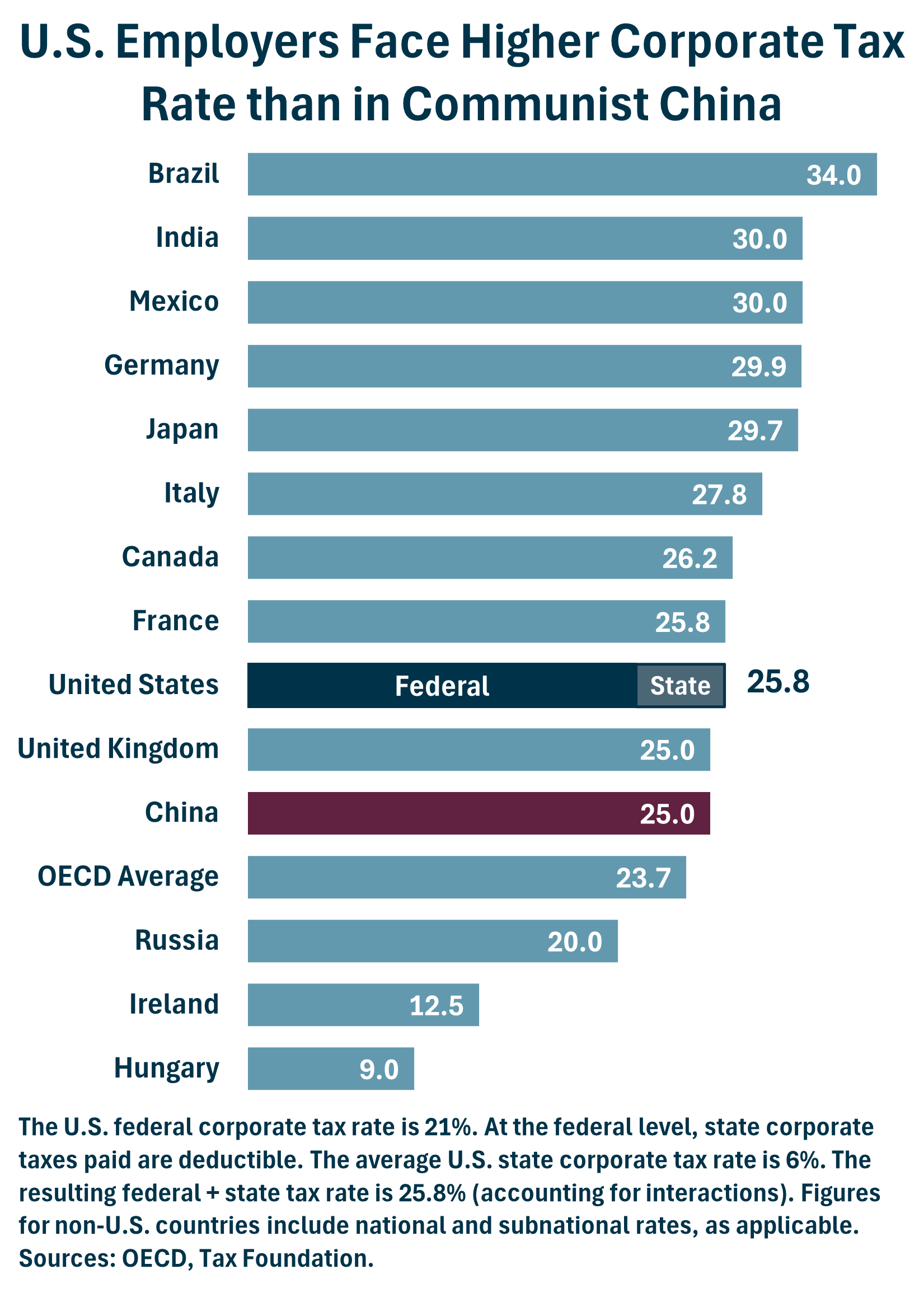
Reduce Double Taxation of Dividends, Capital Gains and the Obamacare Net Investment Income Tax
The corporate tax subjects corporate profits to double taxation. After paying the corporate tax, the remaining profits are distributed to shareholders, who then pay taxes on those dividends or capital gains. This double layer of taxation on the same dollar of income is destructive and distortionary.Chart 3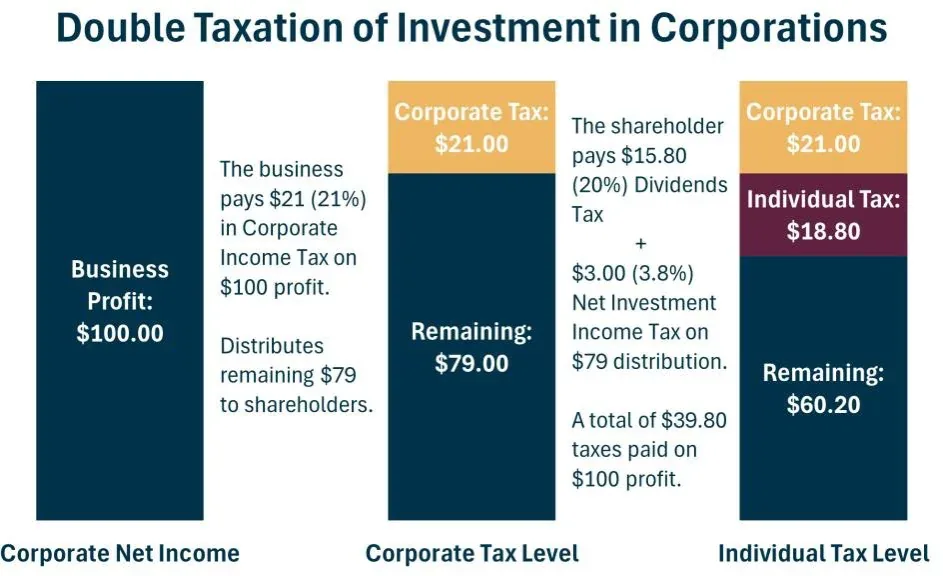
Improve Dynamic Scoring of Tax Proposals
Understanding the economic effects of legislation is now more important than ever.[16] Congress must ensure that scorekeeping agencies use best practices when conducting dynamic scoring of tax legislation. This important type of scoring provides analysis of how the economy is affected by the proposed tax policy and, as a result, how revenues would be affected. A Congressional Budget Office (CBO) working paper has shown there are significantly different effects on the economy depending on the sources of financing government spending.[17] The Budget Committees should require the CBO and the Joint Committee on Taxation (JCT) to update the macroeconomic scoring methodology for all dynamic estimates to incorporate the budgetary effects of changes in economic output, employment, capital stock, tax revenues, sources of financing new outlays, total debt of the federal government, international trade, and international capital flows resulting from the legislation. The Pro-Growth Budgeting Act, introduced by Representative Kevin Hern (R-OK-01) in the 117th Congress, would implement these requirements. The CBO and the JCT should also be as transparent as possible regarding their dynamic scoring models. For example, the CBO and the JCT should discuss their assumptions regarding the long-run equilibrium and the speed of convergence for when the debt-to-GDP ratio stabilizes. In addition, Congress should require the CBO and the JCT to produce annual analysis that shows how their economic projections and assumptions compared to other leading economic modeling organizations and the historical record. These important reforms could be advanced by working with the House Budget Committee to provide instructions to the CBO and the JCT and by including these requirements in the House Rules package that will be adopted at the beginning of the 119th Congress.Address the Drivers of Debt and Reduce Spending
If not paired with significant spending reductions, tax cuts will not prove durable and will not provide the conditions for long term growth, even if these tax cuts produce stronger economic growth (and thus revenue growth) in the short run. The problem underlying the government’s fiscal policy is that government spending is on an unsustainable trajectory. Over the long run, government spending cannot continue to grow faster than the economy.[18] Yet, that is the path that the current fiscal trajectory would put us on.Chart 4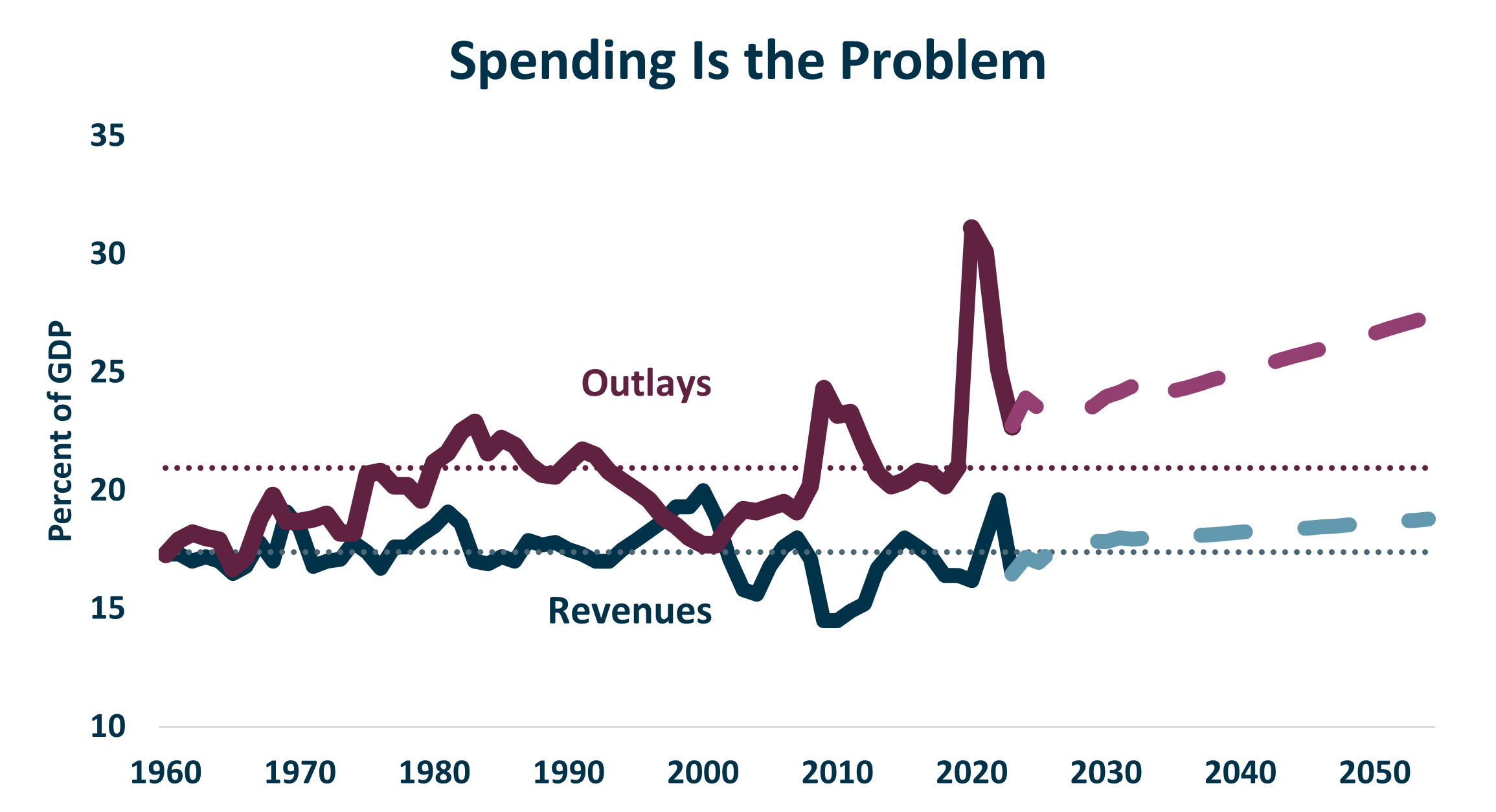 Sources: CBO, OMB
Reforms to Promote Fairness
Repeal Green Energy Tax Credits
The green energy subsidies from the Inflation Reductions Act (IRA) should be fully repealed. Tax credits for electric vehicles (EVs), wind, solar, and other so called “green energy” merely shift the cost onto taxpayers instead of allowing the price to reflect the value provided to consumers. Transitions to green energy should reflect what consumers actually want and not what politicians and bureaucrats think that they should do in an attempt to modify Americans’ behavior and personal choice. In other words, households are the best judges of their own wellbeing, and they will adopt new technologies when new tech provides superior benefits to existing alternatives. Subsidies are effectively a transfer of wealth from people who do not use green energy or are in locations where that is not practical to those who do want to use it. Wealth transfers are not efficient and do not promote genuine, long-term growth. Rather, they change the incentives that producers face and encourage investment in areas which otherwise would not grow at that pace. Subsidies effectively amount to picking winners and losers instead of supporting competitive innovation among energy resources. Subsidies guarantee the same (0r greater) quantity of money to reliable and unreliable energy sources leading to a misallocation of resources. Additionally, energy subsidies of green energy components in solar panels and EVs are primarily manufactured in China. In the case of EVs, most batteries are manufactured in China. For solar, almost 80 percent of solar cells, wafers, polysilicon, and modules are produced in China. Green energy relies heavily on rare earth elements and critical minerals, most of which are mined and processed by Chinese-controlled companies. Subsidizing green energy does not effectively reduce carbon emissions given that many of the components or elements are manufactured or mined in China under worse environmental conditions and with more emissions than in the U.S., and then shipped across oceans. Subsidizing green energy means subsidizing China rather than helping American families. Instead, we should remove the subsidies, stop funding Chinese manufacturing and emboldening the Chinese Communist Party, and allow consumers to choose the best energy source for the lowest amount of money.Eliminate the Individual SALT Deduction
The state and local taxes (SALT) deduction should be fully eliminated, allowing lower taxes for families across the country. One of the most important tax reforms of the 2017 Tax Cuts and Jobs Act was limiting the federal individual deduction for SALT. Under TCJA, taxpayers who itemize can deduct no more than $10,000 from their federal taxes for SALT. The SALT deduction is not pro-growth, it does not make the tax code fairer, nor does it simplify the tax code. The SALT deduction disproportionately benefits high income individuals in high tax states. Before the cap was put in place, just seven states collected more than half of the benefits of SALT: California, Connecticut, Illinois, Maryland, Massachusetts, New Jersey, and New York.[21] The SALT deduction effectively provides a federal subsidy to states with high taxes. This tax subsidy incentivizes higher taxes and bigger state and local governments. At the same time, the deduction forces federal tax rates to be higher across the board to raise the same amount of revenue. This punishes the millions of Americans who have moved to pro-growth, low-tax jurisdictions. The SALT cap is scheduled to expire at the end of 2025 along with other individual provisions of the tax code. At a minimum, the cap should be extended. Failing to extend the cap would require other taxes to be more than $1 trillion higher over the next decade to make up for the subsidy.Eliminate the Corporate SALT Deduction
The corporate SALT deduction should also be eliminated and replaced by a lower corporate tax rate. Analysts at EPIC estimate that the state and local tax deduction averages about 2 percent of all corporate deductions. While the TCJA capped the SALT deduction for individuals, corporations can fully deduct state and local taxes paid from their federal tax liability. The distortions and problems caused by the individual SALT deduction are mirrored by the corporate SALT deduction. The federal deduction provides a subsidy to state and local governments that impose high taxes on employers, paid for by taxpayers in pro-growth, low tax jurisdictions.Eliminate the Death Tax
The Death Tax should be eliminated. The estate tax, better known as the Death Tax, imposes a 40 percent tax on property transferred at death. Along with a companion tax called the gift tax (which should also be repealed), the estate tax costs the economy in unnecessary insurance, accounting, and legal fees. In addition, the Death Tax is fundamentally unfair and economically destructive. Because the assets subject to the Death Tax that are passed along to the next generation can be illiquid — such as family farms and small businesses — families often have no way to pay the federal government other than by selling off those businesses and land. So, while families grieve for their loved ones, they are often forced to give up the fruits of their hard work – resources meant to secure a better future for the next generation. This is entirely contrary to the American dream. The TCJA doubled the Death Tax exemption to $11.2 million, which is adjusted annually for inflation ($13.6 million in 2024) and allowed many families to avoid the tax. However, the expanded exemption will expire at the end of 2025 along with the individual provisions of the TCJA.Protect Taxpayers and Prohibit Aliens from Eligibility for Welfare Tax Credits
Congress should prohibit recipients of asylum, parolees, conditional entrants, refugees, temporary protected status (TPS), noncitizens granted withholding of removal, extended voluntary departure, and deferred enforced departure from eligibility for welfare and assistance benefits, including the Child Tax Credit (CTC), the Earned Income Tax Credit (EITC), and the Obamacare Premium Tax Credit (PTC). The federal government provides billions of taxpayer-funded benefits for immigrants.[22] The cash and in-kind benefits available from welfare and other assistance programs incentivize illegal immigration. These welfare payments are also contrary to the long-standing policies of the United States which have expected immigrants to be self-sufficient, contribute to the American economy, and not be reliant on government benefit programs. Current law makes inadmissible any alien who “is likely at any time to become a public charge.”[23] Unfortunately, the public charge doctrine is undermined by loopholes that exempt many categories of immigrants including asylees and refugees. These must be closed. The Biden-Harris Administration also implemented regulations undermining the public charge doctrine by not considering dozens of health, housing, food assistance, education programs, and other public benefits when making a public charge determination. Reversing these regulatory loopholes is a critical component of a pro-growth, anti-welfare state tax plan.End Tax Deductibility of Union Non-Representational Expenses
The revenues dedicated to nonrepresentational activities of labor unions should be subject to the normal corporate income tax. Labor unions are tax-exempt under Section 501(c)(5) of the Internal Revenue Code. In 2019, these organizations had $3.2 billion of net income on $27.5 billion of revenues and held more than $43 billion in assets.[24] Many of these labor unions spend significant amounts of their revenues on partisan political activities and lobbying rather than actual representational activities for their members.[25]Reforms to Promote Simplicity
Create Universal Savings Accounts
Policymakers should make universal savings accounts (USAs) available to all Americans. USAs would allow individuals to make contributions to a savings account where proceeds grow without being subject to further taxation. The funds could be withdrawn at any time and used for any purpose. A properly constructed tax code would not punish savings and investment. Generally, current tax policies double tax the funds that people put into normal savings and investment accounts. However, policymakers have recognized the importance of tax-free savings. The result has been the creation of a myriad of special tax-advantaged accounts, including 401(k)s, individual retirement accounts (IRA), Roth IRAs, 529 tuition savings plans, and health savings accounts (HSA). The problem with these accounts is that they are subject to a web of complex rules and restrictions for how and when the savings can be used. Access to these savings accounts can also be limited to only certain qualifying people. In other words, the tax code plays a dominating role in the taxpayer’s decisions on how to spend her own income. This is antithetical to personal liberty. The key feature of USAs is their simplicity and adaptability to every family’s needs. Funds could be saved towards the purchase of a home, investing in education, health expenses, the birth of a child, or as a rainy-day fund. USAs would promote expanded savings and better financial security. H.R. 9010, the Universal Savings Account Act of 2024, introduced by Rep. Diana Harshbarger (R-TN-1) would implement this important reform.End a Marriage Penalty by Eliminating the Head of Household Filing Status
Marriage penalties are harmful and should be eliminated wherever possible. A major marriage penalty exists in the tax code due to the head of household filing status. Taxpayers generally choose from one of four different filing statuses[26] when completing their tax returns: single, married filing jointly, married filing separately, and head of household. The head of household status is for unmarried taxpayers with a child or other dependent.Chart 5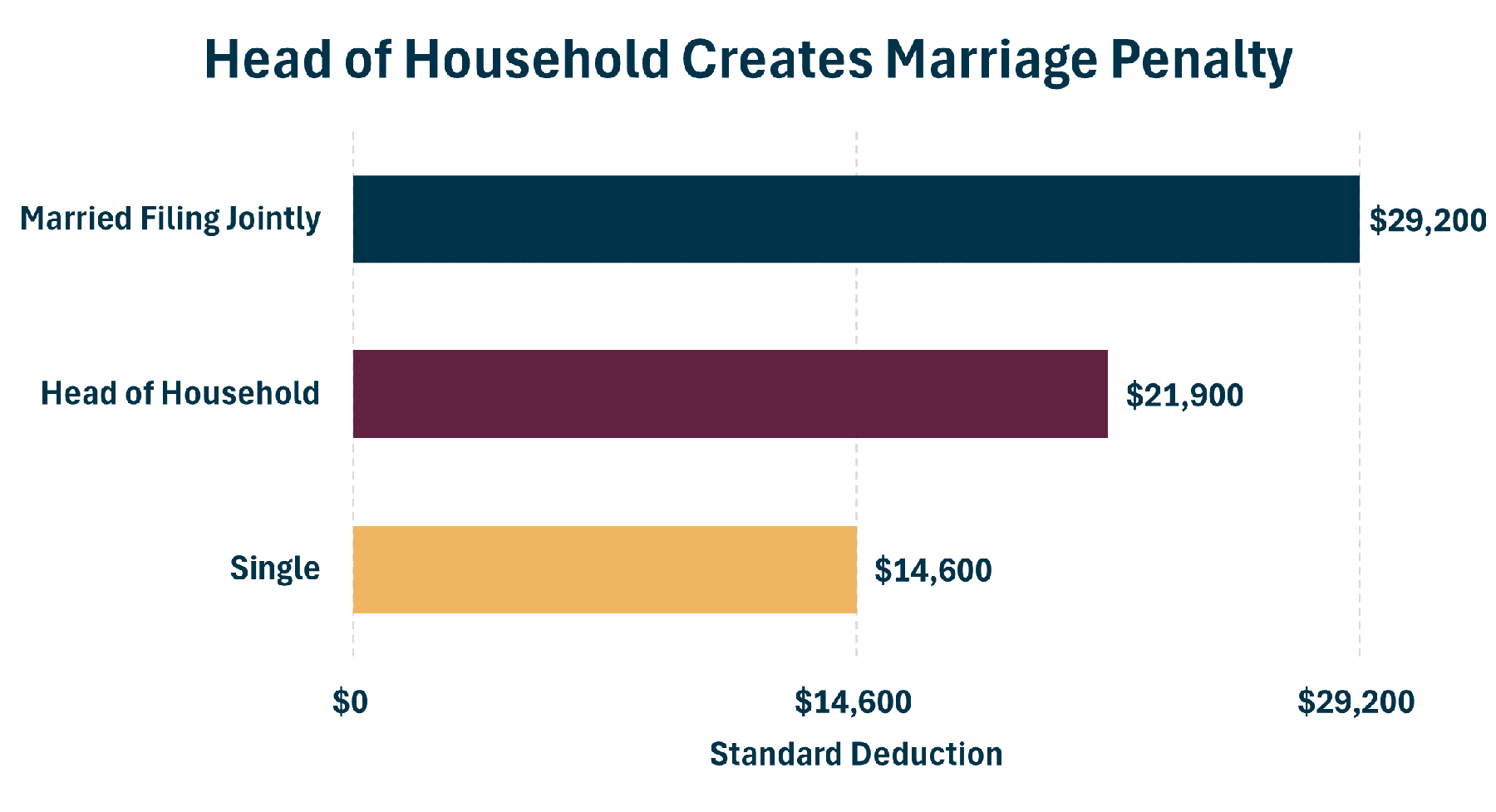 Source: IRS
Fix the Measurement of Tax Expenditures
Tax expenditures are special tax deductions, credits, and exemptions.[28] The U.S. Treasury Department, the JCT, and the CBO are required to report on tax expenditures, measured against a “normal law” tax baseline. However, the definition of tax expenditures that is codified in the Congressional Budget Act as deviations from “gross income” is flawed and highly misleading.[29] The baseline way that tax policies are described is biased in a direction that favors higher taxes and economically harmful outcomes. The “gross income” baseline definition assumes that double taxation of savings and investment is normal. This means that the “reduced” rates on capital gains and dividends, the exclusion of capital gains taxation of principal residences, and individual retirement accounts are all considered tax expenditures. Expensing of business investments, which simply removes the tax bias against investments, is also listed as a tax expenditure. Taken to the extreme, this concept is used to claim that taxing unrealized capital gains would be closing a loophole, as argued by the Biden-Harris Administration.[30] Policymakers should end special carveouts in the tax code and adopt fair, pro-growth policies. Social and economic engineering is simply not the purpose of the tax code, whose solitary mission should be the raising of needed revenue for limited, essential governmental functions. The baseline for how tax policies are reported must be fixed so that actual loopholes are ended. The definition of the baseline from which tax expenditures is measured should instead be “consumed income.”[31] This important reform could be advanced by working with the House Budget Committee to provide instructions to the CBO and by clarifying definitions in the House Rules package that will be adopted at the beginning of the 119th Congress.Conclusion: Lawmakers Must Preserve and Expand the 2017 Tax Cuts to Promote Opportunity, Fairness, and Simplicity
Lawmakers face many significant challenges in 2025. The expiration of TCJA provisions will trigger an urgency to consider tax legislation, providing lawmakers with an important opportunity to preserve and expand on the 2017 law. These tax reforms should promote sustainable economic growth and opportunity for all Americans, fairness, and simplicity. William W. Beach and Sarah Wagoner contributed to this report.Appendix: Tax Reforms to Promote Opportunity, Fairness, and Simplicity
Reforms to Promote Sustainable Economic Growth and Opportunity for All
- Prevent Tax Increases on American Workers and Families
- Make Expensing for Capital Investments Permanent
- Make Expensing for Research & Development Permanent
- Provide Neutral Cost Recovery for Investments in Buildings
- Prevent Tax Increases for Small Businesses
- Lower the Corporate Rate to Increase American Competitiveness
- Reduce Double Taxation of Dividends, Capital Gains and the Obamacare Net Investment Income Tax
- Improve Dynamic Scoring of Tax Proposals
- Address the Driver of Debt and Reduce Spending
Reforms to Promote Fairness
- Repeal Green Energy Tax Credits
- Eliminate the Individual SALT Deduction
- Eliminate the Corporate SALT Deduction
- Eliminate the Death Tax
- Protect Taxpayers and Prohibit Aliens from Eligibility for Welfare Tax Credits
- End Tax Deductibility of Union Non-Representational Expenses
Reforms to Promote Simplicity
- Create Universal Savings Accounts
- End a Marriage Penalty by Eliminating the Head of Household Filing Status
- Fix the Measurement of Tax Expenditures