More After-Tax Income for Working Americans
The One Big Beautiful Bill (OBBB) allows hard-working Americans to keep
more of their paychecks. For example, a married couple with three kids and $50,000 of income will have $1,840 more after-tax income in 2026, a single parent with one child and $65,000 of income will have $2,120 more after tax income, and a married couple with three kids and $75,000 income will have $2,530 more after-tax income.
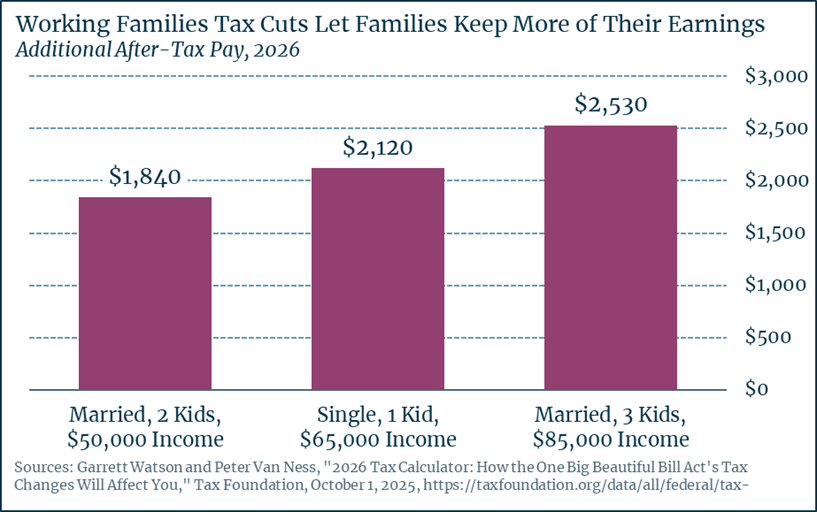
This means that working families will have more money to spend on
their priorities, instead of the government spending their money on the priorities of politicians and powerful special interest groups.
Moving Toward Real Affordability
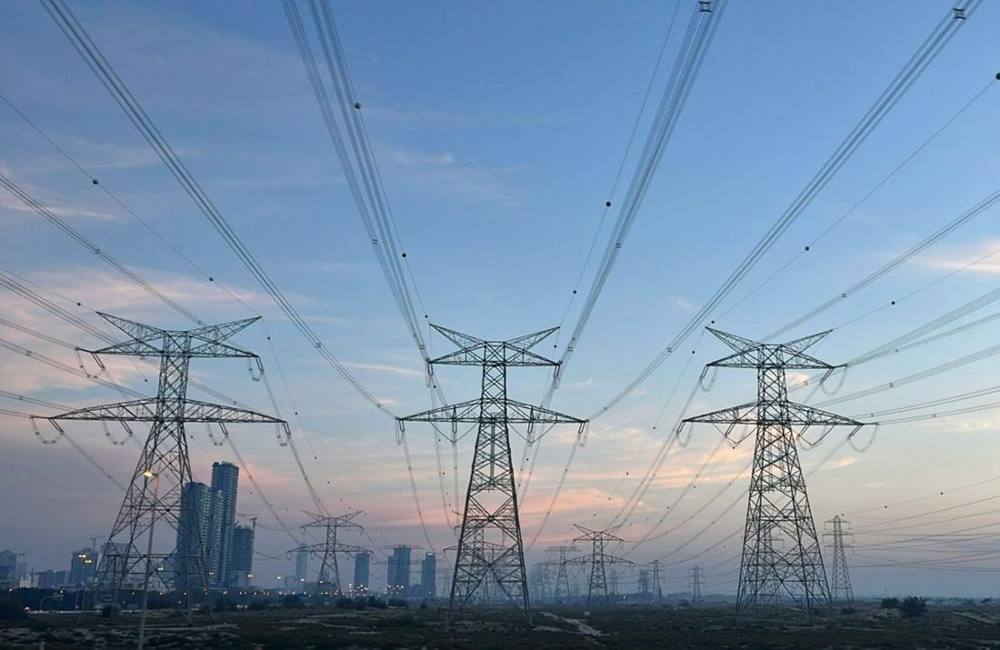
Some of those powerful interest groups that wanted to profit at the expense of ordinary taxpayers have argued that Americans’ energy costs are going to increase as a result of the One Big Beautiful Bill’s repeal of hundreds of billions of dollars in
taxpayer subsidies for “green energy.”
But the government
throwing massive amounts of money around doesn’t reduce costs—it drives them up. Just look at the $4.6 trillion in COVID-related spending that led to 9% inflation.
By repealing about
$485 billion in taxpayer subsidies for “green energy,” the OBBB will save the equivalent of $392 per year for each American household. This is a total of $3,500 for green energy subsidies between 2026 and 2034.
[1]
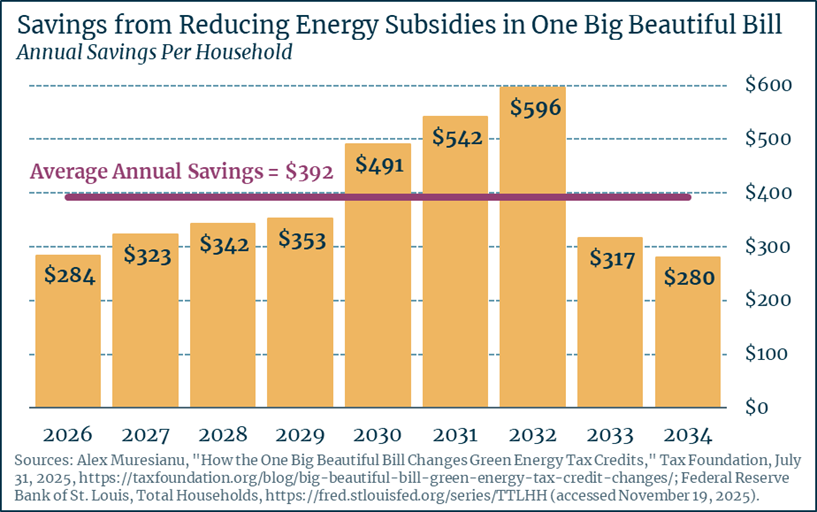
Replacing those market-distorting tax subsidies that picked winners and losers with tax cuts for working families—as the OBBB did—will allow households to use more of their earnings on what they decide are best for them. That includes choosing whether to buy solar panels and electric vehicles based on their actual costs and not how much of that cost the government will force onto other people.
Affordability problems can never be solved by the government making other people pay for goods and services; all that does is drive up costs even further. Real affordability comes from reducing the total cost of producing something, which can only happen when people are free to keep most of their earnings and to spend them on the things they desire. That’s what the One Big Beautiful Bill does.
[1] Estimates based on the annual green energy subsidies as estimated by Alex Muresianu, "How the One Big Beautiful Bill Changes Green Energy Tax Credits," Tax Foundation, July 31, 2025,
https://taxfoundation.org/blog/big-beautiful-bill-green-energy-tax-credit-changes/ (accessed November 19, 2025). Annual green energy subsidies are divided by the number of U.S. Households based on: Federal Reserve Bank of St. Louis, Total Households, https://fred.stlouisfed.org/series/TTLHH (accessed November 19, 2025). Author’s estimates assume that the number of households grows by 0.622% per year, which is the rate of growth in the number of households that occurred over the past eight years.