
Op-Ed
CBO: One Big Beautiful Bill Grows the Economy, Cuts Taxes & Slows Welfare Spending
February 12, 2026 · David Ditch

Food stamp enrollment has increased significantly, surging from 17.3 million individuals in 2001 to 42.1 million in 2023.
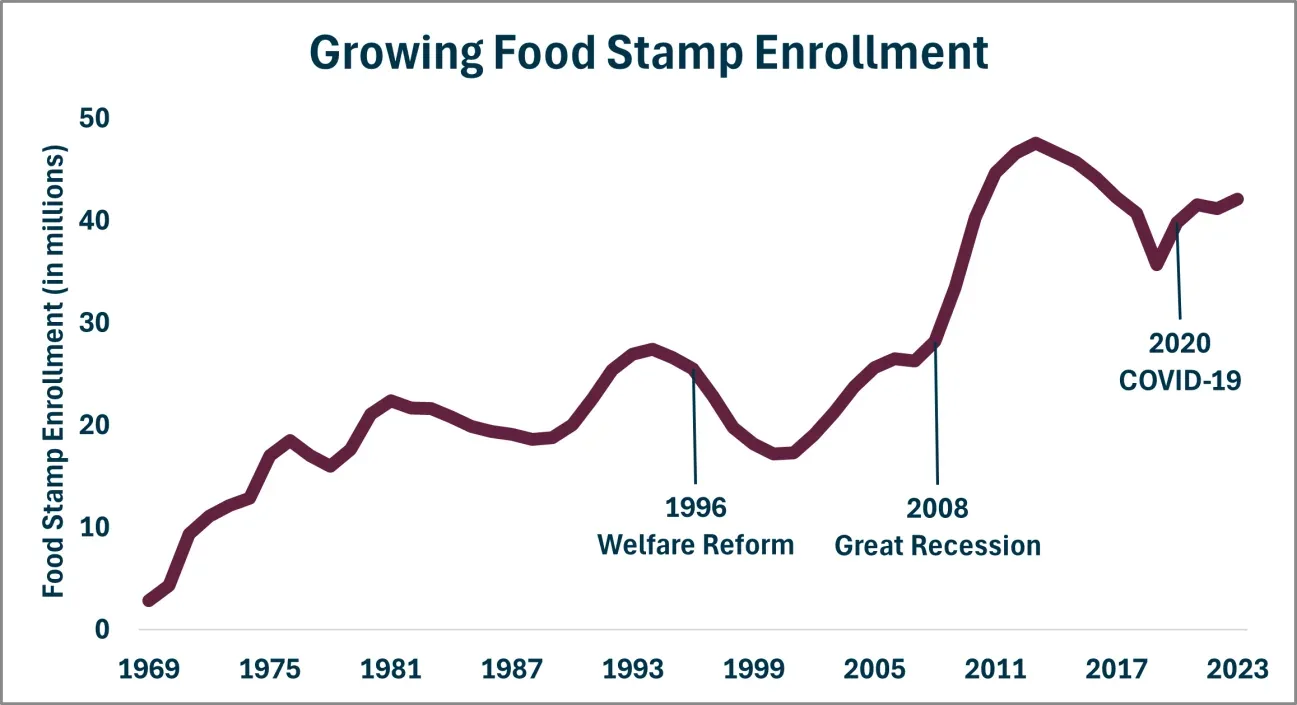
Food stamp enrollment has increased significantly in recent decades.
In fiscal year 2023, 42.1 million Americans received food stamps, increasing from 17.3 million in 2001.
In FY 2013, in the wake of the Great Recession, a record high 47.6 million people received food stamps.
Growing food stamp enrollment has led to fewer workers throughout the economy paying taxes and supporting each welfare recipient.
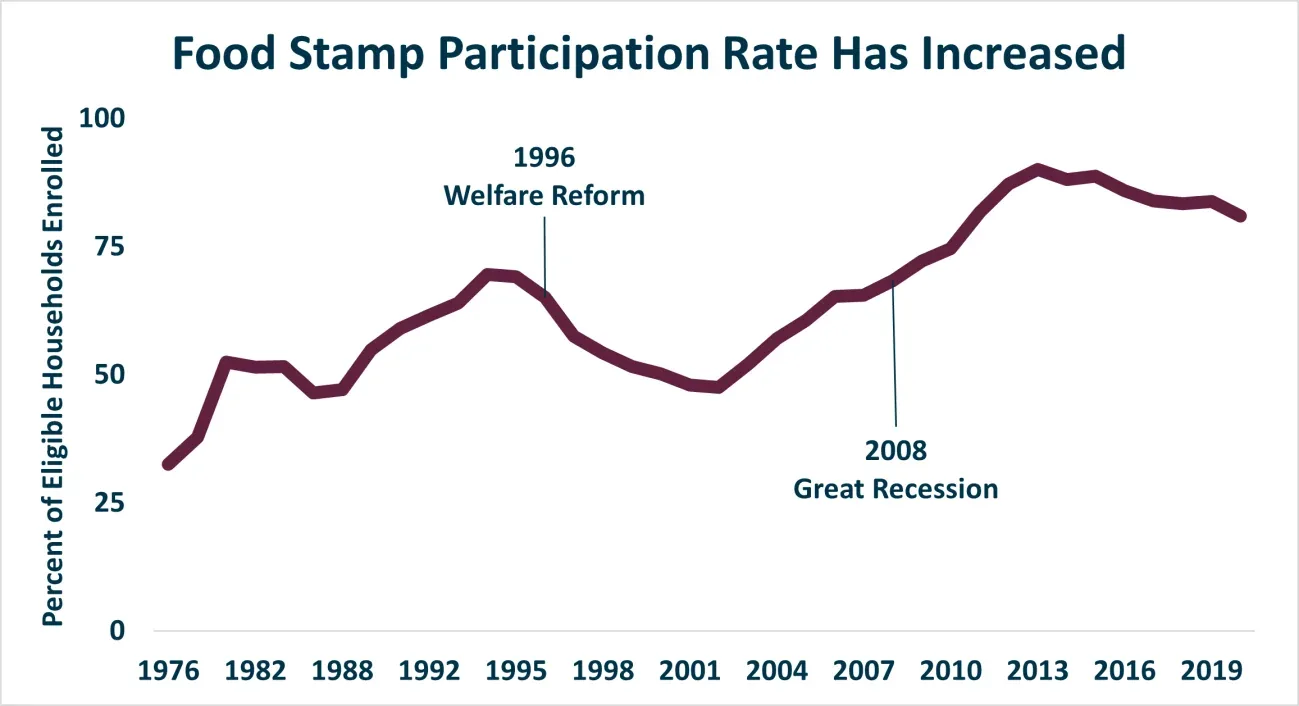
One important reason for the increase in food stamp enrollment is that the participation rate among people eligible for the program has increased.
In 2019, 83.8 percent of people eligible for food stamps received benefits. Between 1980 and 2000, an average of 56.6 percent of eligible people received food stamp benefits. Between 2010 and 2019, an average of 84.8 percent of those eligible received benefits.
The growth in the food stamp participation rate accelerated rapidly after the enactment of the 2002 Farm Bill signed by President George W. Bush, despite relatively low unemployment and a growing economy at the time. Growth continued through the enactment of the 2008 Farm Bill and President Barack Obama’s 2009 stimulus law, with the participation rate peaking in 2013 and only modestly receding thereafter.
The U.S. Department of Agriculture (USDA) summarizes the causes for higher participation and enrollment in food stamps since 2002 as the result of the Great Recession and the slow economic recovery, increased eligibility for noncitizens and immigrant children, expanded vehicle asset test exclusions, increased benefit allotments, work requirement waivers, and sustained increases in outreach about the program.
Most notable is the growth in the participation of able-bodied adults without dependents (ABAWDs) aged 18 to 49 (the population that is supposed to be subject to work requirements as a condition for receiving benefits).
In 2002, 37.9 percent of eligible ABAWDs received food stamp benefits. By 2013, virtually all eligible ABAWDs were participating in the program. In 2019, 81 percent of eligible ABAWDs received food stamp benefits, despite a robust economy and a low unemployment rate.