
Op-Ed
CBO: One Big Beautiful Bill Grows the Economy, Cuts Taxes & Slows Welfare Spending
February 12, 2026 · David Ditch

In 2023, there were just 3.8 workers for each food stamp recipient.
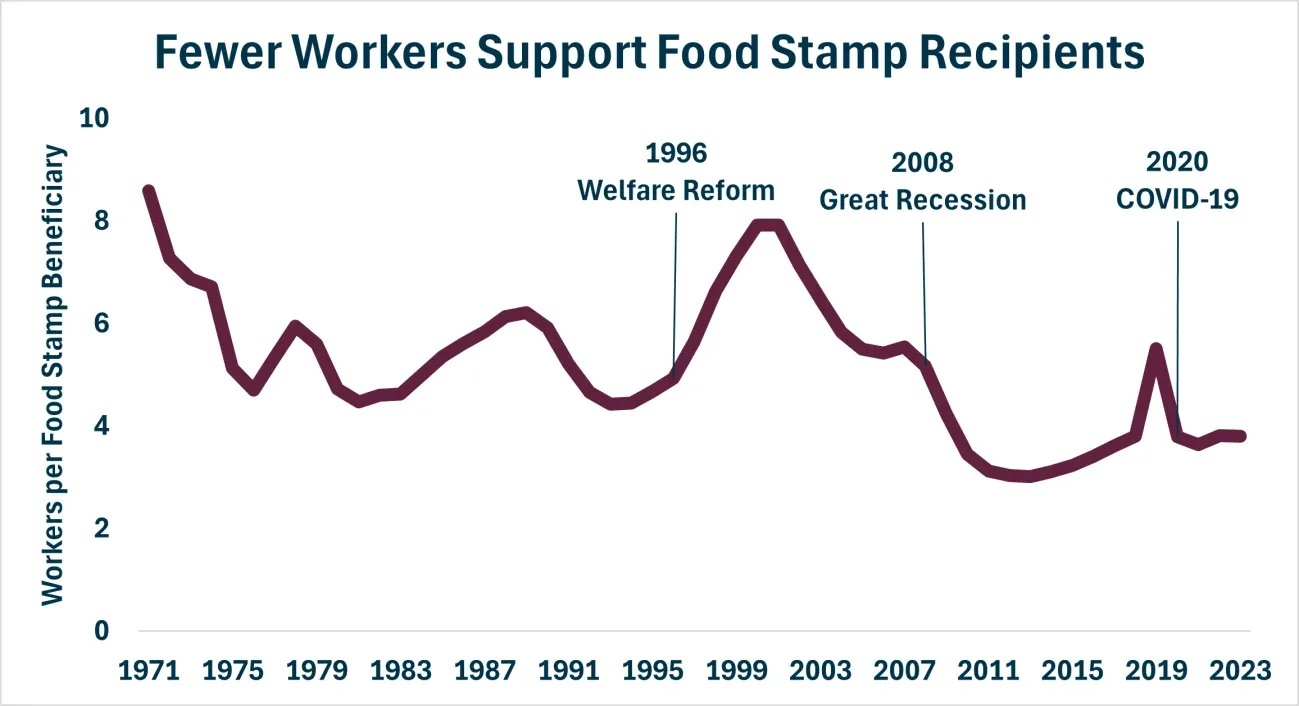
Food stamp enrollment has increased significantly in recent decades. In fiscal year 2023, 42.1 million Americans received food stamps. This is 2.4 times the 17.3 million who were enrolled in FY 2001.
The welfare rolls have grown as 2.3 million fewer people are employed than if the employment-to-population ratio were the same as it was before the COVID-19 pandemic. The lack of workers is hurting economic growth and exacerbating the federal government’s unsustainable budget.
Growing food stamp enrollment has led to fewer workers throughout the economy paying taxes and supporting each welfare recipient.
In FY 2023, there were just 3.8 workers for each food stamp recipient.
Between FY 1971 and 2000, the economy averaged 5.7 workers for each food stamp recipient.
Few adult food stamp recipients work, even those subject to work requirements (which are often waived).
In FY 2019, only 28.6 percent of food stamp households had any earned income, while 71.4 percent had no earned income.
Most able-bodied adults who receive food stamp benefits do not work. Over the 2017-2019 period, an average of 38 percent of able-bodied adults receiving food stamps were employed, while 62 percent did not work at all.