Federal Medicaid welfare spending is skyrocketing out of control, driven by waste, fraud, and abuse.
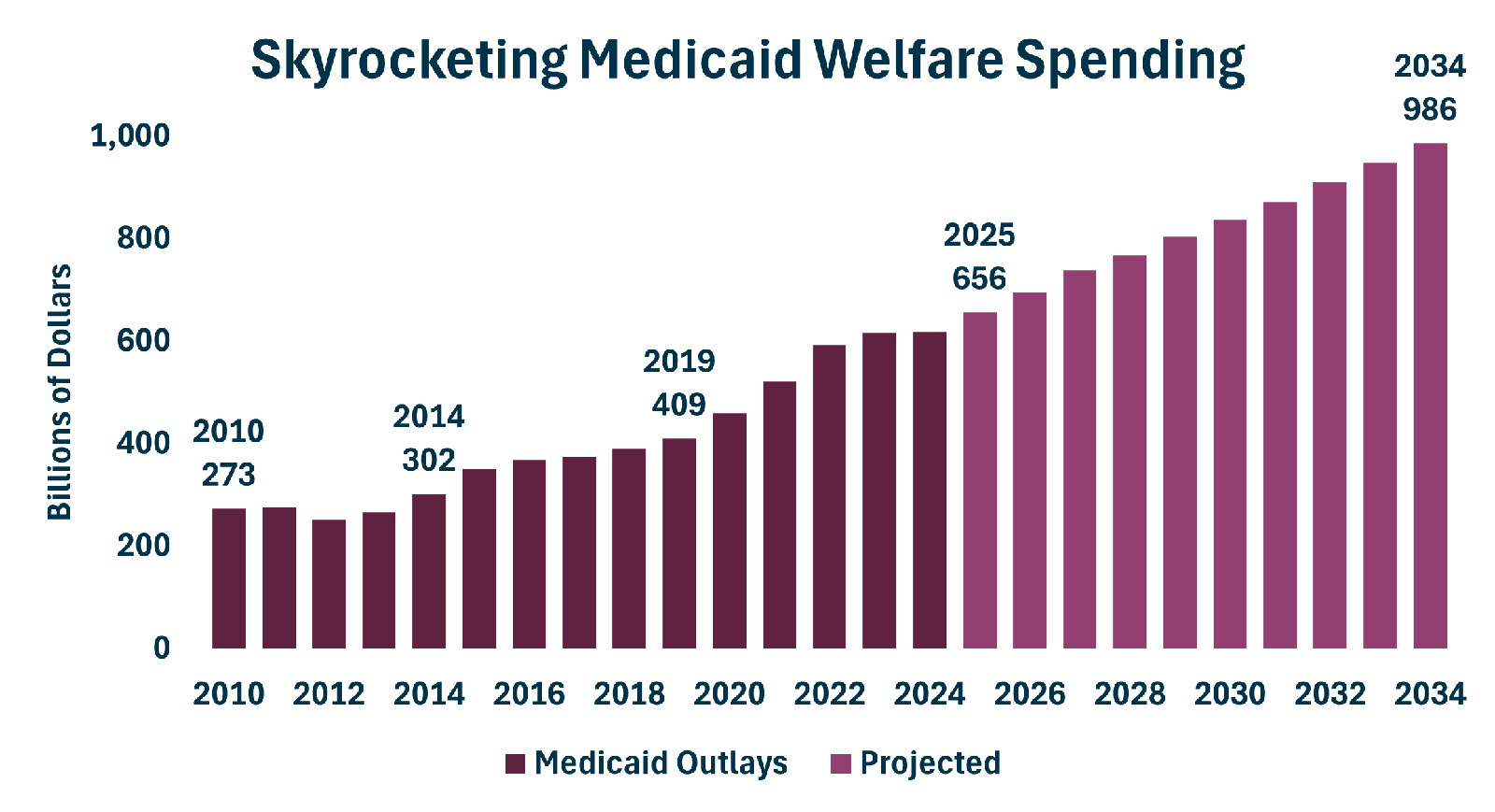
Over the fiscal year 2025 - 2034 period, the Congressional Budget Office (CBO) projects $8.2 trillion in Medicaid spending.
After the Obamacare Medicaid expansion, annual Medicaid spending increased by one-third, growing from $302 billion in FY 2014 to $409 billion in FY 2019.
Throughout and even after the COVID-19 pandemic, the federal government paid states to
keep millions of ineligible individuals on the Medicaid rolls. The Biden administration then implemented the "
Maintaining Enrollment in Medicaid Rule" to restrict states from cleaning up their rolls and verifying eligibility.
This year, Medicaid welfare spending is expected to be $656 billion. By FY 2034, annual Medicaid spending is projected to reach $986 billion.
Sources: OMB, CBO
Medicaid vs Border Security
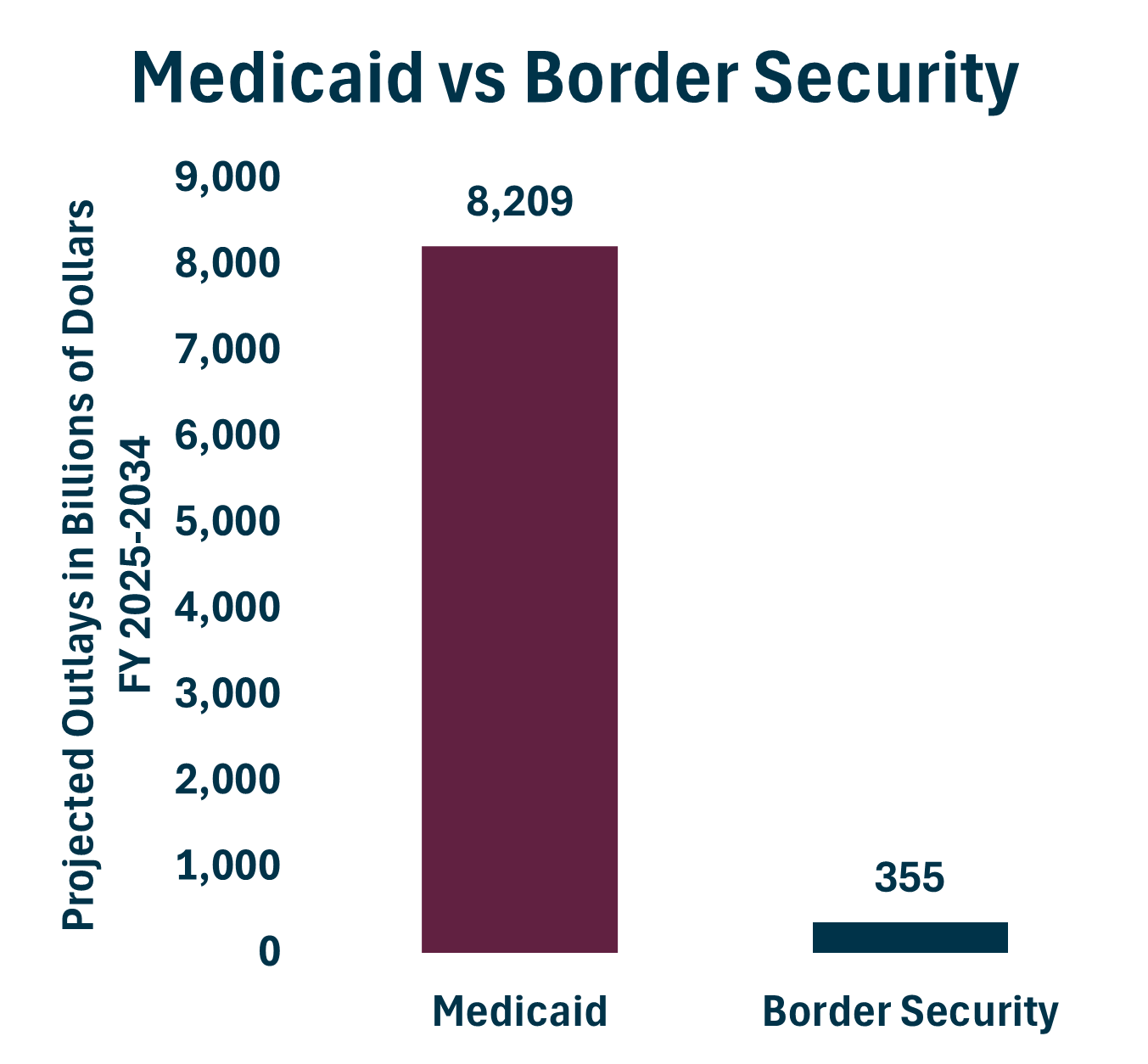
The $8.2 trillion of Medicaid spending over the next decade is 23 times the projected spending for U.S. Customs and Border Protection (CBP) and U.S. Immigration and Customs Enforcement (ICE) that provide vital border security.
Source: CBO
Post-Pandemic Growth
Medicaid spending during and after the pandemic is particularly notable.
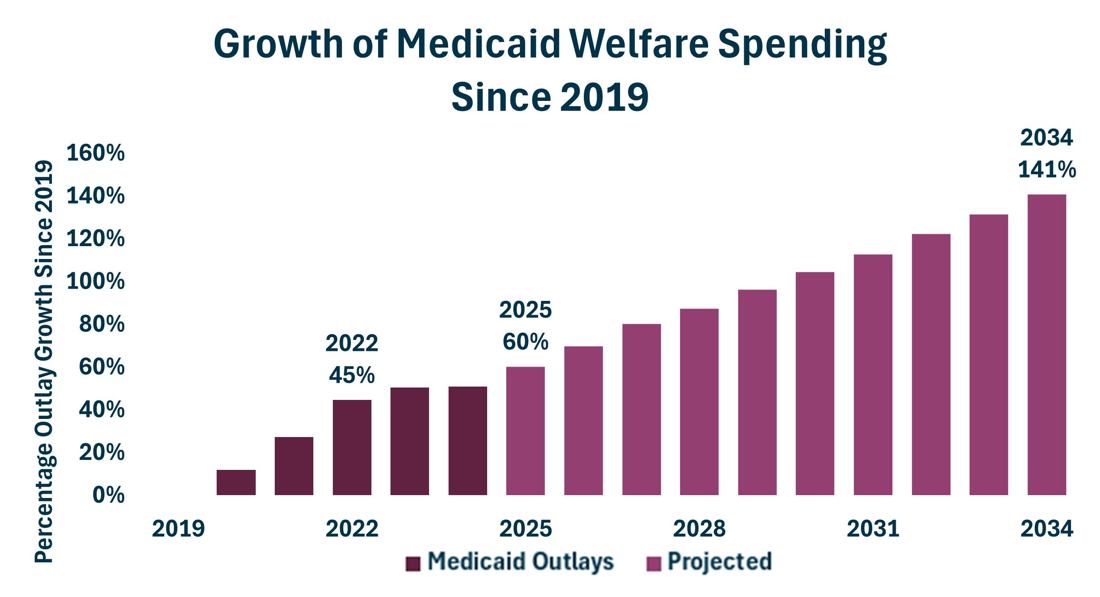
Between FY 2019 and FY 2022, annual Medicaid welfare spending grew by an astonishing 45%.
Medicaid spending this year is projected to be 60% higher than the already high pre-pandemic level.
By FY 2034, Medicaid spending is projected to be 141% higher than pre-pandemic levels.
Sources: OMB, CBO
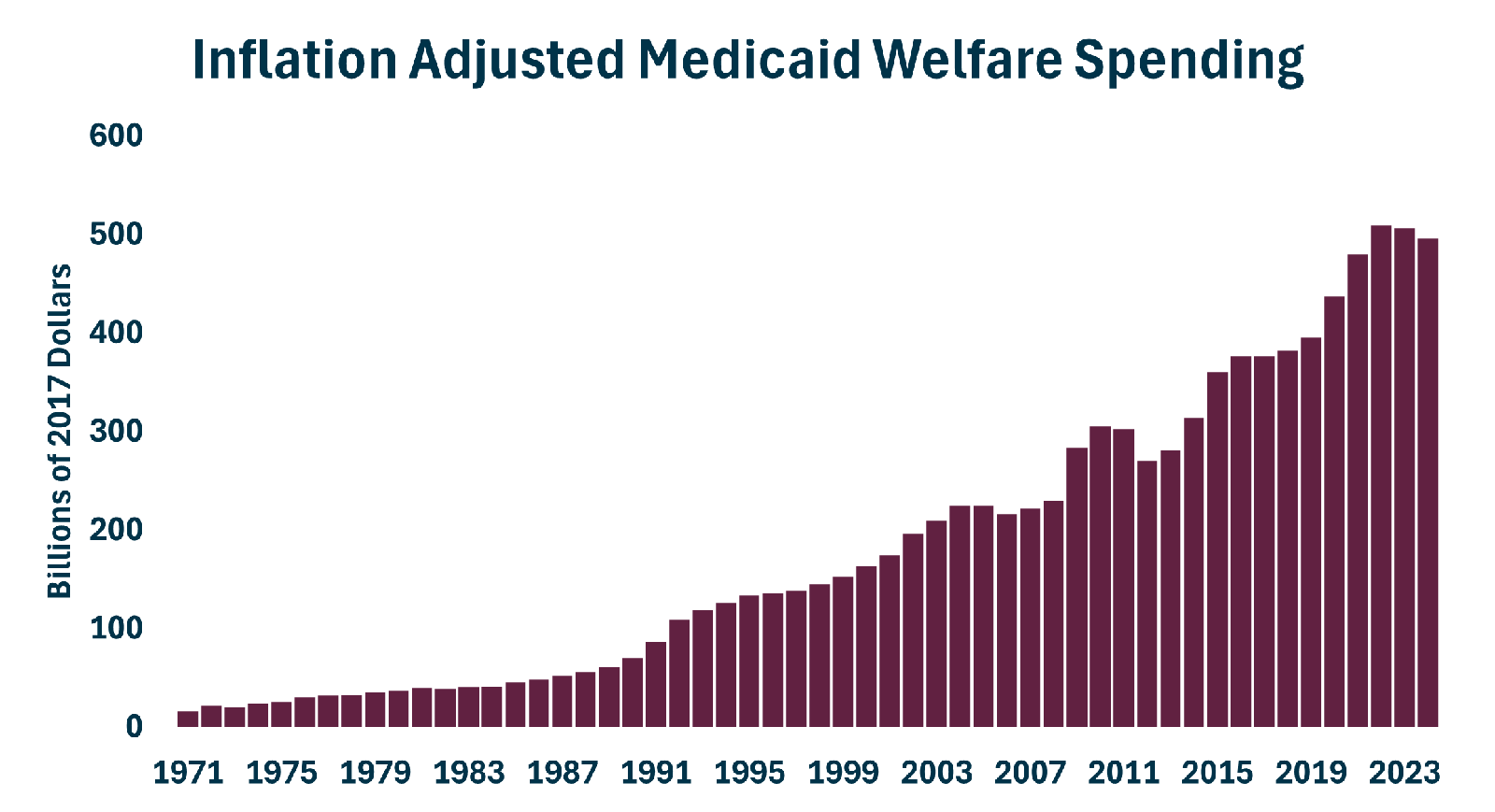
Medicaid Spending Growing Unsustainably
Even in inflation-adjusted terms, Medicaid spending is growing unsustainably. Between FY 1999 and FY 2024, real Medicaid spending grew by more than 225%.
Sources: OMB, CBO
Medicaid is a Failed Program in Need of Reform
Medicaid is rife with waste, fraud, and abuse. The worst thing about Medicaid is that it delivers poor outcomes for the most vulnerable in our society while hundreds of billions of dollars per year flow to hospitals, insurance companies, and state bureaucracies.
Studies have shown that Medicaid consistently provides worse health results and less access to care than private coverage. For example, the landmark Oregon Medicaid Experiment found that Medicaid coverage did not improve physical health outcomes.
The Obamacare Medicaid expansion has
diverted resources away from vulnerable children, the elderly, and Americans with disabilities in order to increase benefits for able-bodied, work capable adults.
Medicaid has also been a failure for the taxpayers. The open-ended financing structure leads to waste, fraud, and abuse. Over the last decade, Medicaid made
$567 billion in improper payments, "equal $4,300 per U.S. household and are enough to provide private health insurance coverage to more than 2.2 million families." States even use loopholes and gimmicks to launder federal money through the Medicaid program.
State governments are
flush with cash, after the federal government spent hundreds of billions of taxpayer funds in recent years
subsidizing state and local bureaucratic jobs. State rainy day funds are nearly twice their pre-pandemic balances, and nearly every state saw their general fund revenue collections come in above or on target in FY 2024.
It is clear that Medicaid is a welfare program in need of significant reform. The budget reconciliation process should be an opportunity to make common sense reforms that increase efficiency and improve care for beneficiaries of the Medicaid welfare program.