Pooling Many Employers Into One Plan
Multiemployer, or union, pensions are defined-benefit retirement plans that pool multiple employers—typically operating in the same industry such as construction, manufacturing, or transportation—into the same pension plan.
Plan factors such as contributions and benefit levels are set through collective bargaining agreements. These pensions are managed jointly by union and employer representatives.
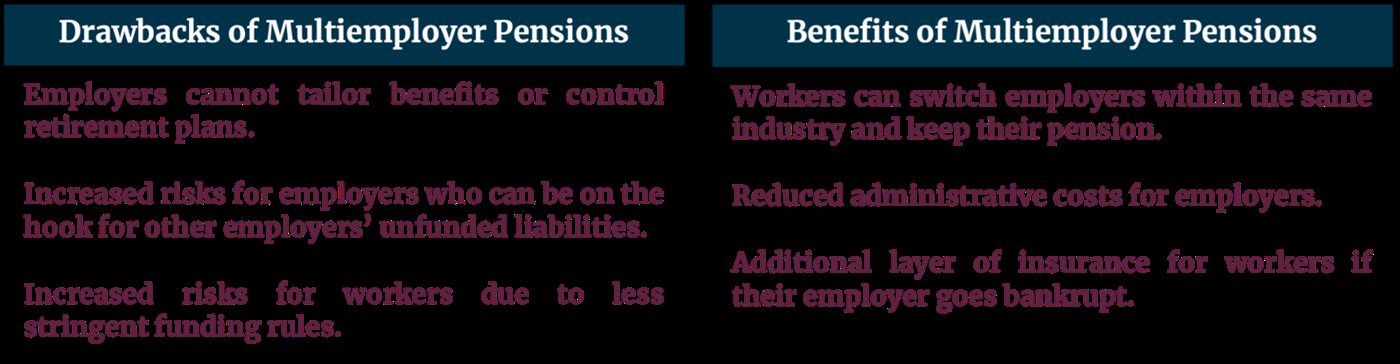
Multiemployer pensions have been on the decline for multiple reasons. There are currently about
1,400 multiemployer pension plans that include 10.9 million participants. The ratio of active workers to retirees declined from 4:1 in 1980 to 1:1 in 2020. Fewer workers per retiree makes it harder for underfunded pensions to dig out of their funding holes.
Multiemployer Pensions Are Massively and Inherently Underfunded
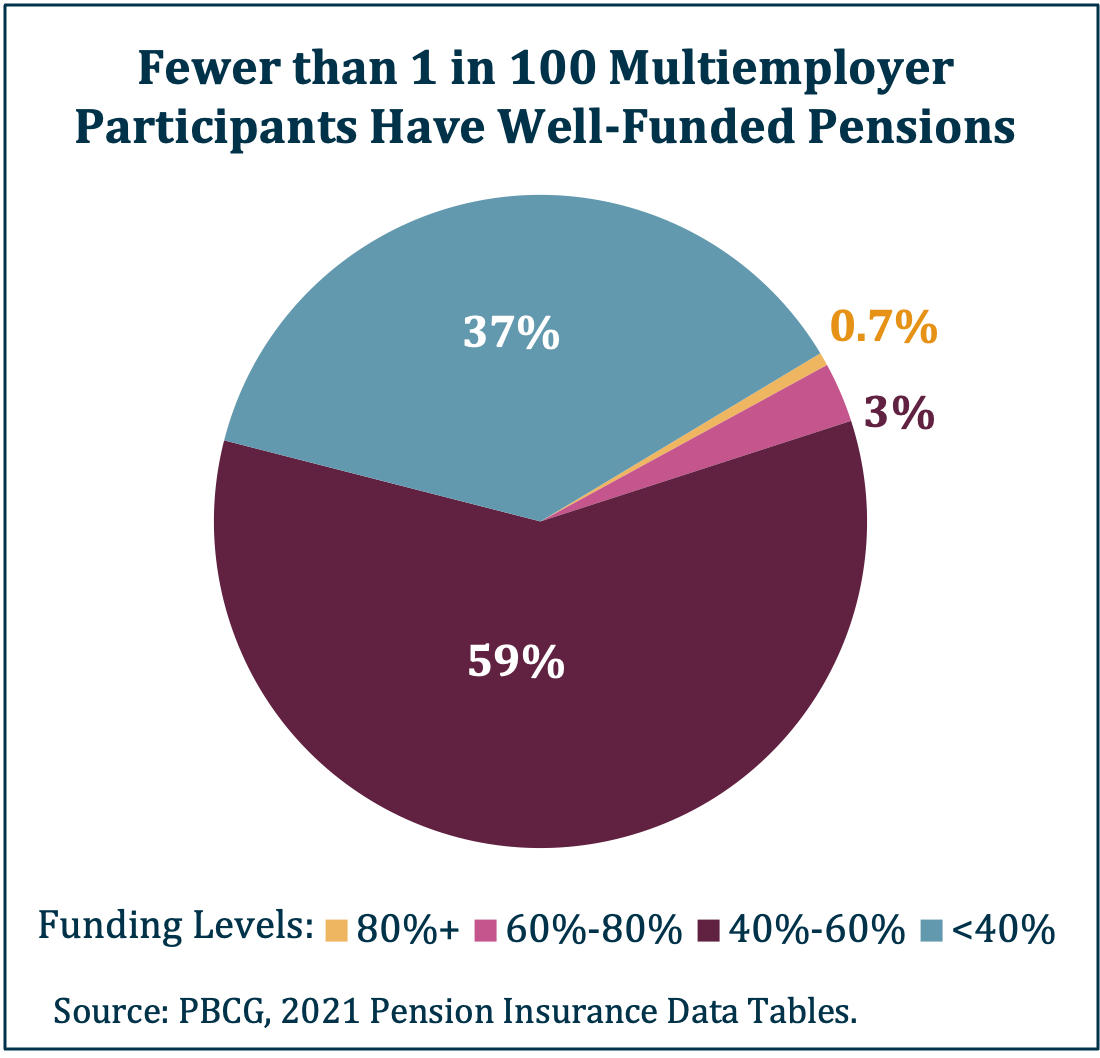
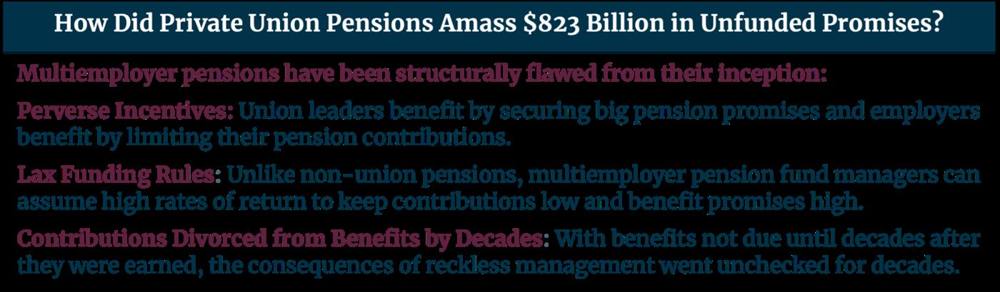
As of 2020, multiemployer pensions had accumulated $823 billion in unfunded pension promises and the system was collectively on track to be able to pay only 41 cents of every dollar in promised benefits. Multiemployer pension underfunding is nearly universal; 96 percent of union pension participants are in plans that are less than
60 percent funded.
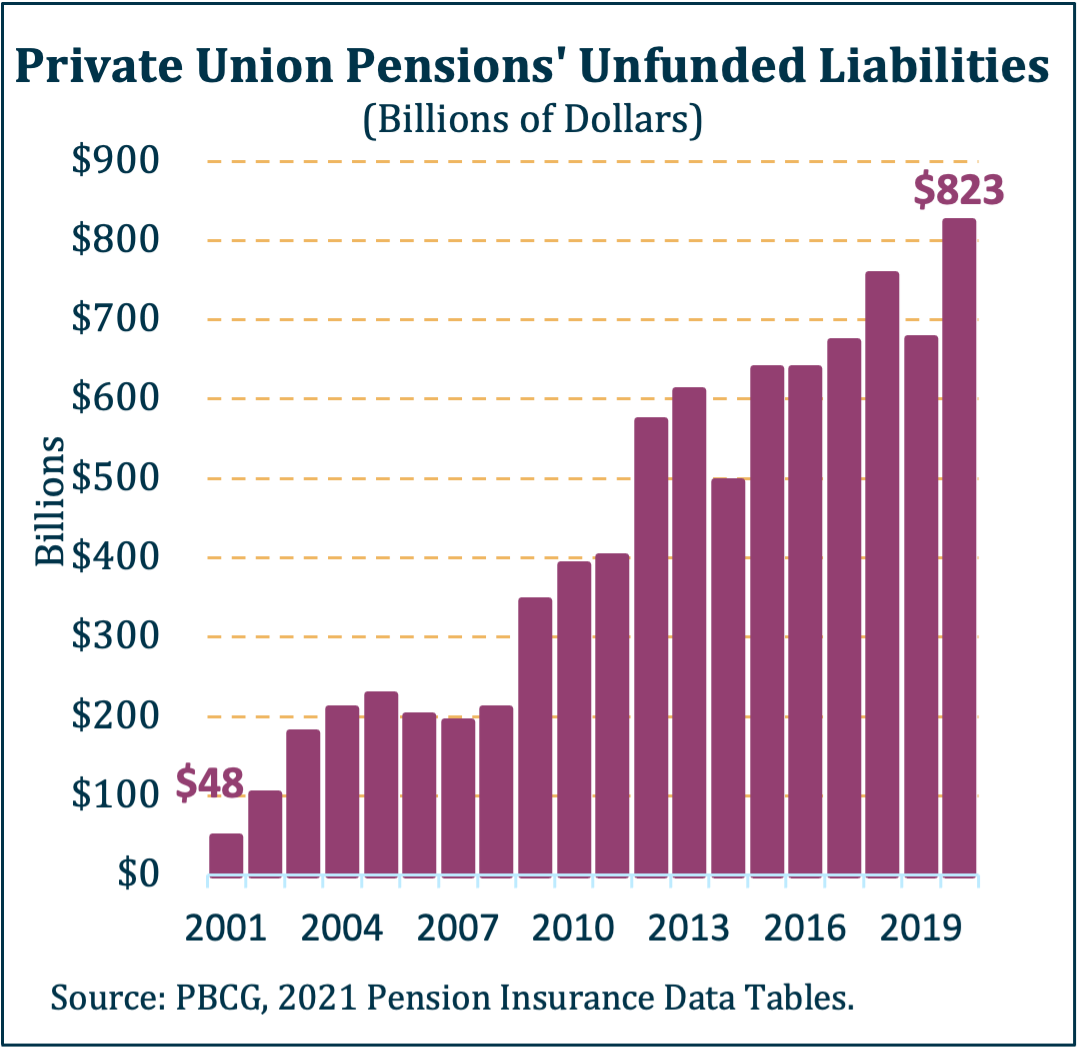
Unions argue that their pension underfunding was caused by companies going bankrupt and leaving behind unfunded liabilities. If a pension plan is adequately funded, it would not matter if every single employer in the pension plan goes out of business; the money to meet promised benefits would be secure within the fund. Bankruptcies only exacerbated existing underfunding.
A Damaging Taxpayer Bailout
With a few large and politically powerful union pension plans on the verge of insolvency and headed towards reduced benefits through the
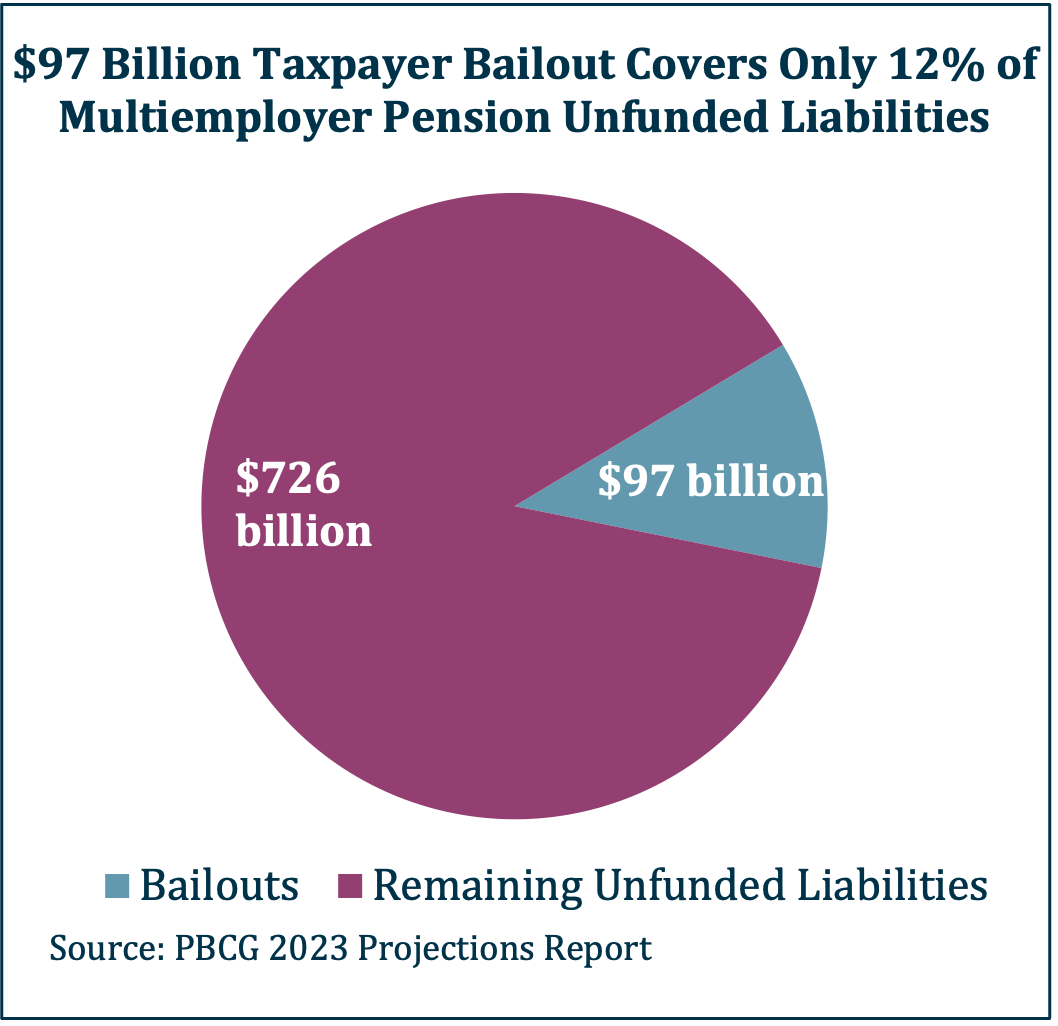
Pension Benefit Guaranty Corporation (PBGC), Congress passed the first-ever taxpayer bailout of select private pension plans under the guise of “COVID relief” in the partisan American Rescue Plan Act. This “Special Financial Assistance” bailout provides one-time cash deposits of about $97 billion directly into the accounts of approximately 250 of the most financially troubled multiemployer pension plans. Those plans, which cover about 3 million participants, are receiving lump sum payments large enough pay 100 percent of promised benefits through
2051. The bailout also includes retroactive restoration of benefit reductions that some plans had implemented to prevent insolvency.
The bailout covers only 12 percent of multiemployer pension plans’ $823 billion in unfunded liabilities and failed to fix the broken structure, flawed funding rules, or the PBGC’s long-term viability. Instead, it set a precedent increasing the risk of even greater pension losses or additional taxpayer bailouts for worsening unfunded union pension promises. Now, multiemployer pension insolvencies will have to be addressed closer to a national fiscal crisis.
Policymakers will need to enact meaningful reforms quickly to protect pensioners from the possibility of losing nearly all of their future promised benefits. In doing so, Congress must
provide equal protection for union and non-union pensioners by gradually transitioning the multiemployer pension funding rules to match those of single-employer pensions.