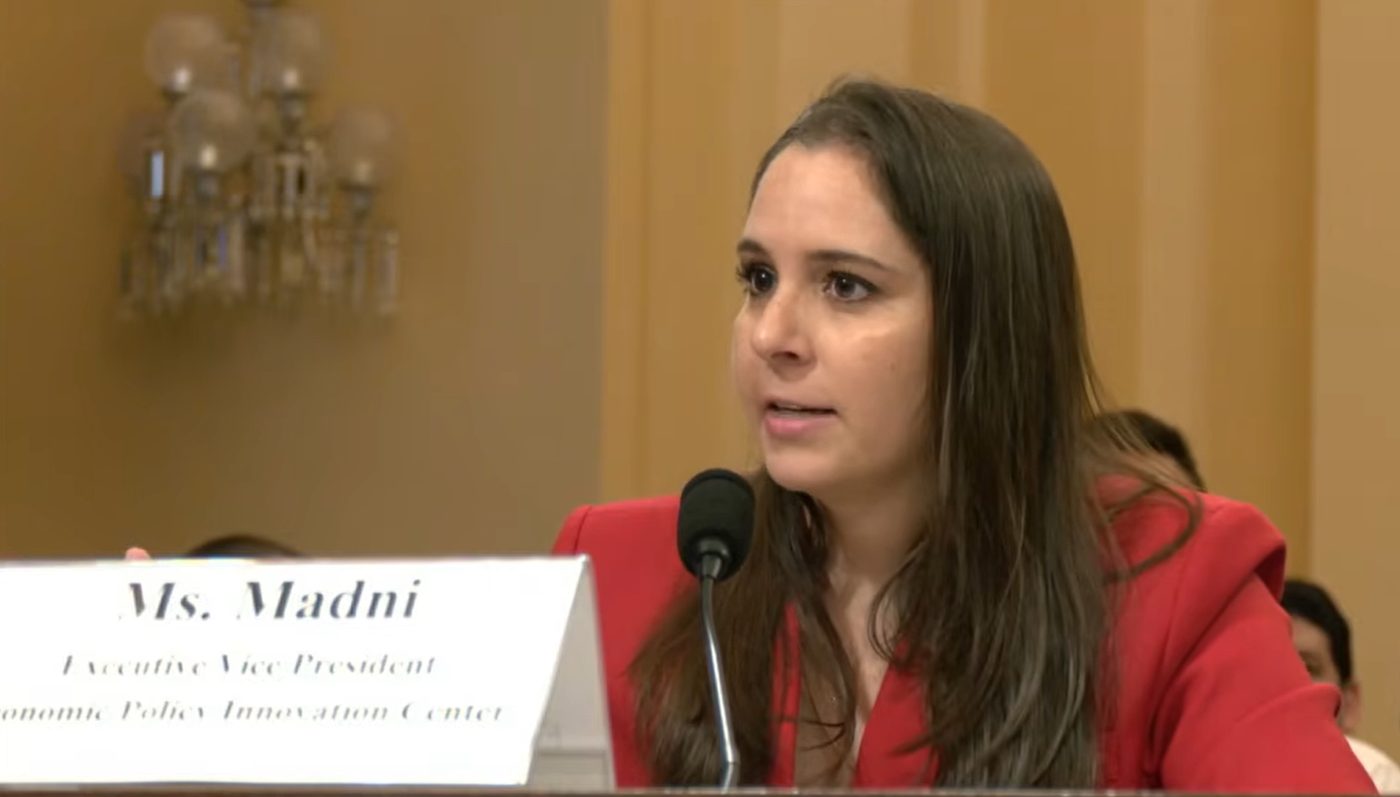
The House Budget Committee held a hearing on
Congress and the Congressional Budget Office (CBO): Examining Ways to Improve CBO on September 11, 2024.
This was the second
hearing focused on
improving the CBO held by the House Budget Committee this year. The Committee should be commended for
regularizing this essential oversight, which has been neglected in recent years. Congress must review the CBO on a regular basis to ensure it continues to fulfill Congress’s needs and can meet Congressional priorities.
CBO Director Phil Swagel
testified on the CBO’s role and its efforts to support Congress, including recent efforts to
promote transparency.
House Budget Committee Chairman Jodey Arrington (R-TX-19) and the other Members of the Committee focused on
accountability and the
need for accurate scorekeeping.
Rep. Cline Focuses on the Biased Baseline
In particular, Rep. Ben Cline (R-VA-06) homed in on one of the most fundamental problems with current scorekeeping rules: the
bias in the baseline.
The CBO baseline is often described as reflecting current law, but
this is a myth. The CBO is
required by statute to include distortions that make spending and revenues appear higher than they would actually be if Congress made no further changes in law. This makes it easier for Congress to increase taxpayer spending.
CBO: Baseline Rules Treat Spending and Revenues Differently
Rep. Cline
asked “Compared to a theoretical baseline that’s calculated without these assumptions, does the official baseline assume outlays that are higher or lower?” Director Swagel testified that spending would be higher than what current law actually provides.
Director Swagel further stated that in contrast, “On the revenues side, we’re required to include current law, so the expiration of the provisions of the 2017 [Tax Cuts and Jobs] Act in 2025, the baseline shows a jump up in revenues, because that’s current law.”
CBO: Baseline is “Not a Neutral Benchmark”
In questioning Director Swagel, Rep. Cline
quoted CBO’s own description of what a baseline is
supposed to be: “CBO’s baseline is not intended to be a forecast of budgetary outcomes; rather, it is meant to provide a neutral benchmark that policymakers can use to assess the potential effects of policy decisions.”
Director Swagel
responded: “It’s a benchmark. As you highlighted, this asymmetry between the spending side and the revenue side. The revenues just follow current law, whereas in some ways big parts of spending deviate from current law. So, it’s a benchmark. It’s not neutral between spending and revenues.”
Rep. Cline asked a follow up question: “Given the distortions that CBO is required by law to incorporate that make spending and revenues appear higher than they would be under actual current law, the baseline is not actually a neutral benchmark. And would you agree that improvements could be made to existing law to enable CBO to produce a more accurately neutral benchmark?”
Director Swagel replied: “One improvement I’ve made is deleting the word neutral from our budget reports. So, you’ll see, we describe it as a benchmark, and not a neutral benchmark.”
CBO: Producing a Neutral Benchmark Would be Helpful
Rep. Cline asked Director Swagel “But wouldn’t you agree that, maybe in addition to what you do, that producing a neutral benchmark would be a goal that Members would find helpful?”
Director Swagel replied, “I do agree,” and described ways that CBO already provides some information about current law and the impacts of the baseline biases.
No Bias in the Baseline Act Would Remove Distortions
To fix the distortions in the baseline, Rep. Cline and Senator Mike Braun (R-IN) have introduced the
No Bias in the Baseline Act. This important bill would provide more consistent, transparent, and realistic cost estimates for legislative proposals.
As Rep. Cline remarked, his “legislation will help [CBO] achieve that neutrality” and fix the problems with the baseline.