The Founding Fathers understood a fundamental truth:
debt is dangerous. It weakens a nation’s ability to respond to an existential threat and is inflationary.
Worse still, a large public debt implies that government has gotten so unwieldy and so intrusive in the American people’s daily lives that it must rely on deficit spending just to sustain itself.
Big government through big spending was not the answer in 1776, and it is not the answer in 2026.
As I
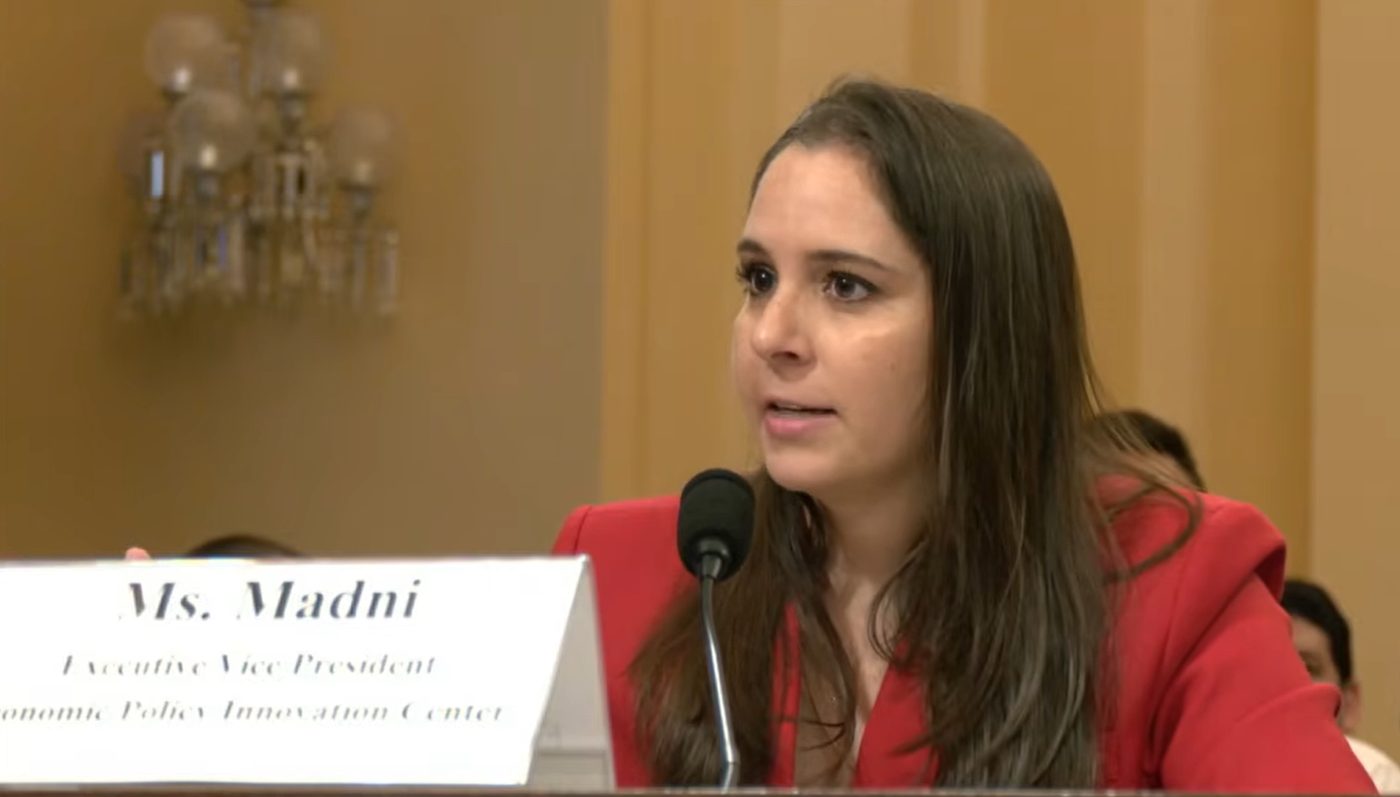
testified before the House Judiciary Subcommittee on the Constitution and Limited Government in December, solutions that encourage the systemic reduction of the size and scope of government spending should be prioritized. One such option is a responsibly crafted
balanced budget amendment, like
H.J. Res. 139 introduced by Congressman Andy Biggs (R-AZ-05).
The State and Scope of the Federal Budget
At the time of writing, America is
$38.9 trillion in debt and fast approaching the $40 trillion mark. More than 60 percent of this total amount (in real, inflation-adjusted terms) occurred over the past 18 years, since the Obama Administration took office. We have added more debt during and since the Obama Administration than over the prior two and a half centuries, which included the Revolutionary War, Civil War, and two World Wars.
In fiscal year (FY) 2026 alone, the
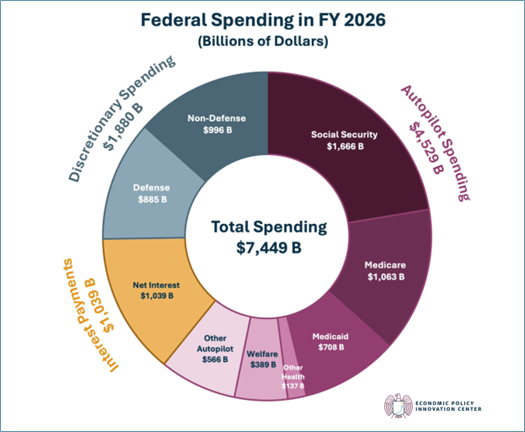
Congressional Budget Office projects the federal government will bring in $5.6 trillion in revenues but outlay $7.4 trillion. This leaves a deficit of $1.9 trillion.
The purpose of “balancing the budget” is not simply to reach zero on a spreadsheet. That could be accomplished by raising an equal amount of revenues to spending, but revenues are not the problem. Overspending is. The purpose is to make government spending and scope match the peoples’ priorities. That activity is inherently American and inherently tied to the philosophy of limited government and individual liberty.
Every dollar spent grows the government along with incursions into the lives and freedoms of the American people. It is an overextension not only of our means, but also of what the government can and should do. More deficit spending inherently means bigger government. It also means growing debt service costs and less
fiscal space.
According to the
Federal Register, there are 444 federal agencies at present, a far cry from the original three departments established by President George Washington the year he was first inaugurated. Each of these agencies and all of their activities and employees are funded by the taxpayer.
Not all of these agencies are essential or within the proper scope of the federal government.
On top of that, the federal budget is rife with waste, fraud, and abuse. For example, the
Government Accountability Office (GAO) recently reported that the federal government has made nearly $3 trillion in improper payments since 2003. In FY 2024, the biggest offenders, as has been the trend, were major autopilot spending programs, including Medicare and Medicaid. Together, those accounted for 53 percent of government-wide improper payments. Simply addressing this major problem would be a step in the right direction toward a balanced budget that focuses spending where the people actually want their tax dollars to go.
A
major part of the problem is that autopilot spending is projected to grow from 33 percent of outlays in FY 1964 to 75 percent in FY 2026. That means, including net interest payments, Congress does not actually review and vote on 75 percent of what it spends in taxpayer money each year. By the end of the decade, that unreviewed amount will grow to 80 percent. It is no wonder that much of the federal government’s fraud and improper payment errors stem from these programs.
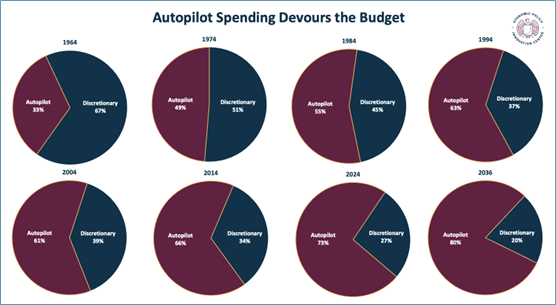
This is certainly a worrying prospect if we are expecting the government to only exercise necessary and proper authorities. There seems to be little to no oversight of the scope and scale of government.
A balanced budget amendment would force Congress to reassess major spending in a meaningful way on a regular basis.
A Founder’s Fiscal Vision
Limiting government – not to mention our nearly $39 trillion debt picture – should precipitate Congressional action on a Balanced Budget Amendment.
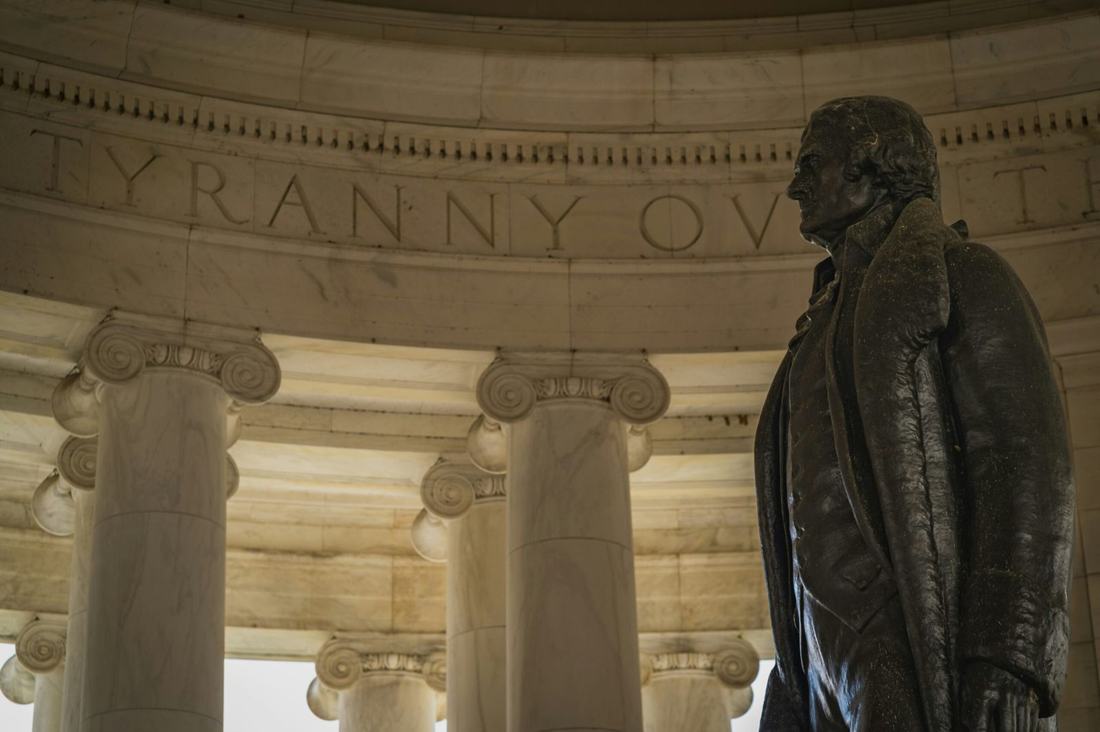
As Thomas Jefferson
wrote:
I wish it were possible to obtain a single amendment to our constitution; I would be willing to depend on that alone for the reduction of the administration of our government to the genuine principles of its constitution; I mean an additional article taking from the federal government the power of borrowing.
He was speaking about a new article to be added to the Constitution – one that limited federal borrowing power to prevent overspending and overexerting of the government’s power.
A balanced budget amendment would push Representatives of our Republic to critically and thoughtfully reexamine, on a regular basis, whether our spending matches Americans’ priorities, is within taxpayers’ means, and is in line with the limited government promises of the Founders.
What to Look for in a Responsible Balanced Budget Amendment
If Congress wants to build that safeguard into the Constitution itself, they should
avoid three major pitfalls when drafting a Balanced Budget Amendment:
- Abdicating Article I powers.
- Failing to remember that we have a spending problem, not a revenues problem.
- Lacking any real enforcement mechanism.
By considering these three tests, Congress can ensure that an amendment is focused on the primary goal of making government spending and scope match the peoples’ priorities. This model will prevent a balanced budget amendment from having serious unintended consequences, like expanding executive power, allowing higher taxes to paper over the spending problem, or reducing momentum for real change without any teeth to make it happen.
The House now has the opportunity to advance just such a responsible version of a balanced budget amendment that passes these three tests. Rep. Andy Biggs’s (R-AZ-05)
H.J. Res. 139 avoids the three major pitfalls described above. If adopted, this amendment would help get America’s fiscal house back in order, but it would also tie us more closely to the foundations of limited government by reducing budgetary overextensions.
Congress should take advantage of this moment to honor the Founders’ fiscal vision and limit both our debt and our government.