Medicaid welfare spending has
grown out of control, driven by waste, fraud, and abuse. Improper payments made by the Medicaid program alone have
totaled $1.1 trillion over the last decade.
The One Big Beautiful Bill makes important improvements to Medicaid to address these problems and deliver better care for truly vulnerable Americans.
What the OBBB Actually Does
The
Medicaid reforms in the OBBB are common sense. The legislation:
Medicaid Spending Grows Every Year
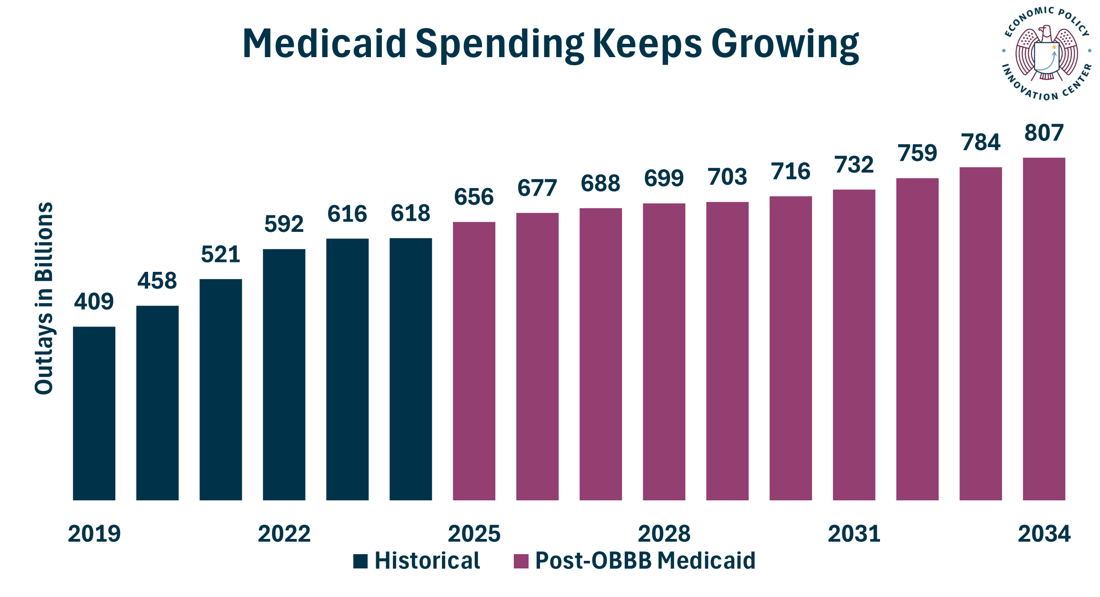
Despite unfounded claims about “cuts,” Medicaid spending is projected to grow each year over the next decade.
After implementation of the OBBB, Medicaid spending would grow from $618 billion in FY 2024 to $807 billion in FY 2034. Only Washington, DC, politicians would try to claim that a 31% increase in annual spending is a “cut.”
By FY 2034, Medicaid spending would be nearly double the FY 2019 pre-COVID spending level.
Biden Policies Caused Medicaid Spending to Skyrocket
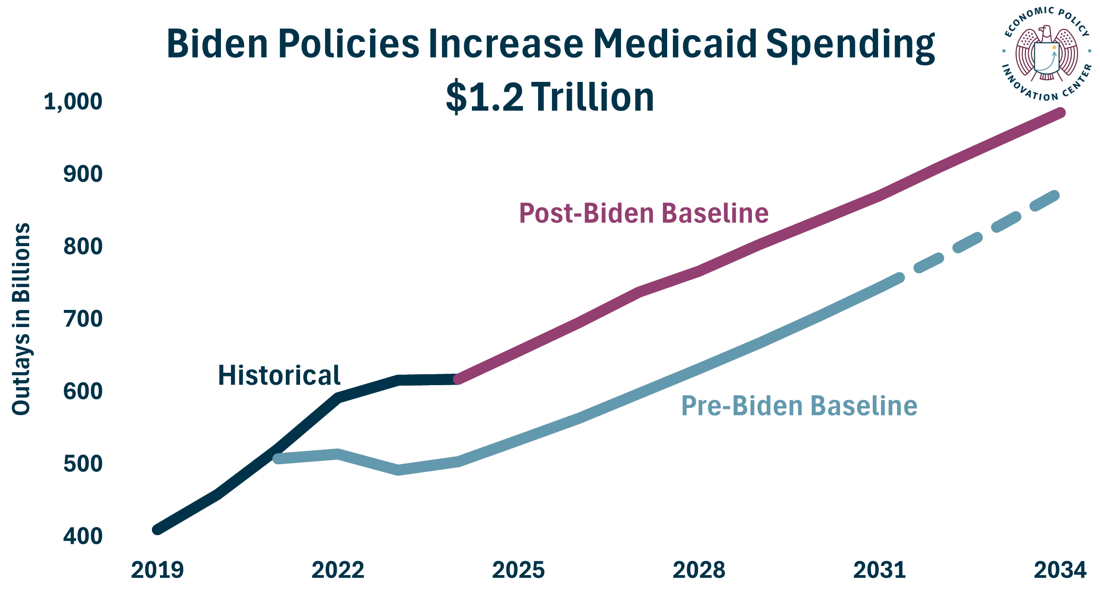
President Biden’s policies caused Medicaid spending to skyrocket. Medicaid outlays are 60% higher in FY 2025 than they were in 2019.
The Congressional Budget Office (CBO) projects that Medicaid spending would have been $1.2 trillion higher between FY 2025 and 2034 compared to the pre-Biden baseline. This spending increase was driven by waste, fraud, and abuse.
Throughout and even after the COVID-19 pandemic, the federal government paid states to
keep millions of ineligible individuals on the Medicaid rolls. The Biden Administration then implemented the “
Maintaining Enrollment in Medicaid Rule” to restrict states from cleaning up their rolls and verifying eligibility.
The OBBB Puts Medicaid on a More Sustainable Path to Protect the Truly Vulnerable
The OBBB makes important reforms that will address Medicaid waste, fraud, and abuse. By closing these loopholes, the OBBB will ensure that resources are available for those most in need of care, restoring the original intent of the program.