The
latest budget baseline from the Congressional Budget Office (CBO) projects deficits that “are large by historical standards.”
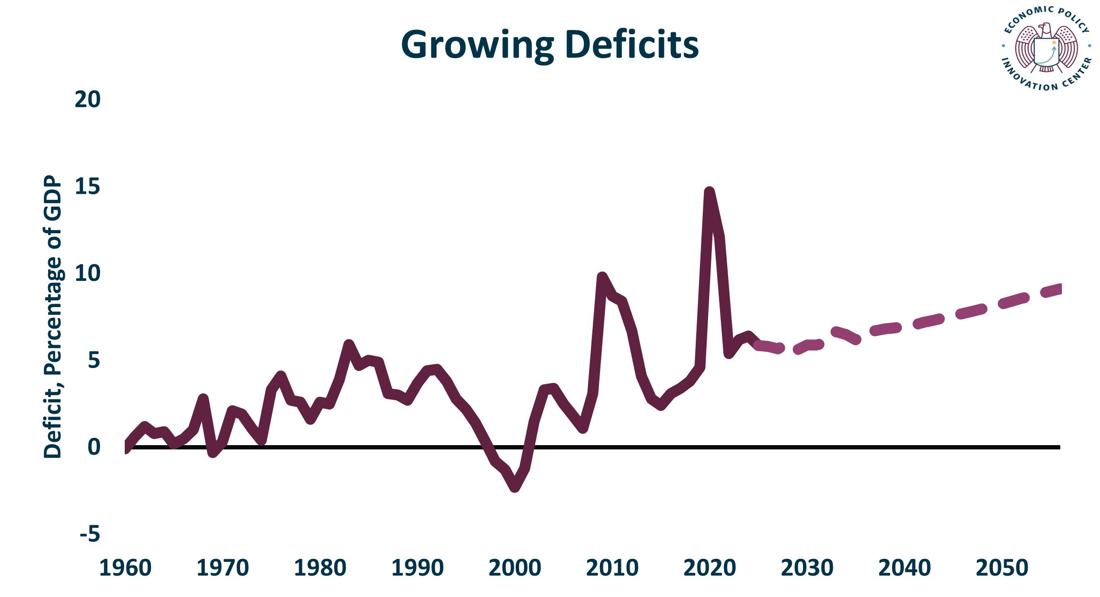
Measured as a percentage of the economy (gross domestic product, or GDP), deficits are projected to grow from 5.8% of GDP in fiscal year (FY) 2026 to 6.7% of GDP in FY 2036. Over the long term, the deficit is projected to reach 9.1% of GDP in FY 2056 on the current fiscal trajectory.
Such a large deficit is extremely unusual during a time of relative peace and prosperity. Deficits this large have only ever been seen during major wars and economic crises.
After deficits spiked to nearly 30% of GDP in response to World War II, the federal budget was running a surplus by FY 1947. Between FY 1950 and 1969, deficits averaged a modest 0.6% of GDP. After the 2008 Great Recession and President Obama’s stimulus spending pushed the deficit to 9.8% of GDP, the deficit was reduced to 2.8% of GDP by FY 2014.
Unfortunately, the deficit has not normalized in the wake of the COVID-19 pandemic era spending programs. The deficit is projected to continue growing because of structural growth in entitlement programs on legislative autopilot.
| Deficits in CBO’s February 2026 Baseline |
|
2026 |
2027 |
2028 |
2029 |
2030 |
2031 |
2032 |
2033 |
2034 |
2035 |
2036 |
2026 - 2036 |
| Deficit |
1,853 |
1,887 |
2,080 |
2,020 |
2,201 |
2,286 |
2,439 |
2,781 |
2,819 |
2,779 |
3,115 |
26,260 |
| % of GDP |
5.8% |
5.7% |
6.0% |
5.6% |
5.9% |
5.9% |
6.1% |
6.7% |
6.5% |
6.2% |
6.7% |
6.1% |
| In billions of dollars.
Source: CBO February 2026 baseline. |
The large and growing deficits erode the government’s fiscal space, which is its capacity to borrow without undermining debt sustainability or risking a loss of market confidence. This fiscal limit can be considered the government’s true debt limit. When the fiscal limit is approached, a debt spiral can occur.
To restore fiscal space and put the budget on a more sustainable path, Congress must enact meaningful deficit reduction. One useful way to make progress on deficit reduction is for lawmakers to
agree on achievable fiscal goals, such as setting a targeted deficit level to work towards.
3% of GDP Deficit Target Has Broad Support
Reducing the budget deficit to 3% of GDP has
broad support among Administration officials, Members of Congress, investors, and other policy analysts.
Treasury Secretary Scott Bessent has laid out a
3-3-3 plan to cut the budget deficit to 3% GDP by 2028, increase economic growth to 3%, and increase U.S. energy production by 3 million barrels of oil per day.
Reps. Bill Huizenga (R-MI-4), Lloyd Smucker (R-PA-11), Scott Peters (D-CA-50), and Mike Quigley (D-IL-5) have introduced the bipartisan
3% Resolution, H. Res. 981, which expresses the sense of the House of Representatives that “Congress should adopt a fiscal target to reduce the Federal budget deficit to 3 percent of gross domestic product… or less as soon as possible and no later than the end of fiscal year 2030.”
Ray Dalio, founder of Bridgewater Associates, has also called for reducing the deficit to 3% in his book
How Countries Go Broke: The Big Cycle.
Paths to a 3% Deficit Target
The analysis below shows three illustrative paths to reduce the deficit to 3% of GDP by different target dates.
Reaching 3% Deficit in 2026
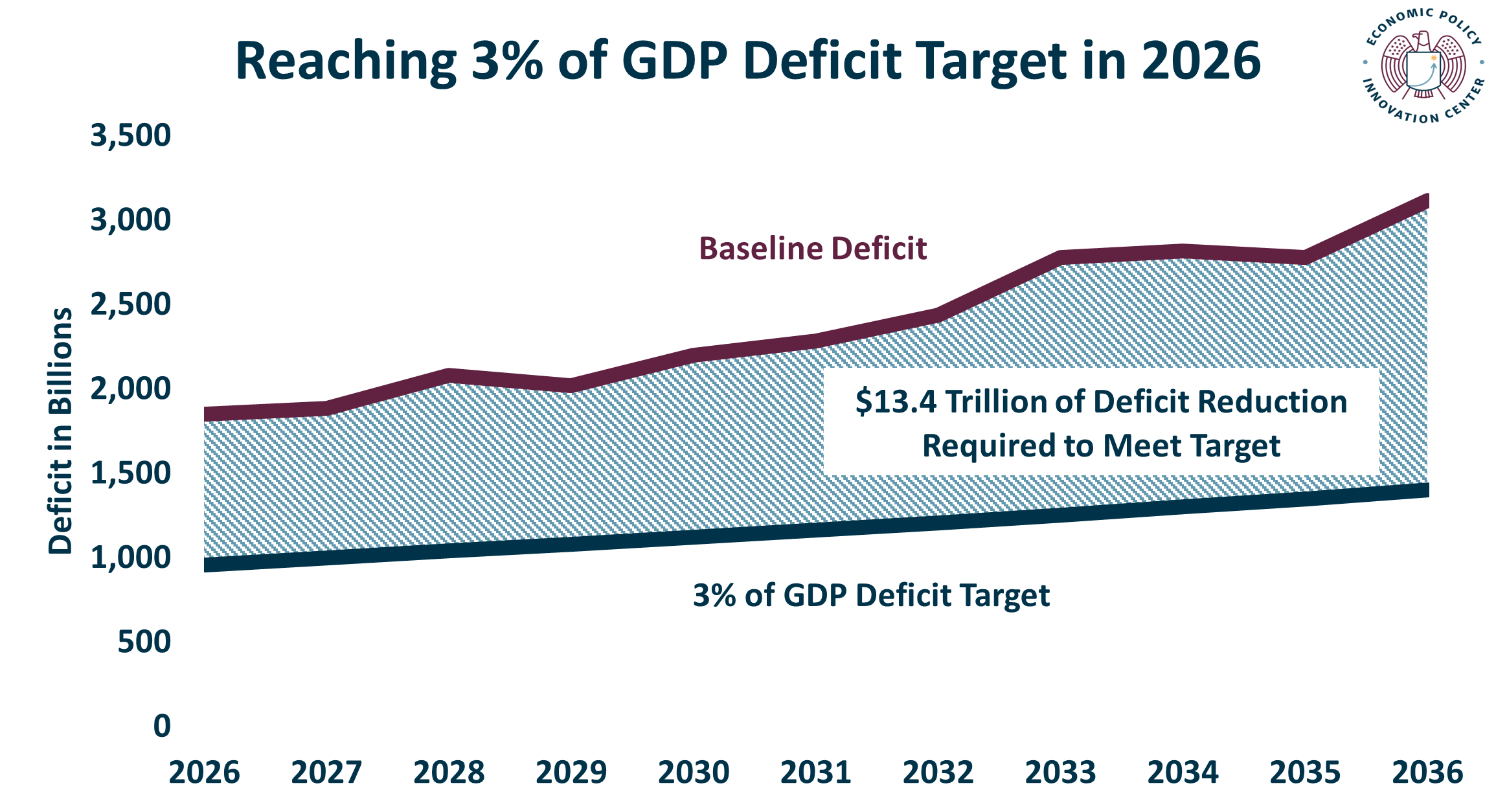
Immediately reducing the deficit to 3% of GDP in FY 2026 would require $896 billion of deficit reduction in the first year. Over the FY 2026 – 2036 period, keeping the deficit at 3% of GDP would require a total of $13.4 trillion of deficit reduction.
| Reaching 3% of GDP Deficit in FY 2026 |
|
2026 |
2027 |
2028 |
2029 |
2030 |
2031 |
2032 |
2033 |
2034 |
2035 |
2036 |
2026 - 2036 |
| Target Deficit |
957 |
999 |
1,040 |
1,080 |
1,122 |
1,164 |
1,208 |
1,254 |
1,301 |
1,350 |
1,401 |
12,878 |
| % of GDP |
3.0% |
3.0% |
3.0% |
3.0% |
3.0% |
3.0% |
3.0% |
3.0% |
3.0% |
3.0% |
3.0% |
|
| Required Deficit Reduction to Meet Target |
| Required Deficit Reduction |
896 |
888 |
1,040 |
940 |
1,079 |
1,122 |
1,231 |
1,527 |
1,518 |
1,429 |
1,714 |
13,382 |
| % of GDP |
2.8% |
2.7% |
3.0% |
2.6% |
2.9% |
2.9% |
3.1% |
3.7% |
3.5% |
3.2% |
3.7% |
|
| In billions of dollars.
Source: EPIC calculation based on CBO February 2026 baseline. |
Reaching 3% Deficit 2028
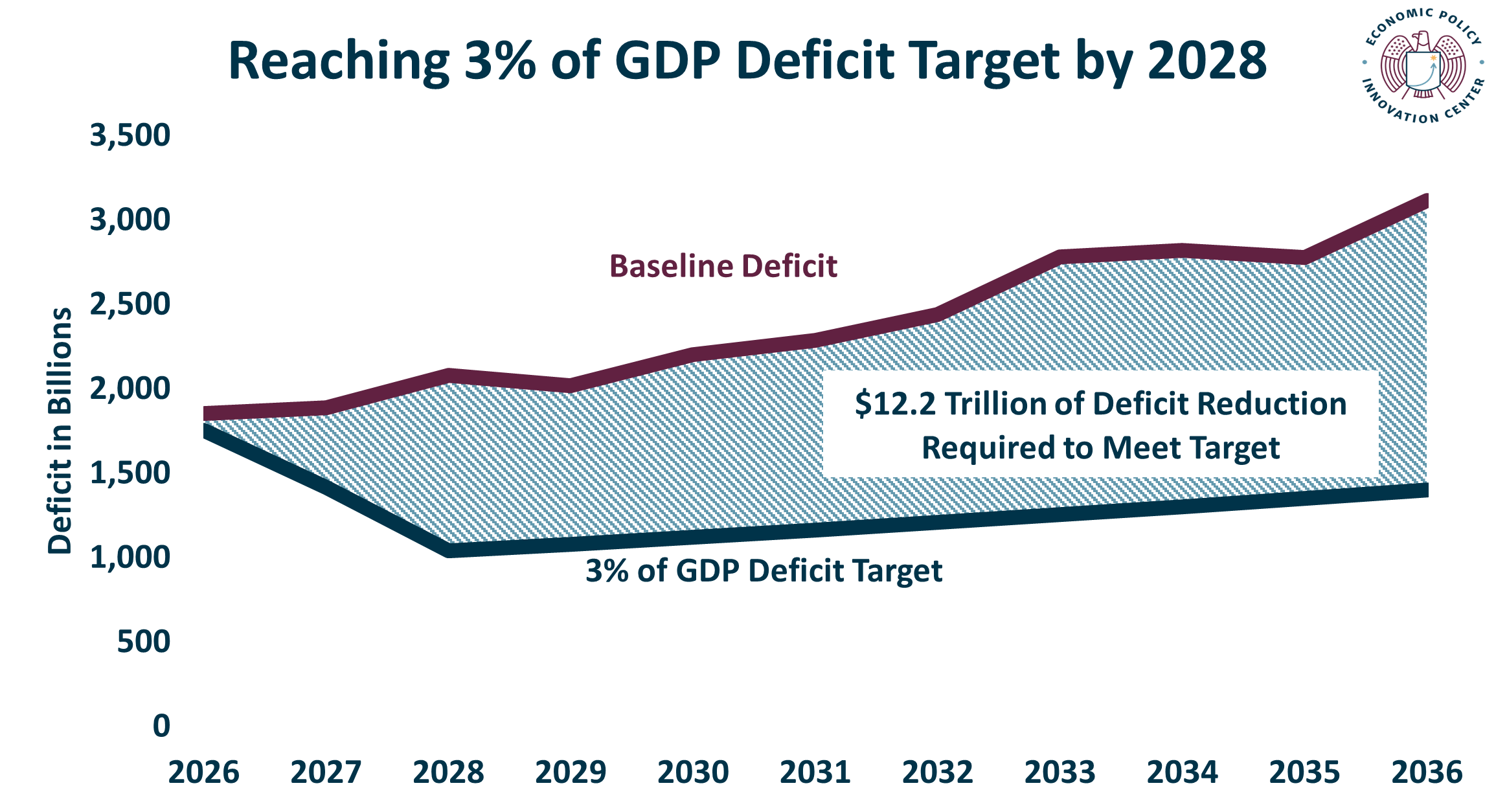
Putting the deficit on a glide path to reach 3% of GDP in FY 2028 would require modest upfront deficit reduction. An illustrative scenario would only require $98 billion of deficit reduction in FY 2026. Over the FY 2026 – 2036 period, this would require a total of $12.2 trillion of deficit reduction.
| Reaching 3% of GDP Deficit in FY 2028 |
|
2026 |
2027 |
2028 |
2029 |
2030 |
2031 |
2032 |
2033 |
2034 |
2035 |
2036 |
2026 - 2036 |
| Target Deficit |
1,755 |
1,416 |
1,040 |
1,080 |
1,122 |
1,164 |
1,208 |
1,254 |
1,301 |
1,350 |
1,401 |
14,092 |
| % of GDP |
5.5% |
4.3% |
3.0% |
3.0% |
3.0% |
3.0% |
3.0% |
3.0% |
3.0% |
3.0% |
3.0% |
|
| Required Deficit Reduction to Meet Target |
| Required Deficit Reduction |
98 |
471 |
1,040 |
940 |
1,079 |
1,122 |
1,231 |
1,527 |
1,518 |
1,429 |
1,714 |
12,168 |
| % of GDP |
0.3% |
1.4% |
3.0% |
2.6% |
2.9% |
2.9% |
3.1% |
3.7% |
3.5% |
3.2% |
3.7% |
|
| In billions of dollars.
Source: EPIC calculation based on CBO February 2026 baseline. |
Reaching 3% Deficit 2030
To slowly reduce the deficit to 3% of GDP in FY 2030 would require $98 billion of deficit reduction in FY 2026. Over the FY 2026 – 2036 period, this would require a total of $11.2 trillion of deficit reduction.
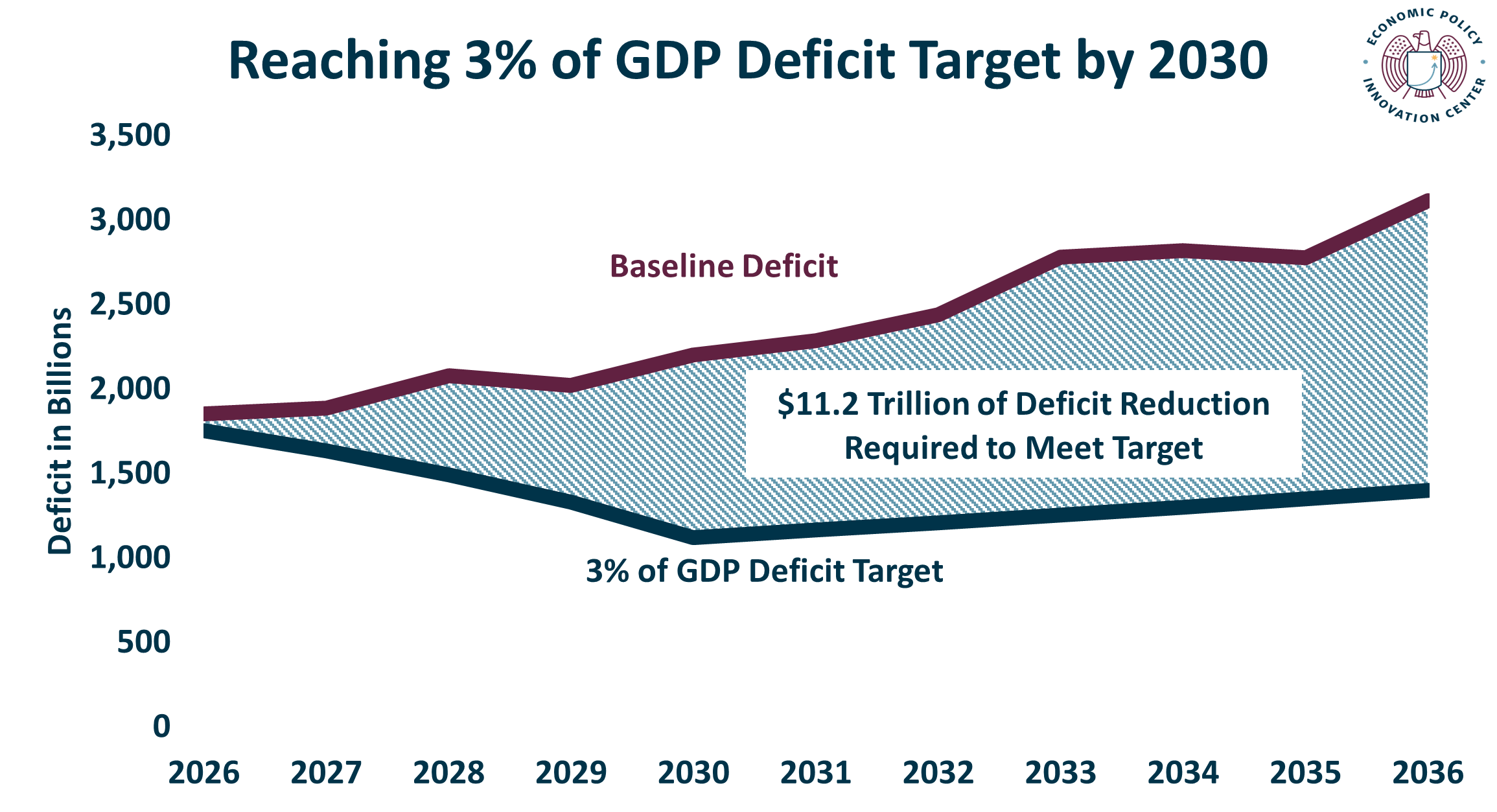
| Reaching 3% of GDP Deficit in FY 2030 |
|
2026 |
2027 |
2028 |
2029 |
2030 |
2031 |
2032 |
2033 |
2034 |
2035 |
2036 |
2026 - 2036 |
| Target Deficit |
1,755 |
1,632 |
1,491 |
1,332 |
1,122 |
1,164 |
1,208 |
1,254 |
1,301 |
1,350 |
1,401 |
15,011 |
| % of GDP |
5.5% |
4.9% |
4.3% |
3.7% |
3.0% |
3.0% |
3.0% |
3.0% |
3.0% |
3.0% |
3.0% |
|
| Required Deficit Reduction to Meet Target |
| Required Deficit Reduction |
98 |
255 |
589 |
688 |
1,079 |
1,122 |
1,231 |
1,527 |
1,518 |
1,429 |
1,714 |
11,249 |
| % of GDP |
0.3% |
0.8% |
1.7% |
1.9% |
2.9% |
2.9% |
3.1% |
3.7% |
3.5% |
3.2% |
3.7% |
|
| In billions of dollars.
Source: EPIC calculation based on CBO February 2026 baseline. |
Conclusion
Reaching a 3% of GDP deficit target is a realistic goal that would put the federal budget on a trajectory that is more sustainable than the status quo.
As the analysis in this report shows, putting the deficit on a glide path to the 3% target is achievable. However, the longer Congress waits to make the programmatic reforms necessary to control spending and reduce the deficit, the more difficult it will be.