The Congressional Budget Office (CBO) has published its
latest budget baseline outlining its
fiscal and economic projections for fiscal years (FY) 2026 through 2036. Even with reforms to major programs included in the One Big Beautiful Bill, federal spending is
expected to keep increasing.
A Budget on Autopilot
The fastest-growing components of the budget are major entitlement programs and interest payments, which operate on
autopilot. Autopilot spending, also known as “mandatory” or “direct” spending, expands automatically under current law, meaning costs continue to rise even without new policy changes. By comparison, discretionary spending is reviewed and provided through the annual appropriations process.
As a result, total federal spending is growing at an unsustainable rate. Outlays are projected to reach $7.4 trillion in FY 2026, and by FY 2036 they will nearly triple
pre-pandemic levels, climbing to about $11.4 trillion.
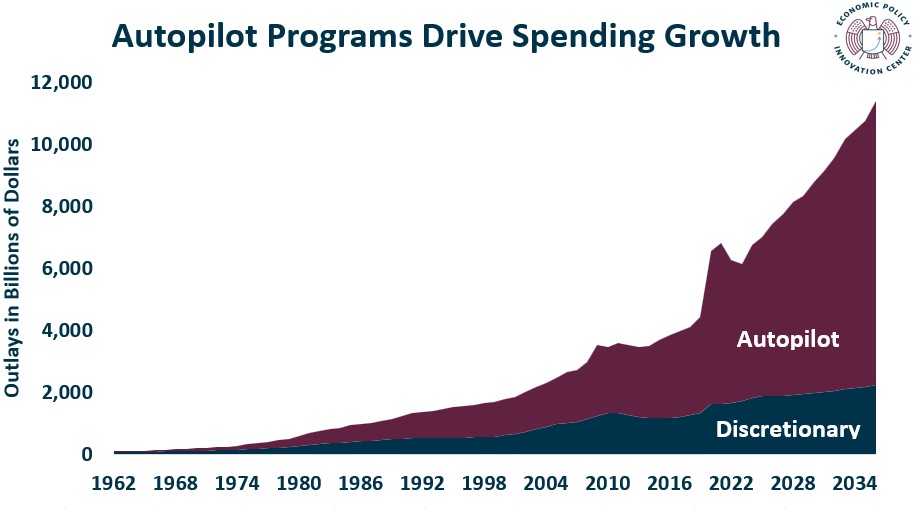
Autopilot programs such as Social Security, Medicare, and Medicaid, along with rapidly rising interest payments on the national debt, are driving this projected increase in spending and taking up a growing share of the federal budget.
FY 1974, the year the
modern budget process was established, was the last time that annual discretionary spending made up the majority of outlays. In FY 2026, the CBO projects that 75 percent of spending will be on autopilot, while only 25 percent will be discretionary.
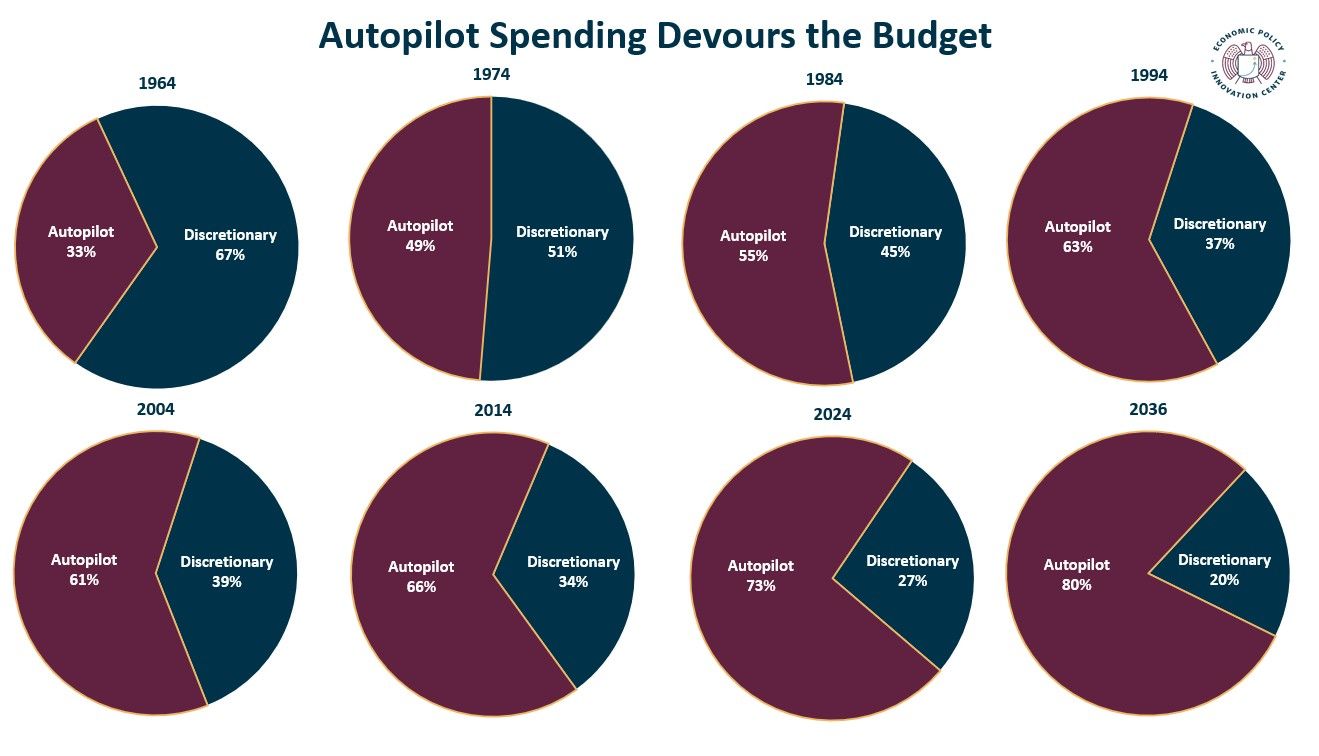
By FY 2036, autopilot spending is expected to consume roughly 80 percent of the federal budget, leaving policymakers with
fewer options to respond to economic downturns, national security threats, or other emergencies that may arise.