On August 11, 2025, the federal government reached a dismal milestone: the gross
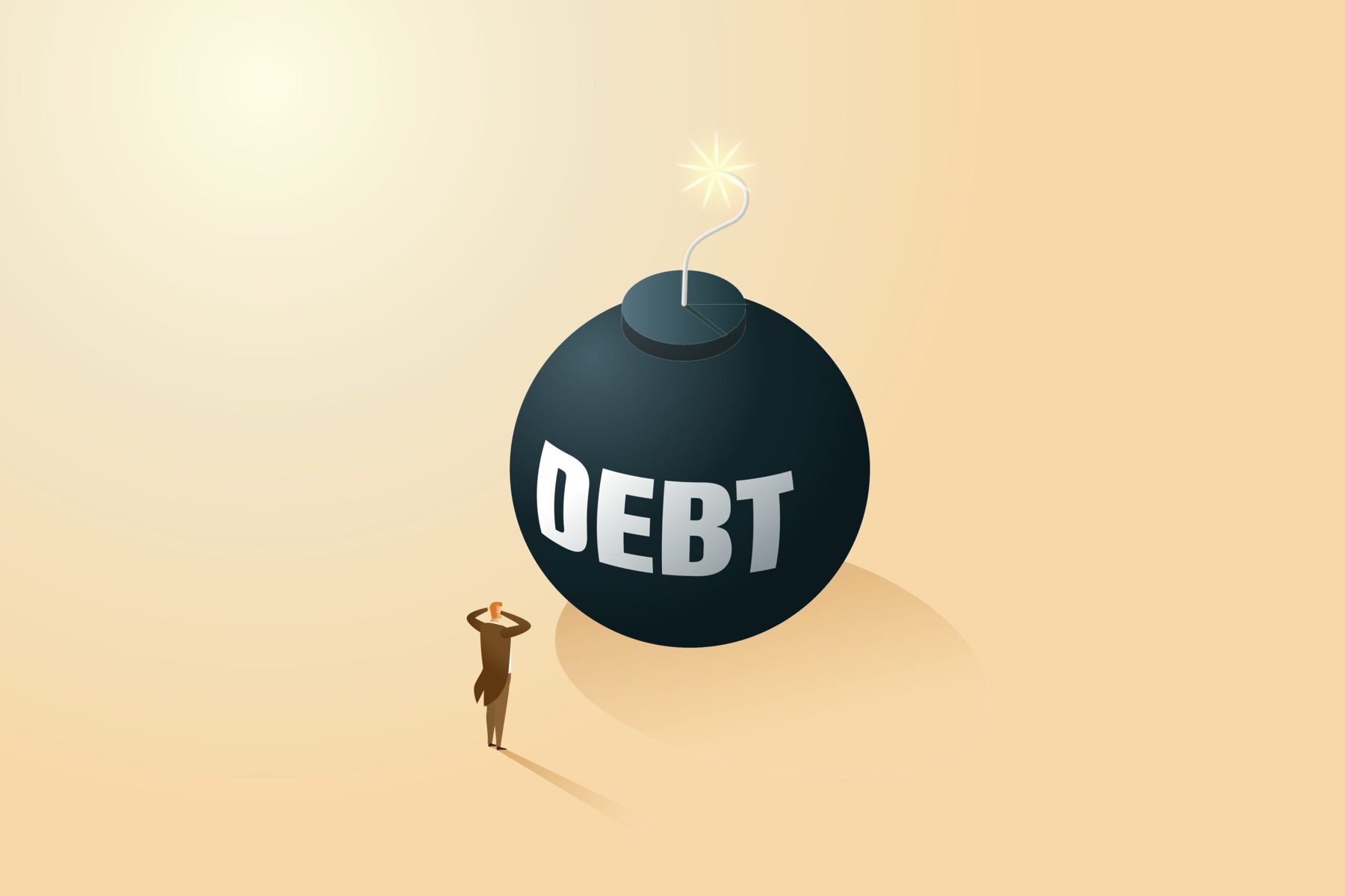
national debt breached the $37 trillion threshold. For perspective, the debt hit $27 trillion in October 2020, meaning that Washington created $10 trillion of red ink in less than 5 years.
Truly, America faces a
daunting fiscal trajectory, and legislators must take action as soon as possible to further address the drivers of unsustainable debt and deficits.
Washington took a long-overdue step in the right direction by including more than $1 trillion in savings in the One Big Beautiful Bill (OBBB) Act. While the bill’s
tax cuts have received most of the attention, its
welfare reforms could be just as historic.
For example, spending growth in Medicaid was expected to far outpace economic growth in the most recent Congressional Budget Office (CBO)
10-year forecast. While there are
dubious claims about the OBBB imposing “deep cuts” on the program, the law will
slow its growth to a more sustainable level while refocusing and protecting benefits for the truly needy.
The same is true for total federal spending. In the CBO’s January forecast, spending as a share of the economy grows from 23.4% in 2024 to 24.3% in 2034. Applying the CBO’s
analysis of the OBBB’s fiscal effects, spending growth would slow down, reaching 23.8% of GDP in 2034 – although this means federal spending will still outpace economic growth.
It is worth noting that there are caveats to this analysis. On one hand, tax reforms in the OBBB will likely encourage more business investment, boosting the private sector and potentially shrinking the federal share of the economy. On the other hand, the OBBB could lead to
higher deficits in the near term, which would increase interest payments and offset some of the bill’s spending savings.
Regardless of the OBBB’s effects, deficits are set to be uncomfortably high over the next decade. From 1969 through 2019, the federal government averaged a 2.9% deficit as a share of GDP. This ramped up during the
spending spree that began with the 2020 pandemic, and deficits are likely to be 6% or higher for the foreseeable future.
The consequences of Washington embracing permanent high deficits would be stark. This includes excessive federal borrowing leading to higher interest costs for families and businesses, which would be a drag on job creation and real wage growth.
While there are few who deny that the federal budget is out of whack compared to historical trends, there is insufficient understanding of the role that spending growth plays in the problem.
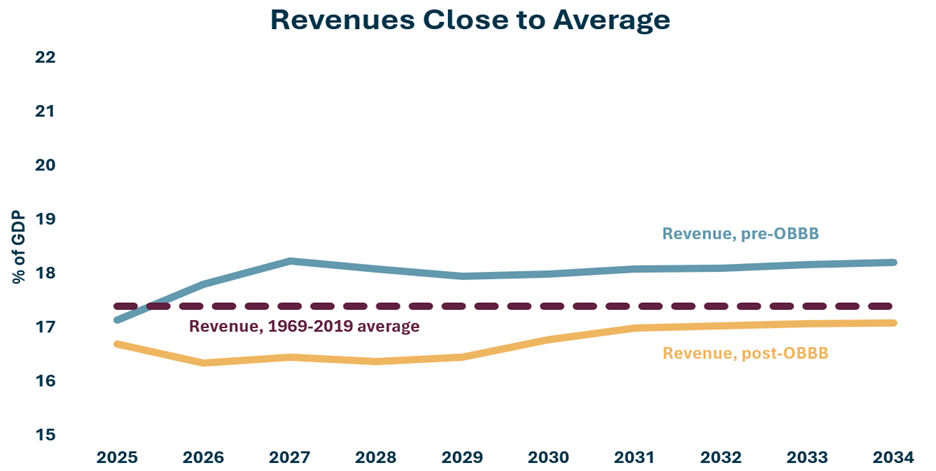
From 1969 to 2019, federal spending averaged 20.3% of the economy while revenues averaged 17.4%. Following passage of the OBBB, spending in 2034 could be 23.8% of GDP and revenue could be 17.1%. This means that spending (3.5% of GDP higher than the historical average) is set to be a considerably stronger factor in exacerbating deficits than revenue (0.3% of GDP lower than the historical average).
Measuring the federal budget in terms of the size of the economy can hide the relentless growth of spending. While Uncle Sam should spend around $7 trillion in 2025, he is on pace to shell out more than $10 trillion in 2034.
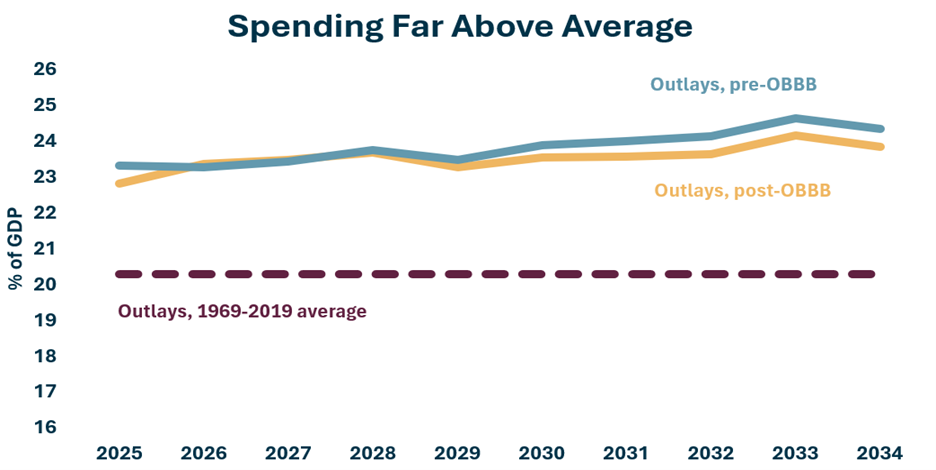
Merely slowing the growth of spending would make a big difference when it comes to deficits. Congress has the opportunity to pass
additional legislation over the next year through the budget reconciliation process.
While the OBBB created a tax code that permanently incentivizes work and investment, reforms to put federal spending on a sustainable path would
further enhance economic growth and wages.
Strong action to slow federal spending will require dedicated leadership. After all, the nation’s capital is filled with powerful lobbyists who are paid handsomely to defend the programs and subsidies that lard up the budget.
Congress and President Trump stood up to many special interest groups during the passage of the OBBB. To ensure the health of our economic future, they must summon their courage once more and make America’s budget great again.