
Op-Ed
CBO: One Big Beautiful Bill Grows the Economy, Cuts Taxes & Slows Welfare Spending
February 12, 2026 · David Ditch

The food stamp has a troubling problem with growing long-term dependency on welfare.
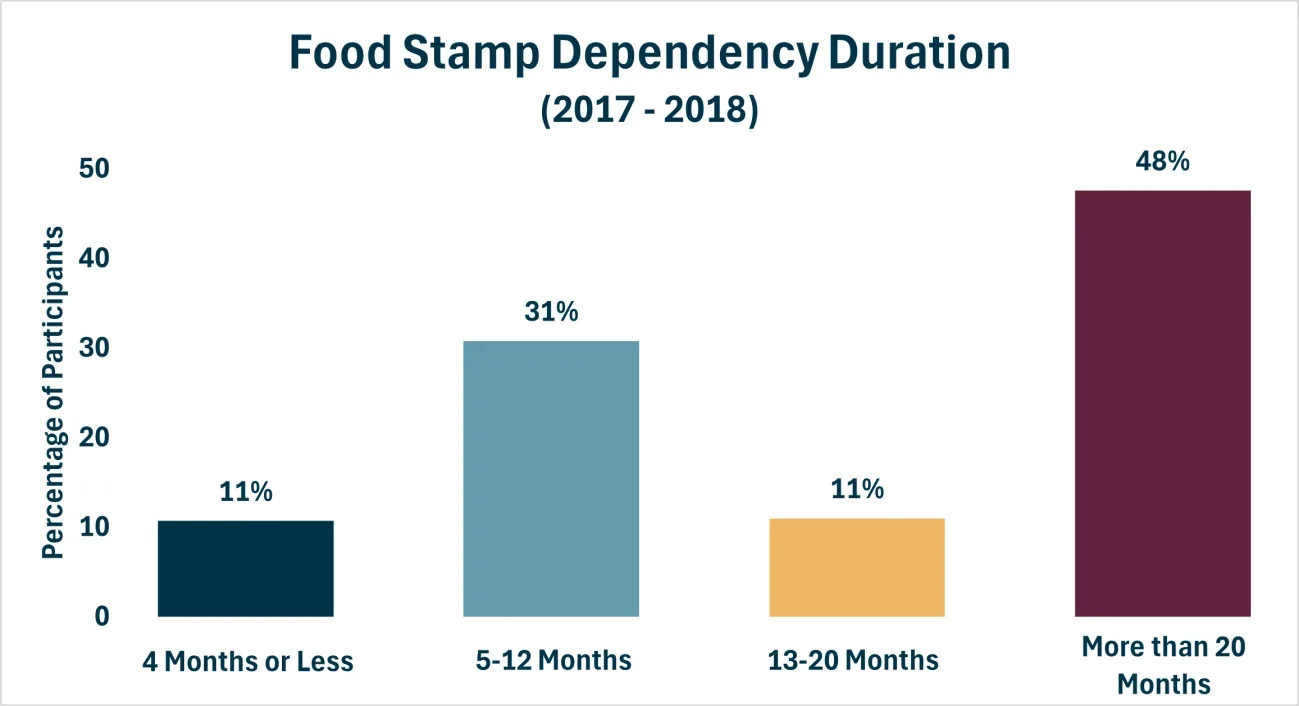
The food stamp has a troubling problem with growing long-term dependency on welfare.
Of those on food stamps in 2017 and 2018, 58.6 percent had received benefits for more than a year, with 47.6 percent receiving benefits for 20 or more months. Only 10.7 percent had a short-term period of receipt of four or fewer months.
The reported duration of dependency on food stamp benefits has lengthened over time. After welfare reform, 71 percent of recipients had periods of receipt of a year or less, while 21 percent were on food stamps for longer than a year.
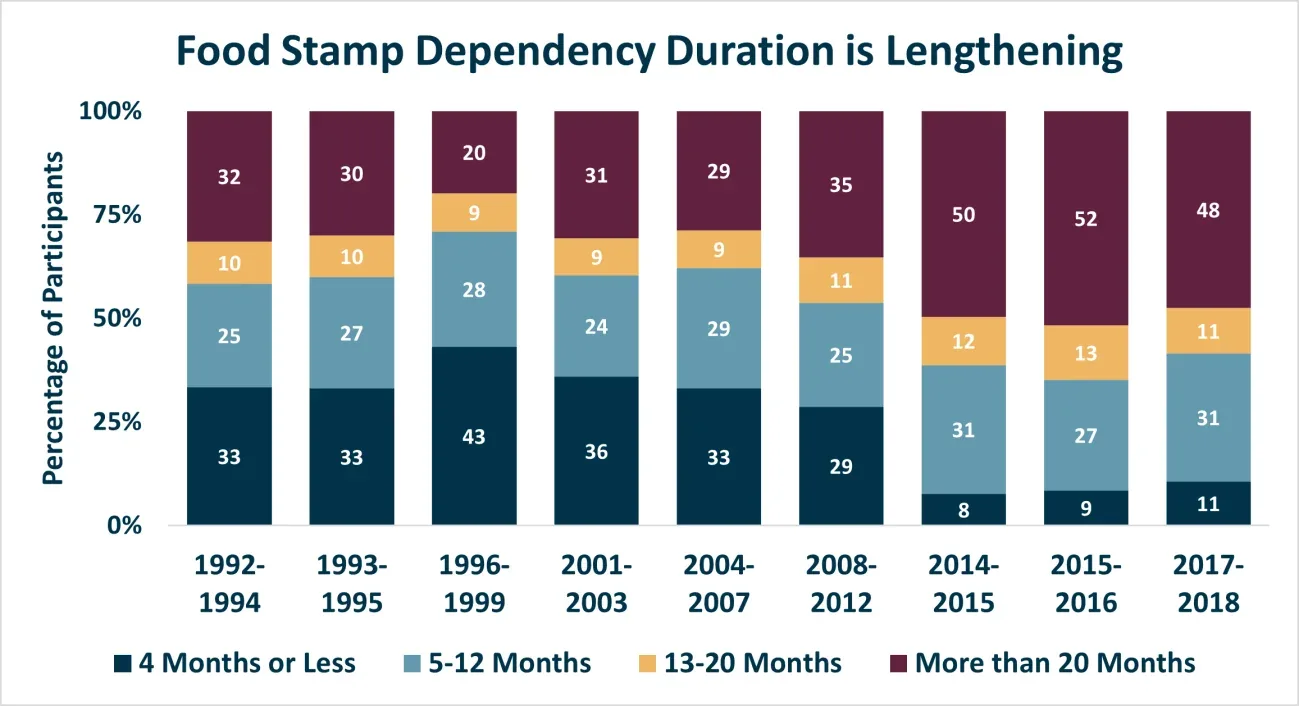
Some of the increase in reported benefit receipt duration is likely due to an update in the Census surveys that were meant to improve data collection.
However, the increase in long-term dependency is significant and coincides with efforts to promote food stamp enrollment.
The Obama Administration ramped up food stamp promotion efforts, even spending millions on a campaign that encouraged “food stamp parties” and making Keynesian-style claims about the stimulus multiplier effects of increasing benefit receipt to push enrollment.
Both the Bush and Obama administrations partnered with the Mexican government “to promote nutrition assistance programs — notably food stamps — among Mexican Americans, Mexican nationals and migrant communities in America.” Notably, the food stamp participation rate in California – home to about 1 in 10 food stamp recipients nationwide – grew 22 percentage points between 2007 and 2015.
The Biden Administration has continued these efforts, with a USDA official writing that the agency “highly encourages states to consider requesting waivers of the [able-bodied adults without dependents (ABAWD)] time limit and to use discretionary exemptions as appropriate.”
Over the 2008-2012 period, an average of 76.8 percent of eligible households received food stamp benefits, while the participation rate averaged 85.7 percent over the 2014-2019 period.
Other than the often-waived work requirement for a limited number of able-bodied adults without dependents, the food stamp program has no time limits for how long a person can receive benefits.