The Fiscal Responsibility Act (FRA) of 2023 suspended the
debt limit from June 2, 2023, through January 1, 2025.
Through the debt limit suspension period, the U.S. Department of the Treasury has added more than $4.7 trillion in new debt.
Impact of the Debt Limit Suspension
When the debt limit was suspended by the FRA on June 2, 2023, the national debt stood at $31.467 trillion. By December 2, 2024, the debt had skyrocketed to more than $36.171 trillion.
The current debt limit suspension is the second-largest debt limit increase ever, surpassed only by the 2019 to 2021 suspension that added more than $6 trillion to the national debt during the height of COVID-19.
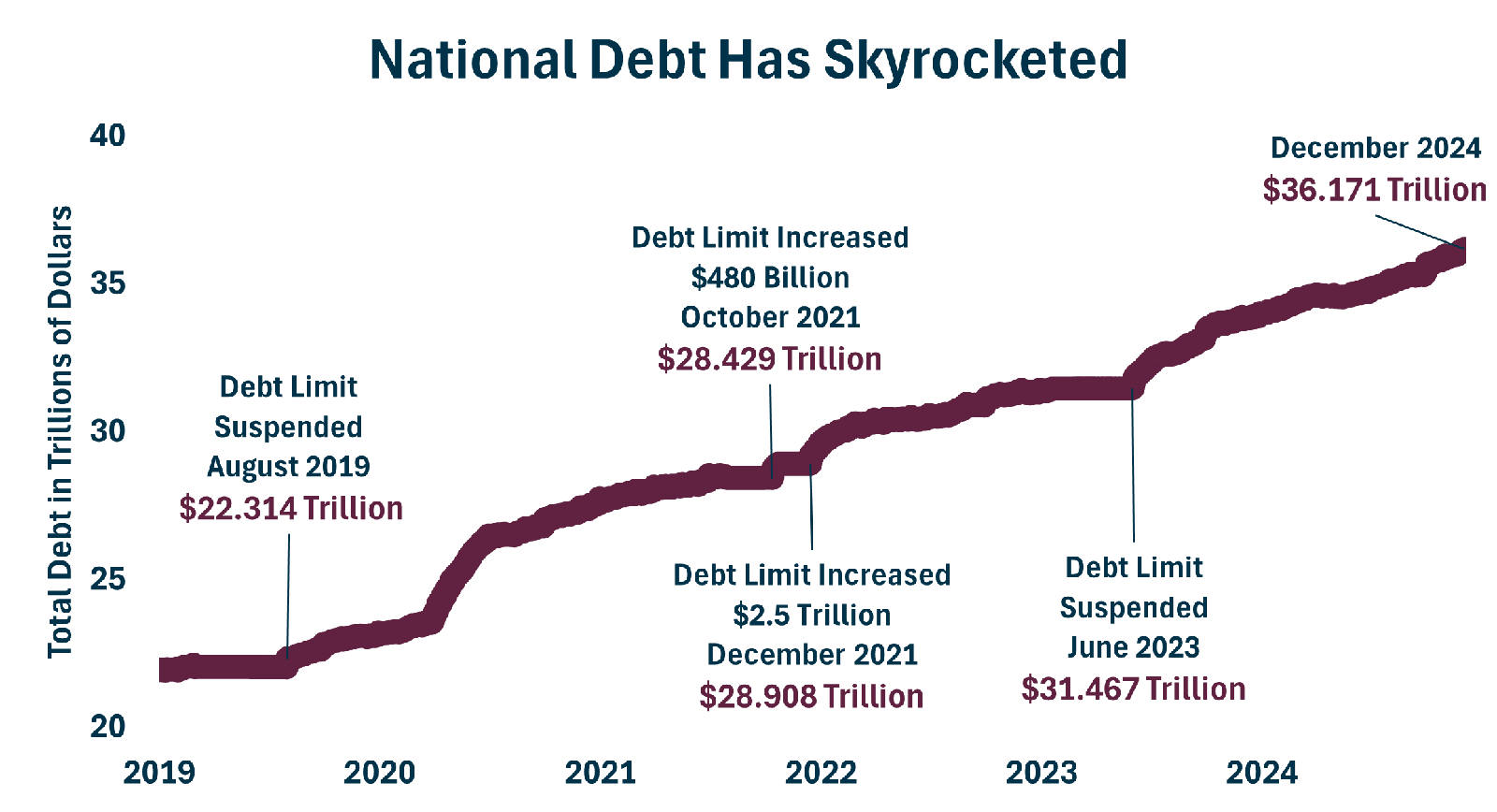
Source: U.S. Treasury
The national debt has increased at a rate of $99,000 per second since the debt limit was suspended in June 2023. Each business day, an average of $12.7 billion has been added to the national debt.
|
Debt Limit Suspension Allows Massive
$4.7 Trillion National Debt Increase
|
|
Time Period of Debt Limit Suspension
|
Number Between
June 2, 2023, and December 2, 2024 |
Debt Added Per Period
|
|
Months
|
18 |
$261,337,890,792 |
|
Weeks
|
78 |
$60,308,744,029
|
|
Calendar Days
|
550 |
$8,552,876,426
|
|
Business Days
|
371 |
$12,679,466,400
|
|
Hours
|
13,200 |
$356,369,851
|
|
Minutes
|
792,000 |
$5,939,498
|
| Seconds |
47,520,000 |
$98,992
|
| Sources: U.S. Treasury; Time and Date |
The $4.7 trillion in higher debt amounts to $35,500 per American household.
Never Again
The latest debt limit suspension provided a free pass for more
reckless and
unsustainable spending.
Congress should never again suspend the debt limit.
When the debt limit must be increased, it should be set at a specific dollar amount to prevent more of the runaway debt witnessed since the enactment of the FRA .
Once the debt limit is reinstated in January, Treasury will use extraordinary measures to extend the “X-Date” by which the debt limit must be increased to allow the government to pay its obligations on time.
EPIC's
analysis projects that it is possible the debt ceiling could be reached prior to June 16, 2025, and the Congress will need to act earlier than many are expecting.
The debt limit has historically helped facilitate the political environment needed for deficit reduction agreements, presenting an opportunity in 2025 to pair necessary debt limit increases with reforms to control spending and promote economic growth.