
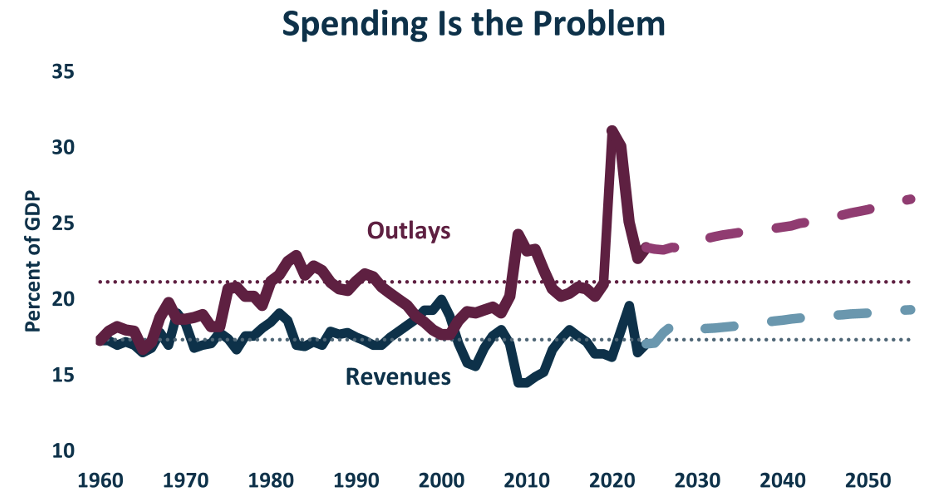
 The budget picture becomes increasingly grim in the future, as federal spending is expected to grow much faster than revenues even if the 2017 tax cuts expire.
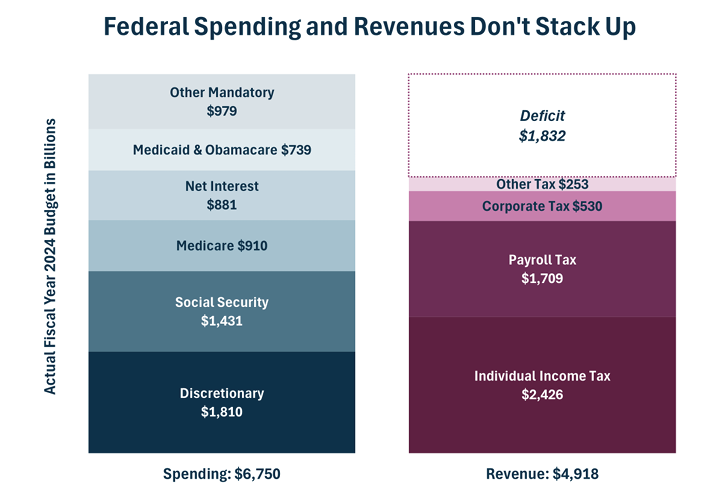
 Running a $1.83 trillion deficit during a non-recession peacetime year and allowing deficits to continue growing is more than just irresponsible - it’s also dishonest. That’s because the damage caused by excessive deficit spending and a surging national debt is less obvious than taxes. As economist Milton Friedman said:
“What we call a deficit is simply a form of taxation. It’s hidden taxation.”Here are some of the hidden ways that overspending hits Americans in the pocketbook. First: with the federal government now turning over trillions in obligations on debt markets every year, it’s harder to get capital for business investments. This “crowding out” effect reduces economic growth. Second: the growth of the national debt and related interest costs makes it harder for the Federal Reserve to focus on keeping inflation low. In a situation known as “fiscal dominance,” governments use higher inflation to avoid hitting a borrowing limit. For example, the Federal Reserve’s decision to buy federal debt to enable a prolonged government spending spree during the pandemic helped usher in the wave of inflation that started in 2021. Another recession or other type of crisis could easily bring a repeat. Inflation isn’t officially labeled as a tax, but it has the same effect on a family’s finances. Third: with most federal spending now on “autopilot” for benefit programs and interest on the debt, it would be difficult to quickly reduce spending in the event of a fiscal crisis. Instead, it would be simpler to impose a nationwide sales or “value added” tax. Americans have no appetite for that kind of tax hike. However, if spending and debt continue to grow dramatically faster than the economy, those taxes will be unavoidable. In other words, big tax hikes will come sooner rather than later unless Congress acts. Fortunately, the budget reconciliation process provides Congress with a tool to rein in reckless spending, including spending that is hidden in the tax code. There are trillions of dollars in waste and schemes that legislators should tackle this year. It will be equally important for legislators and taxpayers to keep an eye out for new spending proposals moving forward. Industry groups lobbying for subsidies, state governments asking for handouts, and socialists calling for new benefits will all attempt to hide the cost of new spending, but make no mistake: the taxes will be soon to follow.